Viewers are turning to Tip Toe, Russell T Davies’ latest five-part drama, for a sharply observed story about queer life, rising hostility and the fragile hope of community. Set in Manchester and led by Alan Cumming and David Morrissey, the Starz series matters because it connects today’s culture wars with the hard-won lessons of the HIV/AIDS era.
Essential Takeaways
- A five-part warning: Tip Toe follows the final days of Leo Struthers, an HIV-positive gay bar owner in Manchester.
- A formidable cast: Alan Cumming leads, with David Morrissey, Paul Rhys and Iz Hesketh among the key players.
- History still echoes: The drama draws on decades of HIV/AIDS stigma and changing LGBTQ rights.
- Community is central: Manchester’s Gay Village offers warmth, humour and solidarity against a harsher outside world.
- The tone is deliberately unsettled: It mixes wit, grief and social commentary rather than offering easy comfort.
Tip Toe opens with a death, then rewinds
Tip Toe doesn't ease viewers in gently. It begins with Leo Struthers hanging from a streetlight, a grim image that immediately turns the five-episode drama into a question of how he got there. The story then travels back ten days, introducing him as funny, generous and gloriously alive.
Alan Cumming gives Leo a bright, theatrical energy, but there's steel beneath the charm. He's an HIV-positive bar owner, a mentor to younger queer staff and the sort of person who keeps believing people can be better, even when the evidence is rather thin. The Wrap's review highlights that tension at the heart of the series. [4]
That contrast gives the opening real bite. We know Leo's story ends badly, yet the everyday details still feel precious: a cheeky anecdote, a busy bar, a friend offering practical help. It makes the threat feel personal rather than abstract.
Manchester becomes more than a backdrop
The series returns to Manchester, a city closely associated with Davies' earlier LGBTQ storytelling. ITV News reported that the writer viewed the production as a return to familiar territory, bringing the drama back to the city with a strong sense of place. [6]
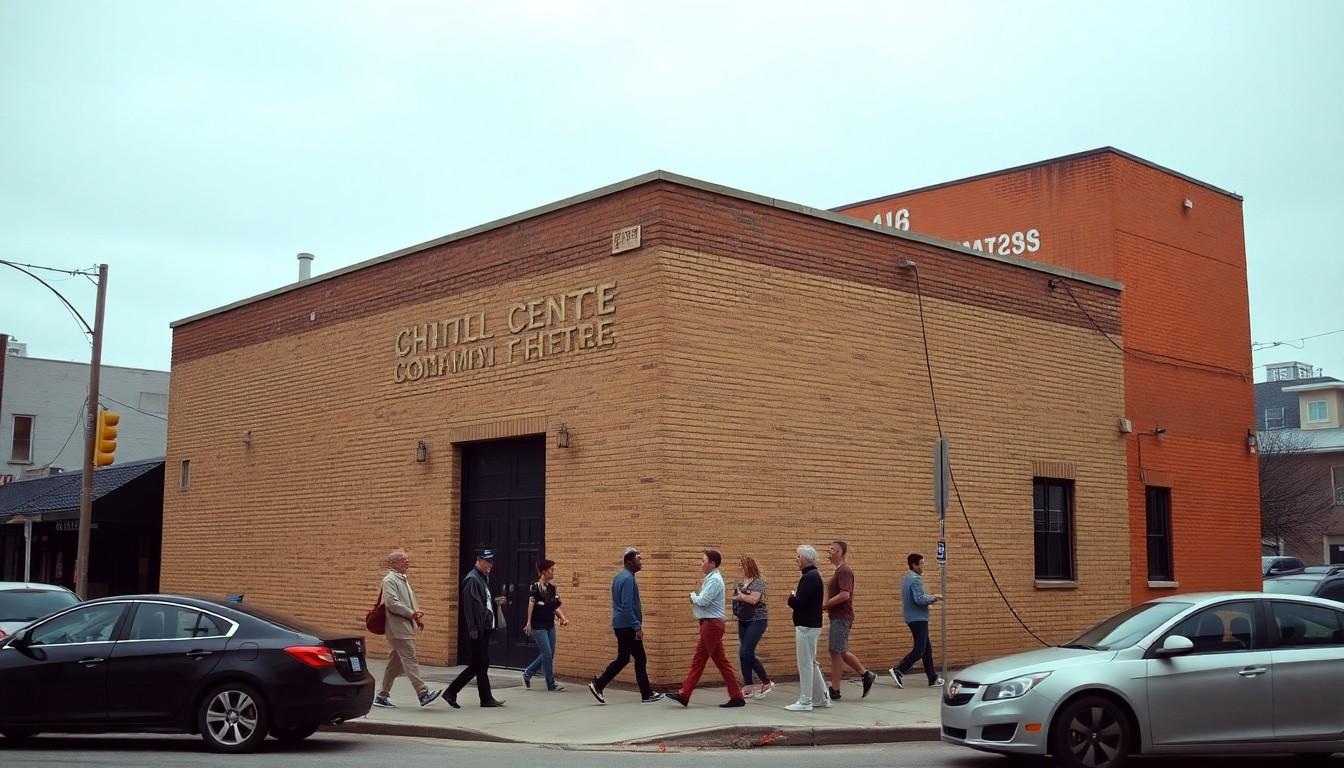
Leo's Spit & Polish bar is the emotional centre. Its staff include trans women and young gay men, and the scenes there offer a welcome rush of noise, laughter and belonging. Outside, the mood changes quickly. A former home, a hostile neighbour or a careless comment can turn an ordinary errand into a safety calculation.
That push and pull is one of the show's most effective ideas. Queer life isn't presented only as pain, and it isn't polished into a cheerful advert for progress either. There are jokes, flirtation, makeup and friendship, but also the exhausting knowledge that danger may be nearby.
Why the HIV/AIDS history still matters
Tip Toe's anxieties land more heavily when viewed against the history of HIV/AIDS. The CDC's account of the epidemic describes how fear, misinformation and stigma shaped public responses in its earliest years, with LGBTQ communities facing particularly severe consequences. [2]
The HIV.gov timeline shows how medical advances and public understanding developed over several decades, while social attitudes often moved more unevenly. [3] That history gives Leo's character extra weight. He's not simply carrying a diagnosis; he's carrying memories of a period when illness was routinely surrounded by shame and political neglect.
The drama also understands that progress can feel reversible. Gay marriage, greater visibility and improved treatment have changed countless lives, but those gains haven't erased prejudice. Tip Toe's point isn't that nothing has improved. It's that improvement needs defending, especially when false claims travel faster than careful facts.
David Morrissey plays the danger of online certainty
David Morrissey's Clive is less a cartoon villain than a portrait of a man being hollowed out by resentment. He watches racist, homophobic and transphobic material online, grows suspicious of his neighbour and struggles to connect with his own family. His fear becomes a private hobby, then a worldview.
The performance is particularly interesting because Clive occasionally appears capable of kindness. Each glimpse of warmth is followed by retreat, as though admitting uncertainty would threaten his entire identity. The Week described Tip Toe as a deeply stirring state-of-the-nation drama, and that reading fits its focus on how personal loneliness can feed public bigotry. [7]
The show also links Clive's behaviour to wider ideas about masculinity. His sons absorb complaints about women and relationships, while older men hide insecurity behind certainty. It's uncomfortable viewing, but recognisable in a way that makes the prejudice more worrying.
A timely drama about fighting back
Tip Toe's most useful insight is that online outrage isn't the same as action. Melba, one of Leo's long-time friends, argues that people can't simply type their way out of a crisis. When harassment or misinformation spreads, a hashtag may raise awareness, but it won't replace showing up for someone in danger.
That idea connects the drama's historical perspective with the present day. Canal+ describes the series as a story built around its characters, intrigue and release plans, while also pointing to the show's strong contemporary relevance. [5] Leo's world is intimate, but the questions are much larger: who gets protected, who gets believed and who is expected to stay quiet?
There isn't a neat solution waiting at the end. Instead, Tip Toe offers something more honest: a reminder that community is active work. For viewers who remember the 1990s, that may feel painfully familiar. For younger audiences, it could be a sharp lesson in how quickly hard-won progress can become background noise.
It's a bruising but humane drama, and its warning is hard to ignore.
Source Reference Map
Story idea inspired by: [1]
Sources by paragraph: