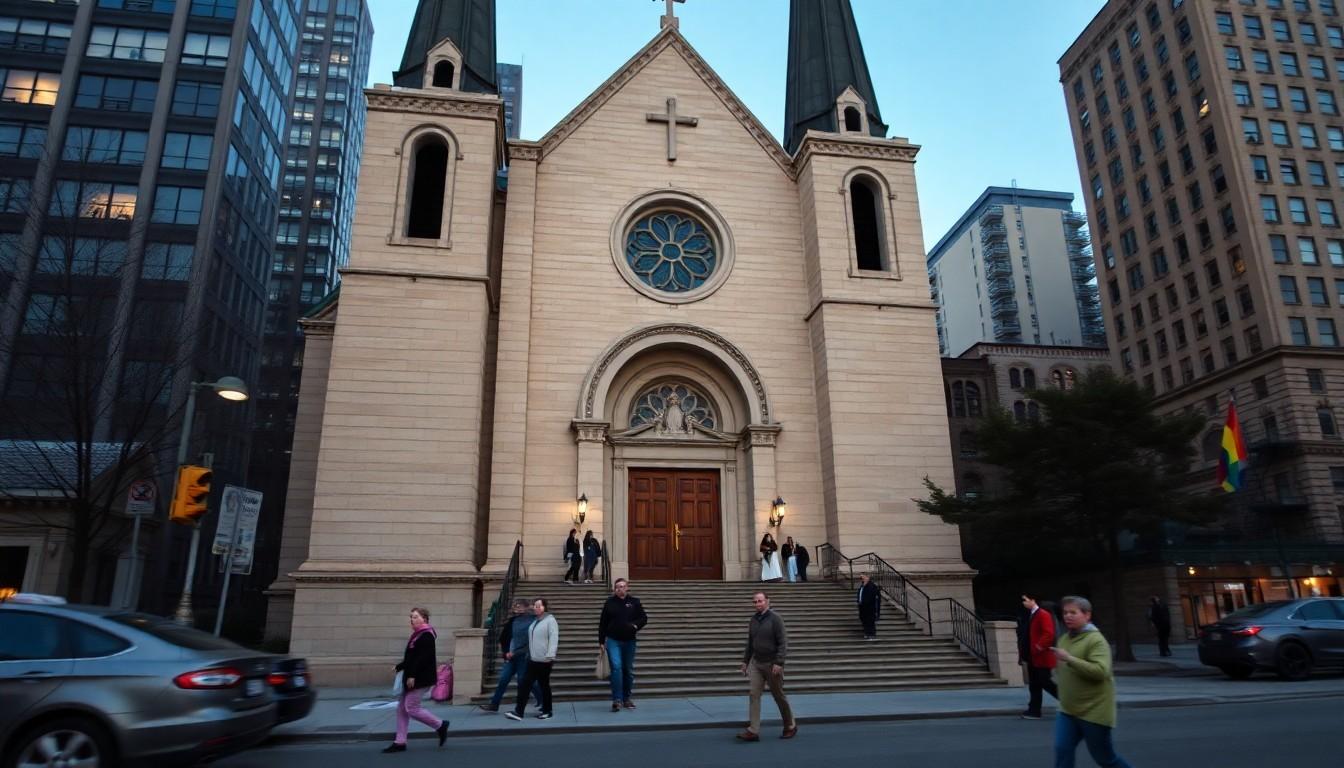
Pilgrims have gathered in New York City for a three-day journey through LGBTQ Catholic history, linking prayer, parish life and the HIV/AIDS crisis. Organised by Outreach, the September pilgrimage used the shape of the Paschal Triduum to explore places of loss, courage and renewal, from the West Village to Manhattan’s historic churches.
Essential Takeaways
- Three-day structure: The pilgrimage followed Holy Thursday, Good Friday and Holy Saturday themes before concluding with Sunday Mass.
- History on foot: Stops included the AIDS Memorial, former Catholic care sites and the Stonewall Inn.
- Parish voices: Clergy, religious sisters, ministry leaders and LGBTQ Catholics shared personal memories and local history.
- A crisis remembered: Speakers reflected on St Vincent’s Hospital and the pastoral response to HIV/AIDS in New York.
- Community remains central: Prayer, music and fellowship brought pilgrims together with more than 150 people at a regional gathering.
A pilgrimage designed to change the traveller
New York can feel overwhelming at street level, all traffic, towers and restless movement. Yet this pilgrimage invited participants to slow down and notice the quieter stories held by its churches, hospitals and neighbourhood corners.
According to Infovaticana, the journey was announced as a new pilgrimage for LGBTQ Catholics following an earlier Rome gathering. The idea was less about sightseeing than about allowing New York’s religious and social history to reshape the people walking through it.
That distinction matters. A pilgrimage isn't simply a religious tour with better footwear. It asks participants to hold joy and grief together, and this one placed LGBTQ Catholic experience at the centre of that encounter.
Why the Paschal Triduum shaped the route
The organisers used the rhythm of the Paschal Triduum as a framework. The first day centred on the Eucharist and unity, while the second turned towards suffering, memory and the cross. The later stages focused on waiting, witness and the possibility of new life.
The approach gave the weekend a clear emotional shape. Rather than presenting history as a neat timeline, it encouraged pilgrims to move through it gradually, with space for prayer and conversation.
Coverage from Advaticanum described the event as part of Outreach's wider work with LGBTQ Catholics. That broader context helps explain why the pilgrimage combined formal worship with testimony, local history and communal reflection.
The West Village became a living memorial
The most powerful section unfolded around St Francis Xavier Church and the West Village. Parish representatives discussed the church's LGBTQ ministry, its relationship with Dignity and the tensions that marked Catholic life during the 1980s and 1990s.
Pilgrims then followed a Stations of the Cross route through several significant locations. The AIDS Memorial, the former site of St Vincent's Hospital, the former Gift of Love hospice and the Stonewall Inn each carried a different weight. Together, they formed a map of illness, care, activism, faith and remembrance.
Dignity New York's account of its pastoral care and AIDS ministry adds important context to that period. For many people, Catholic communities were not abstract institutions but places where practical support, companionship and dignity could make an unbearable time slightly less lonely.
St Vincent's story shows the human cost
At Fordham University's Lincoln Center campus, Sister Karen Helfenstein shared memories from her years at St Vincent's Hospital, which became a crucial centre during New York's AIDS crisis. Her reflections connected institutional decisions with the intimate realities of caring for patients and families.
The hospital's story also shows why this history still needs careful telling. Public fear, prejudice and uncertainty shaped the early response to HIV/AIDS, while nurses, chaplains, religious communities and volunteers often worked in conditions that demanded extraordinary steadiness.
The pilgrimage's organisers placed these memories alongside prayer rather than treating them as a museum display. That choice feels significant: remembrance becomes more than looking back when it also asks what compassion should look like now.
Parish life offered a glimpse of what comes next
The journey continued at the Church of St Paul the Apostle, where speakers discussed the parish's LGBTQ ministry and the changes that followed advances in HIV treatment. A regional gathering later brought pilgrims together with local parishioners for prayer, singing and conversation.
The final movement led to St Ignatius of Loyola, where pilgrims joined the wider parish community for Solemn Mass. It was a fitting close, shifting attention from the past towards belonging in the present.
The event also suggests a wider trend in Catholic life: people increasingly want history told by those who lived it, not only by official timelines. That can make worship feel more grounded, especially for communities whose experiences have too often been left at the margins.
What this kind of pilgrimage can teach visitors
For anyone considering a similar LGBTQ Catholic history pilgrimage in New York, the most useful preparation is simple. Read the local history beforehand, leave room for silence and expect the emotional pace to be slower than a conventional city break.
Comfortable shoes help, but so does a willingness to listen. Churches, memorials and public landmarks can look familiar in photographs, yet the stories attached to them may change how you see the entire neighbourhood.
As the Associated Press has reported in wider coverage of the HIV/AIDS era, memory remains closely tied to questions of public health, stigma and community care. New York's pilgrimage placed those questions inside a living faith tradition, where grief and hope could share the same pew.
It's a small but meaningful reminder that walking together can be its own form of prayer.
Source Reference Map
Story idea inspired by: [1]
Sources by paragraph: