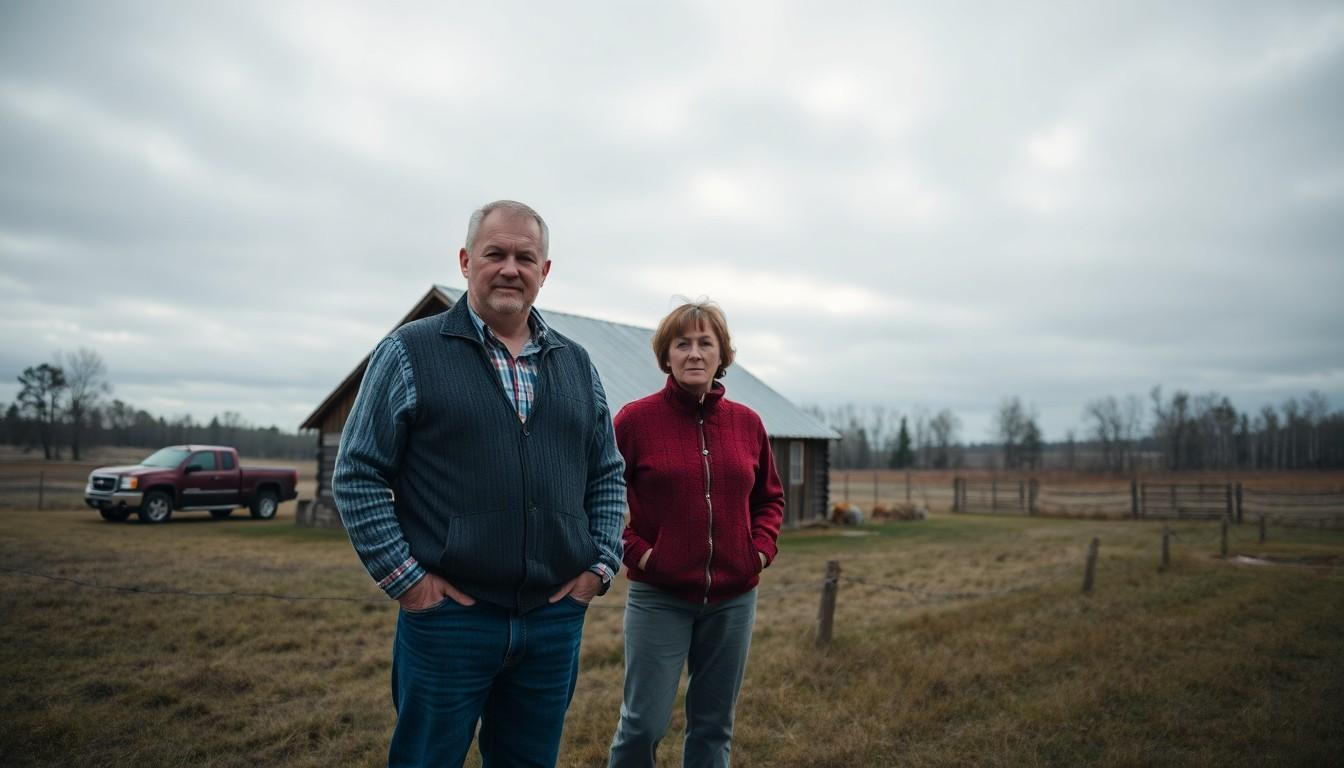
Viewers are discovering a striking Finnish documentary about bisexuality, marriage and sexual honesty in rural northern landscapes. Markku Heikkinen's Arctic Circle of Lust, also known as Pohjoinen intohimo, follows farmer Petri and his wife Anu as they negotiate desire, trust and safer sex in a relationship that refuses neat labels.
Essential Takeaways
- A personal story: The film follows Petri, a bisexual potato farmer, and Anu, his wife.
- An unusual setting: Northern Finnish countryside provides a stark backdrop for private lives often kept hidden.
- Open relationship, carefully negotiated: Anu accepts Petri's relationships with men, although she doesn't want additional partners herself.
- Safer-sex warning: The couple's experience with chlamydia underlines the importance of condoms and regular testing.
- A wider conversation: The documentary explores secrecy, identity and whether conventional relationship models fit everyone.
A quiet landscape, a complicated love story
The most arresting thing about Arctic Circle of Lust is the contrast between its setting and its subject. Against empty northern roads, forests and sauna interiors, the documentary opens up a candid conversation about bisexuality, marriage and sex.
At its centre is Petri, a man in his fifties who has understood his attraction to both women and men since he was a teenager. The film, directed by Markku Heikkinen, presents his life not as a tidy coming-out story, but as an ongoing negotiation involving desire, loyalty and the practical realities of partnership. Festival and distributor descriptions position the documentary as an intimate portrait of lives that have often remained out of public view. According to the Finnish Foundation for Cultural Promotion catalogue, the film examines a hidden subculture in the far north. [2]
Petri is married to Anu, whom he knew when they were younger. Their relationship is affectionate, but it isn't built on pretending that one person can meet every possible need. That frankness gives the film its emotional charge, even when the conversations become uncomfortable.
Anu's acceptance isn't the same as a free pass
Anu is willing to let Petri have relationships with men, but she doesn't want to join him or pursue other partners herself. That distinction matters. The film isn't presenting non-monogamy as a magic solution, rather it shows how couples have to set boundaries that work for them.
There are still tensions. Petri had previously concealed his sexuality in a marriage to a woman, while his relationship with Anu is based on greater openness. He wants honesty, but honesty doesn't remove the possibility of hurt, jealousy or disagreement. It simply gives the couple a better chance of dealing with those feelings in the open.
The documentary's festival presentation highlights this tension between private longing and the expectations surrounding marriage. CPH:DOX describes the film as a close look at desire and secrecy in a remote community, where social visibility can feel both precious and risky. [3]
The unromantic reality of safer sex
One of the film's most sobering turns comes when Petri's unprotected sex with a male partner leads to Anu contracting chlamydia. It's a reminder that relationship agreements need practical safeguards, not just emotional understanding.
Anu's experience, including an unpleasant course of treatment, brings the issue down to earth. Conversations about openness can sound liberating in theory, but trust also means being honest about partners, testing and protection every time. Passion may be spontaneous, but sexual-health precautions need to be prepared in advance.
For viewers, the lesson is straightforward: condoms, regular screening and prompt disclosure are essential, particularly when partners have agreements that extend beyond a closed relationship. The film's frankness is useful precisely because it doesn't airbrush away the consequences.
Dating apps reveal a hidden network
Petri uses apps including Grindr and Kik to meet men, and the documentary follows some of those encounters. The interactions range from direct, sex-focused messages to quieter meetings involving saunas, conversation and time outdoors.
That variety matters because it challenges the assumption that bisexual men in long-term relationships fit one simple pattern. Some meetings are casual, some appear more companionable, and others take place within a loose network of men who have spent years keeping their sexuality private.
A review published by Gloria's film coverage describes Pohjoinen intohimo as a revealing entry in the programme around CPH:DOX 2026, with the northern environment adding atmosphere rather than simply serving as scenery. [4] The result sounds less like a conventional dating-app exposé and more like a glimpse into a community that has existed quietly alongside everyday life.
Can bisexuality and marriage comfortably coexist?
Petri's question about whether bisexual people are naturally suited to relationships is one of the film's most intriguing ideas. It isn't answered with a slogan, and that's probably for the best. Sexual orientation doesn't dictate one relationship structure, just as marriage doesn't erase attraction to anyone else.
What Arctic Circle of Lust does show is that honesty has a cost, but secrecy can cost more. Petri's earlier silence damaged the possibility of a fully open partnership, while his life with Anu depends on continuing conversations about freedom, responsibility and care.
The documentary also points to a wider change in how audiences talk about sexuality. Bisexuality is increasingly visible, yet bisexual people can still be misunderstood by both straight and queer communities. A film that places those questions in a recognisably ordinary marriage, complete with chores, worry and awkward health conversations, makes the subject feel immediate rather than abstract.
Why this documentary feels timely
There are no easy heroes here, and that makes the story more credible. Petri is open, but he also makes mistakes. Anu is remarkably understanding, but she has limits and expectations of her own. Their relationship is neither a model for everyone nor a cautionary tale; it's a negotiated life between two specific people.
The Finnish cinema listings and programme pages present the film as a work shaped by director Markku Heikkinen's close access to its subjects. [5] That access appears to be the source of both its intimacy and its unease. Viewers aren't simply told that rural queer lives exist; they're invited into the awkward, funny and occasionally painful details.
For anyone looking for a thoughtful documentary about bisexuality in marriage, this is likely to linger after the credits. The snowy landscapes may be quiet, but the questions are anything but.
A candid film about desire, trust and the work of making honesty livable.
Source Reference Map
Story idea inspired by: [1]
Sources by paragraph:
- Paragraph 1: [2], [3]
- Paragraph 2: [2], [5]
- Paragraph 3: [3], [4]
- Paragraph 4: [4], [5]
- Paragraph 5: [5], [6]
- Paragraph 6: [6], [7]
- Paragraph 7: [2], [3]
- Paragraph 8: [4], [7]
- Paragraph 9: [3], [5]
- Paragraph 10: [2], [4]
- Paragraph 11: [5], [6]
- Paragraph 12: [3], [7]
- Paragraph 13: [2], [5]
- Paragraph 14: [4], [6]
- Paragraph 15: [5], [7]
- Paragraph 16: [2], [3]
- Paragraph 17: [4], [5]