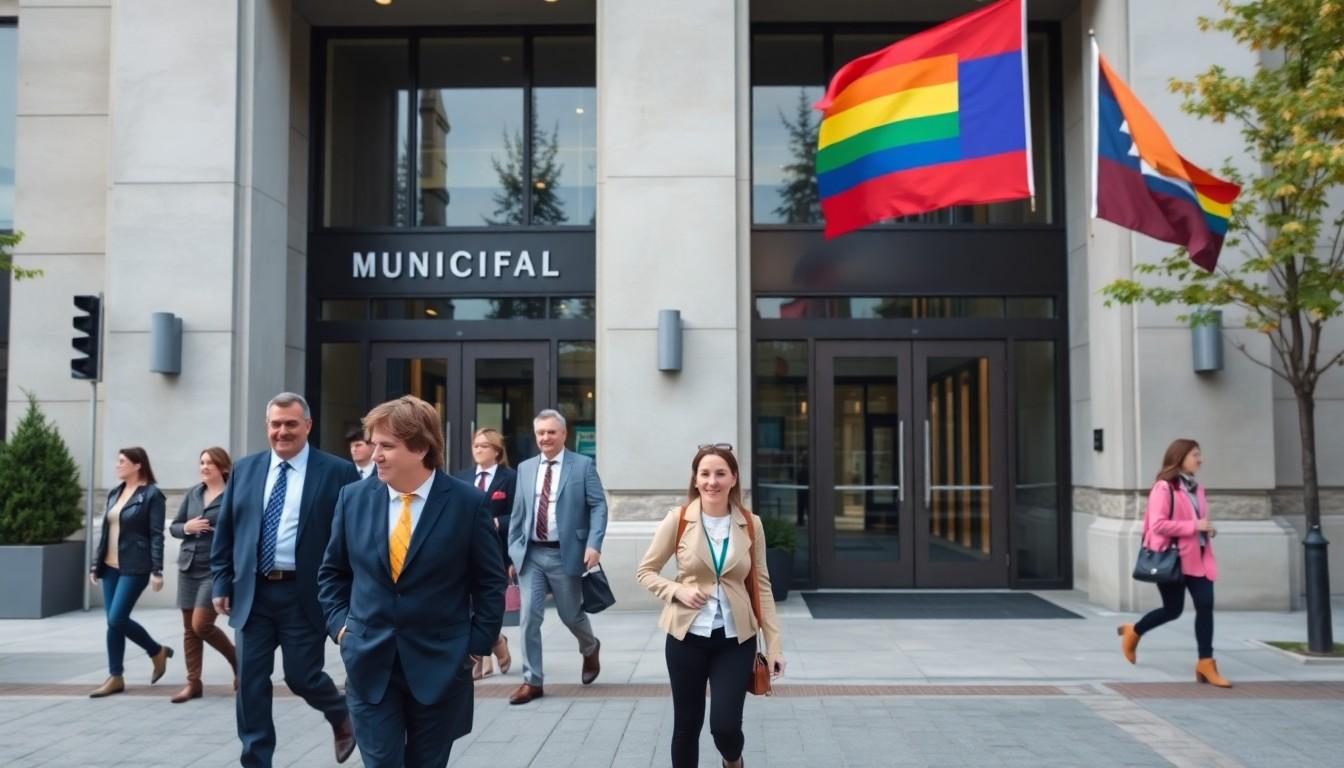
Voters across Canada are heading into a busy election season, and transgender rights are once again being pulled into campaign debates. The bigger question is whether progressive candidates will simply respond to conservative attacks, or offer practical, positive policies that treat queer and trans people as ordinary voters with everyday concerns.
Essential Takeaways
- A crowded election calendar: Provincial, municipal and school board contests are creating several opportunities for candidates to shape public debate.
- Trans issues are being amplified: Campaigns increasingly feature schools, sport, pronouns and healthcare, even when these aren't top concerns for most voters.
- Silence carries risks: Progressive politicians can leave the conversation to social conservatives when they offer only broad statements of support.
- Positive policy matters: Funding for healthcare, inclusive schools and LGBTQ2S+ community services would move debate beyond defensive politics.
- Voters can ask sharper questions: Candidates should explain what they'll do, not just whether they oppose discrimination.
The election calendar is crowded, and so is the rhetoric
Canada's autumn elections are bringing a familiar political sideshow back into view. Alongside debates about housing, healthcare, transport and local services, candidates are once again arguing over what children learn, which teams they join and how schools support gender-diverse pupils.
That contrast matters. These are emotionally charged subjects, with the power to produce anxious headlines and heated social media exchanges, but they aren't necessarily the issues shaping most household decisions. Still, once a campaign turns them into symbols of family safety or social order, they can become hard to ignore.
The current debate is also arriving as conservative parties in British Columbia compete for attention and direction. CBC News has reported on the province's shifting right-wing landscape and leadership contest, a reminder that internal party battles can push identity issues towards the centre of the political stage.
Why trans rights keep becoming a campaign battleground
The pattern is familiar: an issue that affects a relatively small group is presented as a threat to everyone. School pronouns, trans participation in sport and gender-affirming care for young people are then discussed as though they represent a sweeping social emergency.
That framing can be politically useful because it turns complicated questions into simple emotional choices. Parents are encouraged to picture danger, while candidates can present themselves as defenders of common sense. The details, evidence and lived experiences of trans people often get squeezed out in the process.
British Columbia's conservative realignment has helped keep that conversation alive. Reporting from CBC News on the province's party leadership dynamics illustrates how competition on the right can reward sharper positioning, particularly when parties are trying to distinguish themselves from one another.
Progressive silence isn't always neutral
There is a reasonable case for politicians refusing to let every campaign be dictated by provocation. If candidates spend all their time answering claims about trans children, they can reinforce the idea that those claims deserve priority over the cost of living or strained public services.
But silence has a downside. When one side repeatedly defines trans people as a problem, a vague promise to be fair can sound less like solidarity and more like hesitation. It also leaves voters without a clear sense of what a supposedly progressive government would actually protect or improve.
The lesson from British Columbia's political shifts is that parties don't operate in a vacuum. As CBC News has documented, changes in conservative leadership and party structure can alter the issues that receive attention, even before voters have made their choice.
What a more useful platform could look like
A stronger approach would focus less on rebutting culture-war slogans and more on practical commitments. That could include better access to gender-affirming healthcare, properly funded school support, inclusive library collections, anti-bullying programmes and stable funding for LGBTQ2S+ community centres.
This doesn't mean every candidate needs a long manifesto on gender policy. It means they should be ready to answer straightforward questions. Will local schools have the resources to support all pupils? Will healthcare be accessible without punishing delays? Will public services treat trans residents with dignity?
Those are tangible concerns, unlike the abstract warnings that dominate many campaign speeches. They also give voters something useful to compare, particularly when candidates are competing for school boards, councils or provincial office.
Voters can push the conversation forward
Journalists, community groups and voters all have a role in changing the terms of the debate. Instead of asking only whether a candidate supports or opposes a controversial slogan, they can ask what funding, training or safeguards that candidate would put in place.
That approach is especially important for progressive parties. Simply promising not to roll back rights may be better than open hostility, but it sets an unnecessarily low bar. People deserve politics that recognises their needs before a crisis or backlash forces the subject onto the agenda.
For queer and trans voters, the difference between passive protection and active support is more than a matter of wording. As Canada's political landscape shifts, clear commitments can show whether a candidate sees trans people as neighbours and constituents, rather than as a convenient campaign prop.
The next election cycle won't settle every argument, but it can decide who gets to define the conversation. A calmer, more practical debate would be a welcome change for everyone, including the people most often placed at its centre.
It's time to treat trans voters as voters, not political shorthand.
Source Reference Map
Story idea inspired by: [1]
Sources by paragraph:
- Paragraph 1: [2], [3]
- Paragraph 2: [4], [5]
- Paragraph 3: [6], [2]
- Paragraph 4: [3], [4]
- Paragraph 5: [5], [6]
- Paragraph 6: [2], [3]
- Paragraph 7: [4], [5]
- Paragraph 8: [6], [2]
- Paragraph 9: [3], [4]
- Paragraph 10: [5], [6]
- Paragraph 11: [2], [4]
- Paragraph 12: [3], [5]
- Paragraph 13: [6], [2]
- Paragraph 14: [4], [5]
- Paragraph 15: [3], [6]
- Paragraph 16: [2], [3]