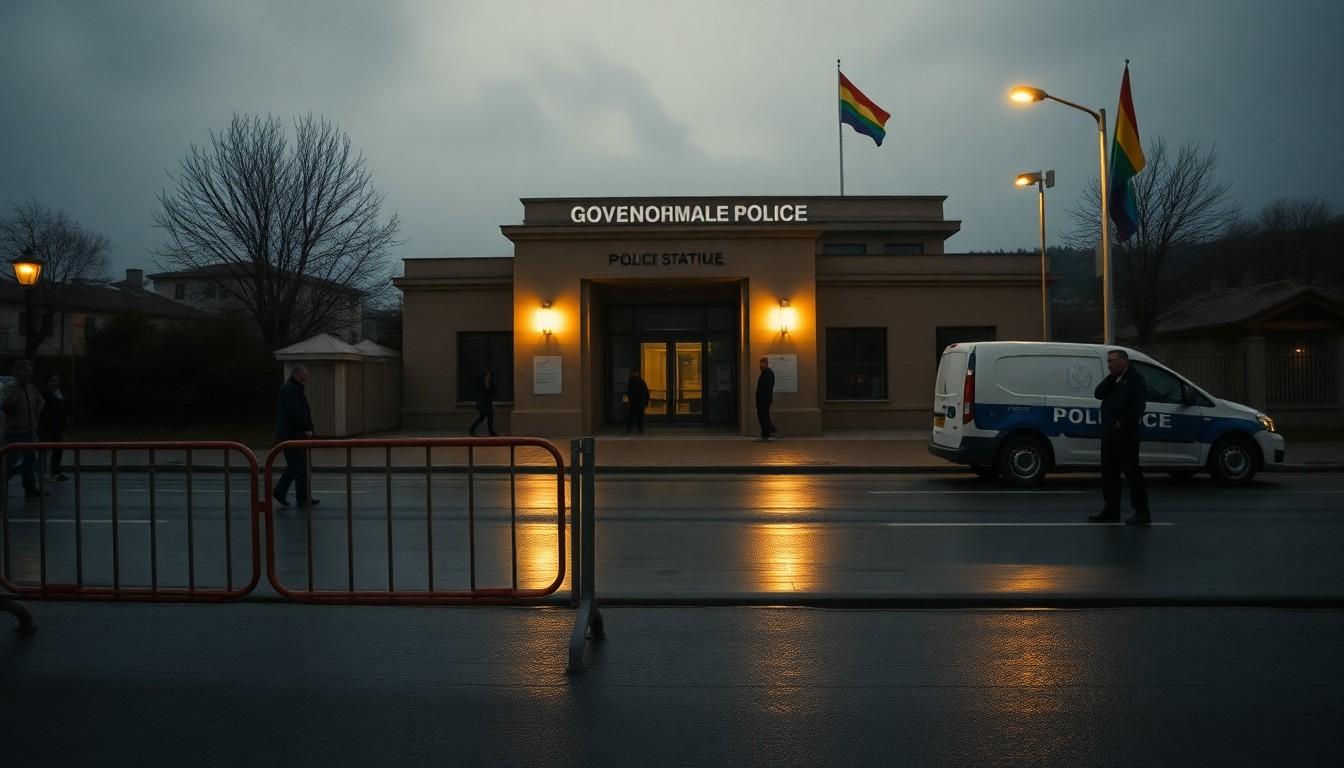
Activists say Turkey’s latest LGBTQ crackdown is moving beyond hostile rhetoric, with arrests, raids and online restrictions squeezing both queer communities and wider civil society. The campaign’s language of “family protection” has become a powerful political tool, while supporters warn that international statements mean little to detainees facing harsh, isolating conditions.
Essential Takeaways
- A sharper turn: Anti-LGBTQ rhetoric has increasingly become part of Turkey’s mainstream political messaging.
- Wider pressure: Raids and digital restrictions have affected activists, journalists, rights groups and opposition voices.
- Family is contested: LGBTQ people and allies are building chosen families and support networks outside traditional structures.
- Online space is shrinking: Accounts and websites linked to LGBTQ organisations have faced blocking and censorship.
- International concern matters: But campaigners say public statements need sustained pressure and practical support.
Turkey’s LGBTQ crackdown is becoming institutional
The most striking change is the distance between political language and state action. Hostile speeches about LGBTQ people are no longer simply campaign rhetoric. They’re increasingly followed by investigations, raids, arrests and restrictions on organisations, venues and online platforms.
That shift has been building for years. Kaos GL documented widespread anti-LGBTQ propaganda in public life during the 2023 election period, when queer identities were repeatedly presented as a threat to children, family life and national values. The result was a political atmosphere in which prejudice could be framed as protection. (According to Kaos GL.)
Turkey’s approach once appeared more compatible with a reform-minded, European-facing agenda. But after the Gezi Park protests, worsening relations with the EU and a more nationalist political style, minorities increasingly became useful symbols of an alleged internal threat. The rhetoric has hardened, and the consequences now feel far more concrete.
Why ‘family’ has become the battleground
The word “family” sounds comforting, but in this context it’s doing heavy political work. Government messaging often treats the family as a heterosexual, reproductive institution, leaving little room for same-sex couples, trans people or the networks created by those rejected by their relatives.
That narrow definition doesn’t match everyday life. LGBTQ people have long relied on friends, neighbours, community groups and older activists for safety, housing, emotional support and practical care. For some trans people, these chosen families aren’t an abstract idea. They’re the people who answer the phone, offer a sofa or turn up when biological relatives don’t.
Election reporting by Kaos GL showed how LGBTQ identities were used as a political football in the run-up to Turkey’s vote. The tactic was effective because it linked private lives to anxieties about national decline, childhood and social order. Yet it also exposed the contradiction at the heart of the argument: families already exist in many forms, whether the state recognises them or not. (According to Kaos GL.)
The pressure reaches beyond LGBTQ organisations
There’s a wider lesson here for Turkey’s opposition. When LGBTQ groups, Kurdish organisations, feminists, student activists or independent journalists are targeted separately, the pressure can look like a series of isolated disputes. Taken together, however, they suggest a broader effort to reduce the space in which citizens can organise and criticise those in power.
The digital dimension is especially important. In 2025, Turkey blocked the Instagram account of Kaos GL, one of the country’s longest-established LGBTQ organisations, a move that made it harder for supporters to access information and communicate publicly. Other reports have described restrictions affecting rights groups, journalists and social media accounts. (Al-Monitor reported on the Kaos GL block.)
That fragmentation is precisely what makes repression effective. Organisations become more cautious, journalists think twice before publishing, and communities are pushed into defending themselves alone. Meanwhile, Turkey’s biggest LGBTQ crackdown in years reportedly targeted activists, groups and venues, showing how quickly online hostility can spill into physical spaces. (According to The Amargi.)
What happens inside detention matters
International criticism can sound significant from a press conference, but it feels very different inside a cell. Friends of detained activists have described reports of people being held alone, denied basic washing facilities and clean clothing for days, and allowed limited time outdoors.
Those details are stark because they strip away the grand language of diplomacy. A detainee isn’t thinking about whether a government statement used sufficiently strong wording. They’re wondering when they’ll see a lawyer, contact family, shower or learn how long they’ll remain behind bars.
Digital repression adds another layer of isolation. Kaos GL has reported restrictions affecting LGBTQ groups and other civil society actors around politically sensitive dates, illustrating how authorities can limit communication precisely when public scrutiny matters most. (According to Kaos GL.)
Solidarity needs to last longer than the news cycle
European governments and institutions have expressed concern about arrests, legal action and restrictions on civil society. That attention is welcome, but campaigners argue that a single statement won’t protect people once the headlines move on.
The most useful response is sustained rather than symbolic. Governments, media organisations, academics, rights groups and funders can keep documenting cases, support threatened organisations and press for due process. International LGBTQ groups also need to resist the temptation to withdraw when working in Turkey becomes more difficult or risky.
There’s a human cost to leaving movements alone at the moment they’re under greatest pressure. Turkey’s LGBTQ community has survived years of bans, hostility and intimidation. What happens next may depend on whether solidarity becomes a continuing practice, rather than a brief expression of concern.
It’s a small word with a large consequence: family should protect people, not be used to silence them.
Source Reference Map
Story idea inspired by: [1]
Sources by paragraph:
- Paragraph 1: [2], [4]
- Paragraph 2: [5], [7]
- Paragraph 3: [2], [4]
- Paragraph 4: [3], [5]
- Paragraph 5: [4], [5]
- Paragraph 6: [3], [6]
- Paragraph 7: [5], [7]
- Paragraph 8: [6], [7]
- Paragraph 9: [2], [3]
- Paragraph 10: [4], [5]
- Paragraph 11: [3], [6]
- Paragraph 12: [5], [7]
- Paragraph 13: [2], [4]
- Paragraph 14: [3], [5]
- Paragraph 15: [6], [7]