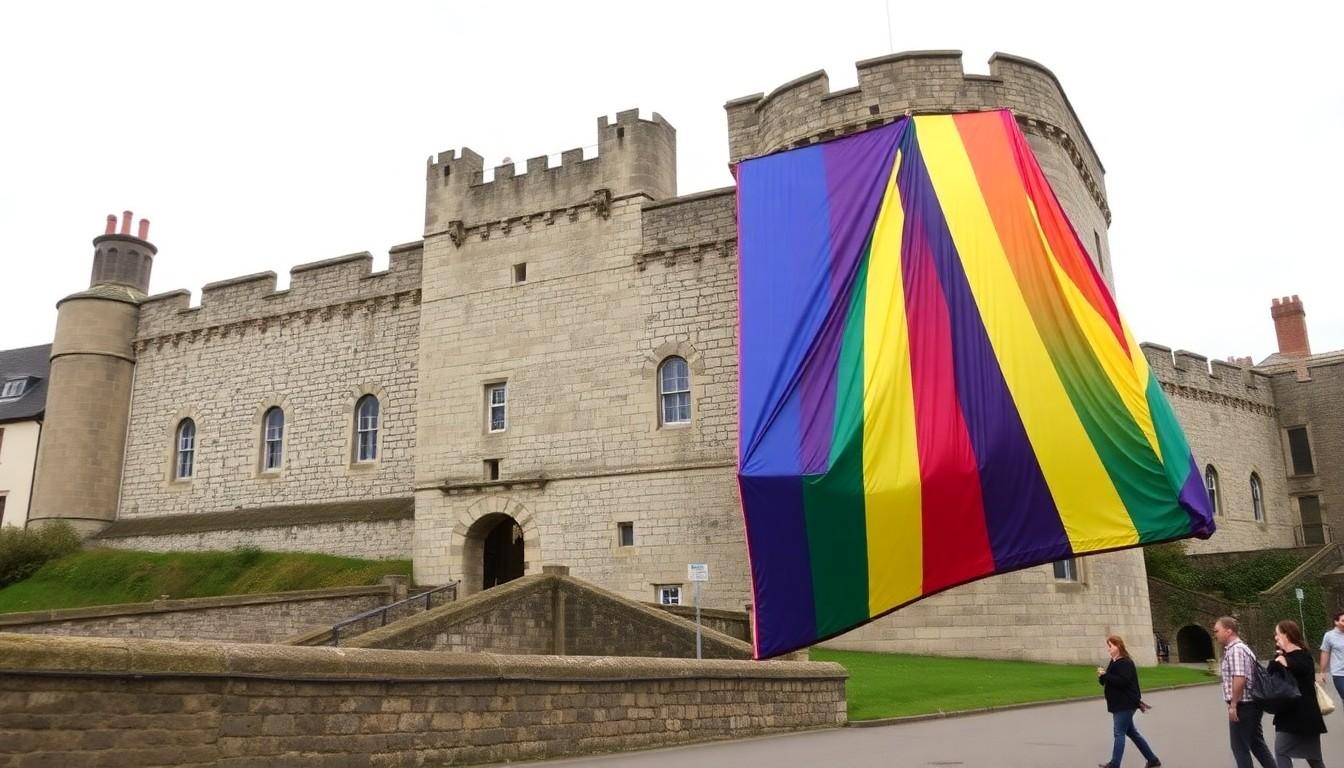
A giant Pride flag wrapped around Totnes Castle has put Devon’s four-day festival firmly in the spotlight, dividing opinion while giving organisers a striking way to say queer people belong in the town’s history and future. The display has prompted criticism, but it’s also become the visual focus of an ambitious local arts programme.
Essential Takeaways
- A bold installation: The “Capture the Castle” flag was wrapped around Totnes Castle during the Pride festival.
- Mixed local reaction: Some residents criticised the display, while supporters welcomed its message of belonging.
- A wider programme: Totnes Pride promoted more than 40 arts and cultural events around the installation.
- Community-led planning: The flag was loaned by Torbay Pride, with English Heritage offering planning advice.
- Economic boost: Supporters say the festival can strengthen Totnes’s profile and benefit local businesses.
One flag, one very visible message
For a short time, Totnes Castle became a giant backdrop for queer visibility. The rainbow fabric was impossible to miss, giving the ancient stone building a bright, unmistakably modern edge during the town’s four-day Pride celebration.
Organisers called the installation “Capture the Castle”, explaining that it represented the idea that queer people have always been part of the community and will continue to be. It’s a simple message, but the setting gave it extra weight: history, quite literally, was wearing Pride colours.
The PinkNews reported that the display triggered angry responses from some residents, including complaints that it was inappropriate and diminished the castle’s historical importance. Others saw the same image differently, arguing that public spaces should reflect the people who live in them now. (Sources: The PinkNews, Totnes Pride.)
Why the display divided residents
The criticism largely centred on heritage and symbolism. Some social media users objected to the flag covering a building associated with centuries of Norman history, while others dismissed the installation outright.
That tension is familiar whenever Pride moves into prominent civic or historic spaces. A temporary display can feel disruptive by design, yet that disruption is often the point. Totnes Pride’s programme presents the festival as more than a parade or single photo opportunity, with events spanning culture, performance and community activity. (Sources: The PinkNews, Totnes Pride programme.)
For supporters, the flag offered a moment of recognition rather than an attempt to rewrite the past. One response shared in the coverage imagined a world where Pride was no longer needed, but said that, for one morning, the castle helped tell local queer people they belonged there too. (Sources: The PinkNews, Totnes Pride.)
Totnes Pride is bigger than the photograph
The castle image may be the festival’s most shareable moment, but organisers say the event was built around a much broader programme. Totnes Pride described more than 40 arts and cultural events, suggesting a festival designed to draw people into the town rather than simply pass through it.
That wider approach matters. Pride events increasingly combine celebration with theatre, music, talks, workshops and local partnerships, creating reasons for visitors to stay longer and spend money with independent businesses. The result is less a single-day spectacle and more a cultural weekend with a community heartbeat. (Sources: The PinkNews, Totnes Pride programme, Totnes Pride.)
The official Totnes Pride information also invites people to take part, support the organisation and engage with its work beyond the main festival. That makes the event feel rooted in ongoing local activity, rather than a colourful occasion that disappears once the bunting comes down. (Sources: Totnes Pride, Totnes Pride support information.)
Careful planning behind the colourful moment
Although the installation looked spontaneous and dramatic, organisers said it involved practical preparation. Ceri Goddard of Totnes Pride confirmed that the flag had been loaned by Torbay Pride, while English Heritage advised on planning.
That detail is worth noting because public displays on historic buildings require more than enthusiasm and a strong hoist. The arrangement had to balance visibility with the responsibilities that come with using a protected landmark, particularly one that carries such a strong sense of place. (Sources: The PinkNews, Totnes Pride.)
For anyone planning a similar event, the lesson is straightforward: involve the relevant heritage and site authorities early, clarify permissions, and make sure the installation is safe as well as photogenic. Even the most joyful idea needs a solid practical foundation.
Pride, place and the local economy
Caroline Voaden, the local Liberal Democrat MP, defended the festival and praised its scale, diversity and quality. She also linked it to Totnes’s wider identity as a centre for progressive arts and culture, while pointing to the potential benefits for the local economy.
That argument gives the debate another dimension. Pride is about rights, dignity and belonging, but it can also support hospitality, retail and tourism when visitors arrive for a full programme of events. A busy town centre, packed cafes and a lively arts schedule are tangible outcomes, even for people who don’t attend every festival event. (Sources: The PinkNews, Totnes Pride programme, Totnes Pride.)
Voaden also described the town as full of energy, fun and queer love, reinforcing the festival’s celebratory side. For many attendees, that may be the most important takeaway: not just being tolerated in a historic town, but being visible, welcomed and part of its public life. (Sources: The PinkNews, Totnes Pride.)
What happens after the flag comes down?
“Capture the Castle” will probably remain the defining image of this year’s Totnes Pride, but the more lasting impact may come from the conversations it started. The backlash underlines that public displays can still provoke strong reactions, while the support shows why visibility continues to matter.
Totnes Pride’s own programme and support channels point towards a festival with ambitions beyond one dramatic installation. If the event leaves behind stronger local connections, more cultural participation and a clearer sense of belonging, the flag will have done more than brighten the castle for a morning. (Sources: Totnes Pride, Totnes Pride programme, Totnes Pride support information.)
It's a bold reminder that local history is still being made, one visible act of belonging at a time.
Source Reference Map
Story idea inspired by: [1]
Sources by paragraph: