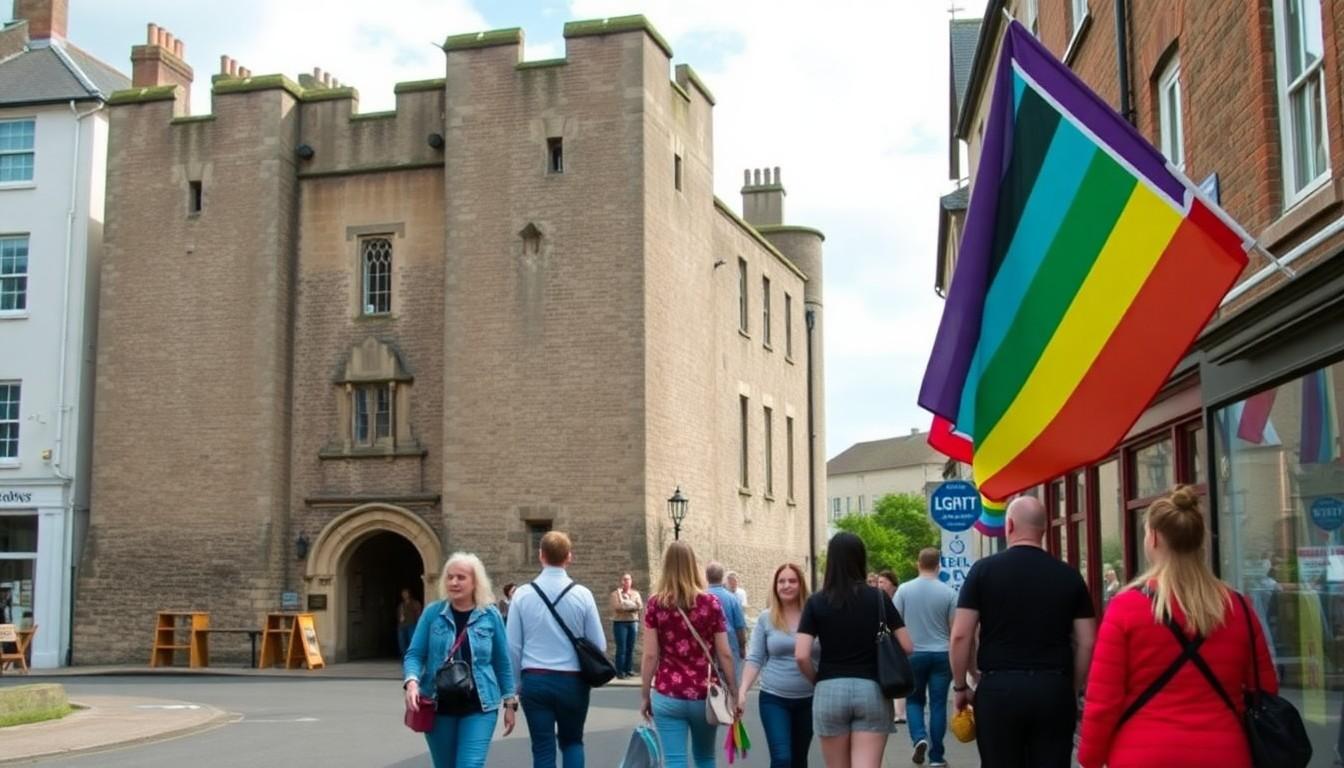
Visitors gathered in Totnes, Devon, as a 150-metre rainbow flag was wrapped around the town's ancient Norman castle during its Pride festival. The striking display celebrated LGBTQ+ history and culture, but also prompted criticism from religious campaigners and political figures, turning a colourful community event into a wider argument about public spaces, heritage and inclusion.
Essential Takeaways
- A dramatic centrepiece: Around 400 people watched 30 local LGBTQ+ participants unfurl the huge flag.
- A historic setting: Totnes Castle dates from around 1087 and is managed by English Heritage.
- A bigger festival: The four-day programme included more than 40 arts, music and cultural events.
- A divided response: Supporters praised the display's message of equality, while critics called it unnecessary and political.
- Careful planning mattered: Organisers said rehearsals and logistical work were needed before the flag could be displayed safely.
Totnes Castle became the festival's most visible stage
The image was hard to miss. A vast rainbow flag stretched across Totnes Castle, bringing bright colour to the stone remains of a medieval motte-and-bailey stronghold and giving this year's Pride celebration an unmistakable focal point.
According to reports carried by several news outlets, around 400 spectators watched as 30 LGBTQ+ people from the town helped unfurl the 150-metre flag. The event, called "Capture the Castle", was designed as a public celebration rather than a private ceremony.
For a town known for its alternative culture and lively community events, the visual made sense. It was bold, theatrical and just a little provocative, which is often where public festivals find their energy. [2], [3]
Why the Norman castle carries such symbolic weight
Totnes Castle was founded around 1087, shortly after the Norman Conquest, to help control a crossing over the River Dart. Its survival gives the event an unusual backdrop: a building associated with authority and defence became the setting for a modern statement about visibility and belonging.
English Heritage supported the planning process, according to comments attributed to Totnes Pride organiser Ceri Goddard. That backing was important because displaying a flag of this scale around a protected historic site required more than enthusiasm and good weather.
The organisers also said the castle spectacle was only one part of a wider programme. More than 40 events were planned across four days, with music, performance, local artists and community activities helping to place the flag in a broader cultural context. [4], [5]
Supporters saw a message about belonging
For Totnes Pride, the display was intended to underline that LGBTQ+ people have long been part of the town's story and remain part of its future. The organisers described Totnes as a diverse community and said the festival was built around its connection to live music, dancing, local creativity, the countryside and the River Dart.
That framing matters. Pride events can sometimes be reduced to a single parade or a collection of colourful photographs, but local organisers clearly wanted this festival to feel rooted in the town rather than imported from elsewhere.
Liberal Democrat MP Caroline Voaden defended the celebration, praising its scale and variety while describing it as a clear statement of equality and inclusion. Supporters argued that public heritage sites belong to the communities around them, not just to the past. [3], [6]
Critics objected to the symbolism
The display also attracted sharp criticism. Christian Concern chief executive Andrea Minichiello Williams argued that the town's public spaces had been taken over by an ideology, while Restore Britain leader Rupert Lowe dismissed the spectacle in strongly negative terms.
Those reactions show why the event became more than a local festival story. The debate wasn't really about the practical mechanics of moving a flag around a castle. It was about who gets to shape the meaning of civic places, and whether public celebration can ever be separated from politics.
Of course, a giant rainbow flag was never likely to pass unnoticed. It was designed to be seen, and that visibility is precisely why supporters welcomed it and opponents objected to it. [4], [5], [6]
What the display says about modern Pride events
Pride organisers across Britain are increasingly combining celebration with local history, arts and community programming. In Totnes, the castle provided a powerful visual hook, but the festival's organisers stressed that the wider programme was just as important.
There was also a practical lesson in the planning. Large-scale displays at historic sites need rehearsals, careful handling and cooperation with heritage bodies. The soft fabric may have looked effortless once it was in place, but the moment depended on detailed preparation behind the scenes.
Whether visitors saw the event as inspiring, overblown or simply memorable, it succeeded in starting a conversation. And for a small Devon town, that kind of attention could help the festival grow again next year. [2], [3]
It's a colourful reminder that old landmarks can still host very modern debates.
Source Reference Map
Story idea inspired by: [1]
Sources by paragraph: