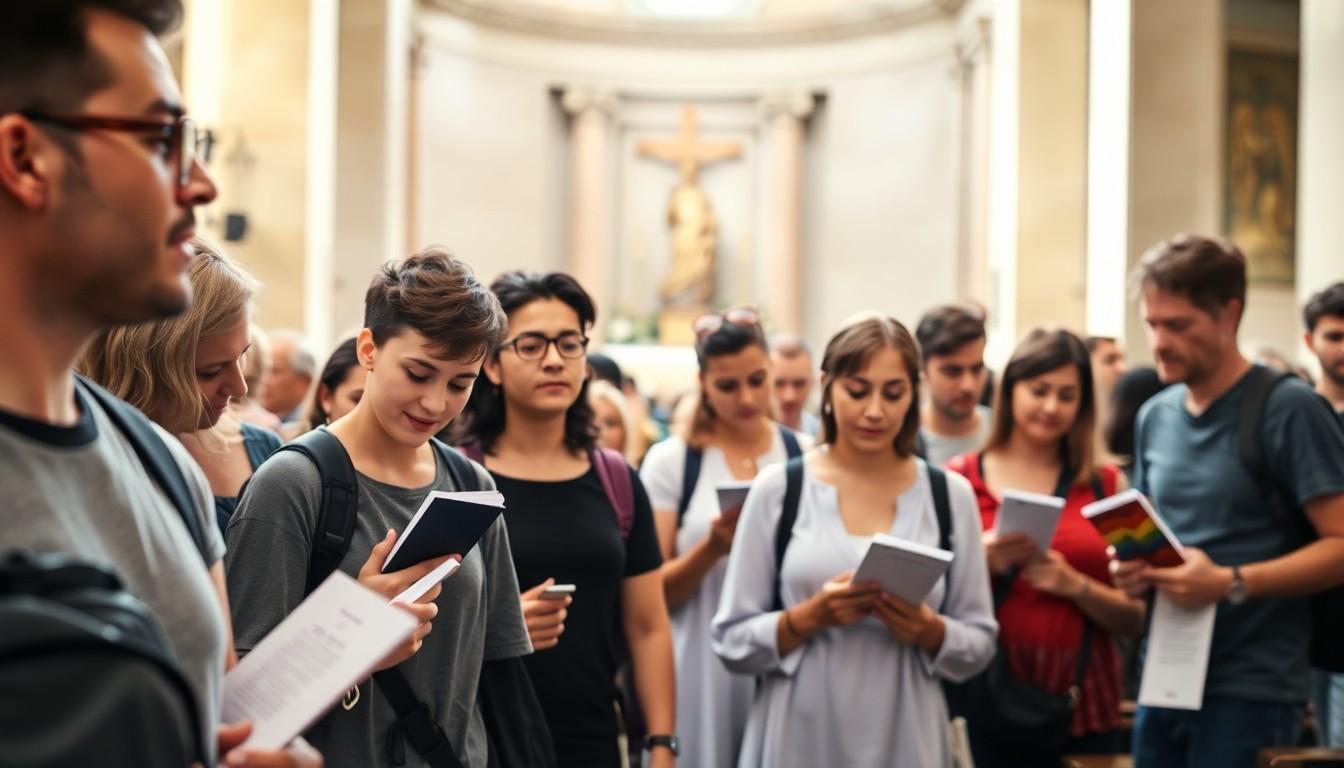
LGBTQ+ Catholics are reflecting on what the Rome Jubilee pilgrimage meant, and where its spirit should lead next. The gathering brought more than 1,400 people together in prayer, conversation and celebration, creating a powerful sense of belonging. Now, one participant is urging the wider Church to turn that moving moment into lasting inclusion.
Essential Takeaways
- A global gathering: More than 1,400 LGBTQ+ people and allies took part in the Rome pilgrimage.
- A moment of welcome: The programme included Mass at the Church of the Gesu and passage through St Peter's Holy Door.
- Faith before argument: Luigi Testa says a personal relationship with Jesus should remain at the centre.
- Belonging takes patience: LGBTQ+ Catholics are encouraged to stay engaged without hiding who they are.
- Everyday witness matters: Parish life, Catholic groups and committed relationships can all become places of visible testimony.
A pilgrimage that felt bigger than Rome
The most striking detail of the LGBTQ+ Jubilee pilgrimage wasn't simply its scale. It was the emotional texture: singing, smiling faces, tears and the quiet relief of finding people who understood the journey. The event offered a rare sense of being seen within a tradition that many LGBTQ+ Catholics have found difficult to navigate. Rainbow Catholics' account of the pilgrimage similarly presents it as a shared expression of faith, solidarity and hope. [2]
Organised by La Tenda di Gionata, or Jonathan's Tent, the gathering brought people from across the world to Rome. Its programme included Mass at the Church of the Gesu, presided over by Bishop Francesco Savino, and ended with pilgrims passing through the Holy Door at St Peter's Basilica. That combination of ritual and community gave the pilgrimage a particular warmth: it was both deeply Catholic and unmistakably shaped by LGBTQ+ experience. [3]
What should happen after the Holy Door?
A pilgrimage can be moving, but its real test comes afterwards, when everyone returns home to ordinary parishes, family conversations and Sunday Mass. Luigi Testa's reflection argues that the grace of the gathering should not be treated as a beautiful memory sealed away in Rome. Instead, it should become a prompt for listening, honesty and practical participation. New Ways Ministry's earlier coverage of the pilgrimage also highlighted how strongly participants connected belonging with the future of LGBTQ+ Catholic life. [4]
That matters because inclusion is rarely created by one grand gesture. It grows through repeated encounters, patient conversations and people being allowed to contribute fully. The pilgrimage's emotional afterglow may fade, but the relationships formed there can still give local communities courage and direction. [5]
First direction: put encounter before rulebooks
Testa's first suggestion is spiritual rather than organisational. LGBTQ+ Christians, he argues, can remind the Church that faith begins with an encounter with Jesus, not merely with a list of moral positions. For people who have struggled with religious language used against them, that distinction is more than theological nuance. It can feel like the difference between being judged from a distance and being met as a whole person.
The point isn't to dismiss ethical questions. It is to resist allowing moral debate to crowd out compassion, prayer and the person at its centre. Memories from the pilgrimage suggest that many participants experienced faith most powerfully through welcome, shared worship and the simple comfort of not having to explain their existence at every turn. [3]
Second direction: stay, but don't disappear
Testa's second proposal asks LGBTQ+ Catholics to remain committed to the Church while refusing to erase themselves. That's a demanding balance. It recognises that belonging can involve disappointment, slow change and conversations that don't resolve neatly over one coffee or one parish meeting.
The idea also challenges the assumption that LGBTQ+ people must choose between authenticity and Catholic identity. Accounts of the pilgrimage describe participants carrying both parts of themselves openly, rather than treating sexuality and faith as competing passports. The Via Francigena story reported by New Ways Ministry makes a similar point through its picture of LGBTQ+ pilgrims walking, praying and sharing life on the road. [6]
Third direction: make visibility ordinary
The final suggestion is perhaps the most practical: be present in the everyday spaces of Catholic life. That means parishes, movements, associations and local groups, rather than only special events. It could involve volunteering, joining a choir, helping with youth work, taking part in parish discussions or simply becoming a familiar and trusted face.
Testa also points towards the witness of loving, fruitful relationships where that is possible. The emphasis is not on making a spectacle, but on allowing LGBTQ+ Catholics to be seen as committed Christians whose lives include service, friendship, devotion and love. Coverage before the Rome gathering showed how much anticipation had already gathered around the chance to celebrate those lives publicly. [7]
The next pilgrimage is local
The Rome gathering offered a vivid reminder that large celebrations can change how people see themselves. But the longer-term work will happen in quieter places: a parish hall, a family kitchen, a prayer group or a conversation after Mass. That is where broad statements about belonging either acquire substance or quietly disappear.
For LGBTQ+ Catholics, the message is hopeful but realistic. The journey isn't finished, and it won't always be comfortable. Still, the pilgrimage has given many people a shared memory, a stronger network and a language for imagining a Church where faith and LGBTQ+ identity don't have to be kept in separate rooms. [5]
It's a small step repeated in ordinary places that can keep a landmark pilgrimage alive.
Source Reference Map
Story idea inspired by: [1]
Sources by paragraph: