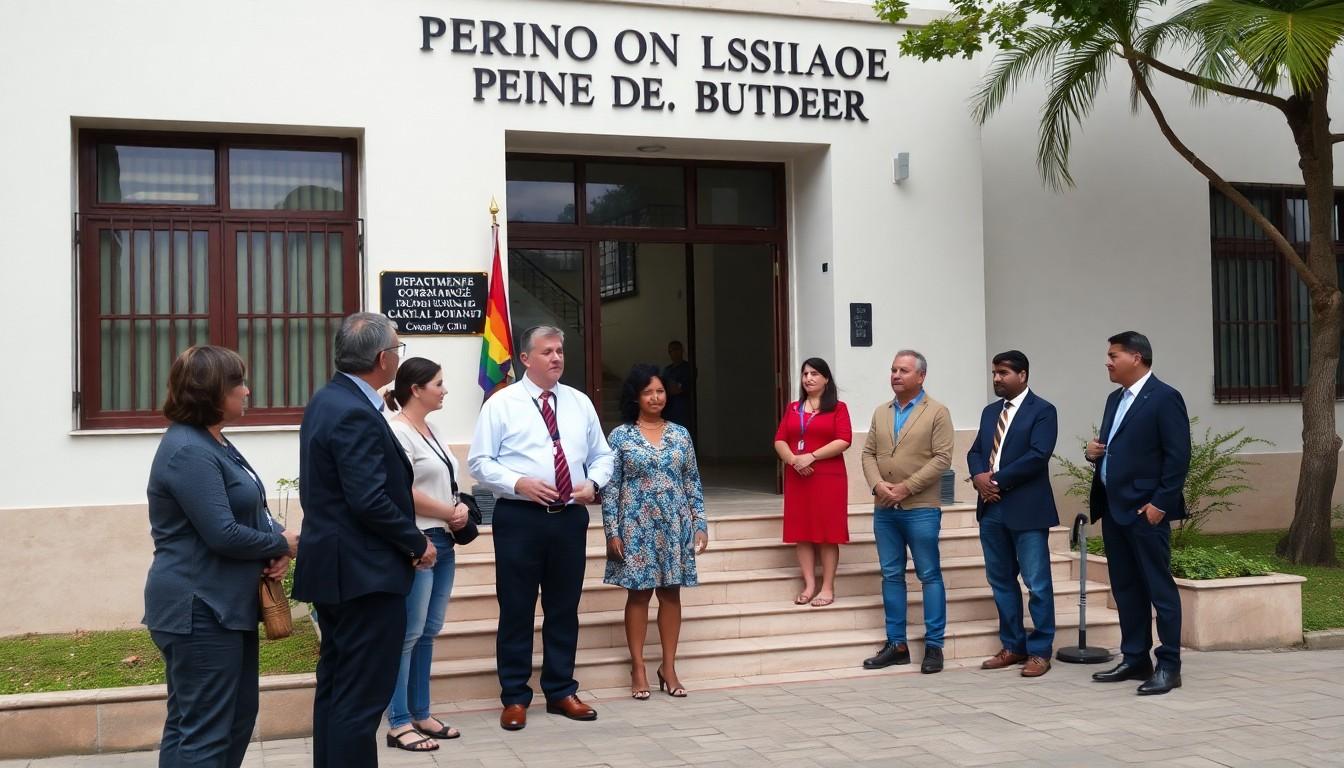
Rivera has become Uruguay's eighth department to establish a sexual diversity council, creating a local forum where public bodies and civil society can discuss policy, monitor progress and respond to hostility affecting LGBTIQ+ people. The move matters particularly in a border region where distance, vulnerability and social resistance can make support harder to reach.
Essential Takeaways
- A new local forum: The council brings government representatives and civil society groups together to shape and track public policy.
- Rivera leads the next step: It is the eighth department in Uruguay to create this type of body.
- Decentralisation is central: Meetings are expected to reach communities beyond Rivera city, including Tranqueras.
- Border risks need attention: Officials highlighted trafficking, sexual exploitation and the vulnerability of trans people.
- A coordinated response is planned: National and departmental councils are expected to develop tools against hate speech and improve access to legal support.
Rivera puts local dialogue at the heart of diversity policy
The new council is more than a ceremonial committee. It is intended to be a working space for proposals, oversight and follow-up, allowing community organisations to challenge institutions when policies fall short. That practical role could make a real difference in a department where geography often shapes access to public services.
Josefina González, director of Sexual Diversity at Uruguay's Ministry of Social Development, presented the initiative and described it as part of a broader decentralisation strategy. Rather than expecting activists and officials to repeatedly travel to Montevideo or other regional centres, the ministry wants decision-making to move closer to the people affected. Uruguay's Ministry of Social Development has also framed its 2026 diversity campaign around building a fairer present through sustained public action. [2]
For residents, that means a quieter but important shift: local concerns can be raised in a place designed to follow them through. The council's value will ultimately be measured not by its launch, but by whether conversations lead to visible improvements.
Why extending meetings beyond Rivera city matters
The council will initially operate from the departmental capital, with plans to take sessions to places such as Tranqueras. That detail is significant. A policy can exist nationally, yet still feel distant if people in smaller towns don't know where to ask for help or fear that their concerns won't be heard.
A recent dispute in Tranqueras, involving the removal of diversity-themed decorations from trees in the main square, underlined the tensions that can surface outside the capital. Taking the council into local communities offers a way to address those tensions directly, rather than allowing them to become isolated incidents.
This approach also fits the national campaign's effort to bring diversity work into different neighbourhoods and parts of the country, rather than concentrating visibility and debate in central Montevideo. Government activity for the 2026 campaign includes public events, information initiatives and materials intended to make rights more accessible. [3]
The Rivera-Livramento border brings particular pressures
Rivera's shared urban life with Livramento is one of its strengths, but the border also creates complicated vulnerabilities. During the presentation, González pointed to trafficking, prostitution and sexual exploitation as issues that need to be considered in the council's agenda, alongside the specific risks faced by trans people.
That doesn't mean treating the border as a problem in itself. Cross-border communities can be culturally rich and closely connected. But services, reporting systems and institutional responsibilities can become harder to navigate when people move between jurisdictions, especially when they already face discrimination or economic insecurity.
The new council therefore has an opportunity to connect rights awareness with practical support. Uruguay's diversity campaign materials are designed to help people understand the protections available to them, a useful foundation if it is paired with clear local contacts and non-judgemental assistance. [5]
A stronger answer to hate speech is taking shape
The council's launch comes amid concern about increasingly aggressive anti-LGBTIQ+ rhetoric. González argued that hate should be confronted by both public institutions and organised communities, with a response that includes legal advice, protection and clear procedures for reporting abuse.
That message has already gained urgency elsewhere. During the installation of a departmental council in Salto, reported hateful statements led to a complaint and an emergency meeting to consider how local organisations should respond. The proposed next step is to bring departmental councils and the national council together to develop a common strategy.
National diversity events have also focused attention on rights, public policy and the implementation of existing measures, including the Comprehensive Law for Trans People and public-sector employment quotas. Official information about the 2026 campaign presents these activities as part of an ongoing effort to repair inequalities rather than simply mark a month on the calendar. [4]
What residents should expect next
The immediate challenge is turning the council into something people can use. That means publishing meeting dates, explaining how organisations and individuals can participate, and making reporting routes easy to find. It also means ensuring that people who raise complaints aren't pushed through exhausting or humiliating processes.
For trans residents and others facing exclusion, the most valuable outcome may be joined-up support: a local authority that listens, a community network that understands the issue and a clear path towards legal or social assistance. The ministry's public events and guidance can help, but local follow-through will decide whether the promise feels real. [6]
There is no instant fix for prejudice, particularly in places where public visibility can provoke backlash. Still, a council that meets people where they live is a sensible place to begin. The next test is whether Rivera's new forum can turn presence into protection and discussion into action. [7]
A local council can make rights feel reachable, not merely written down.
Source Reference Map
Story idea inspired by: [1]
Sources by paragraph: