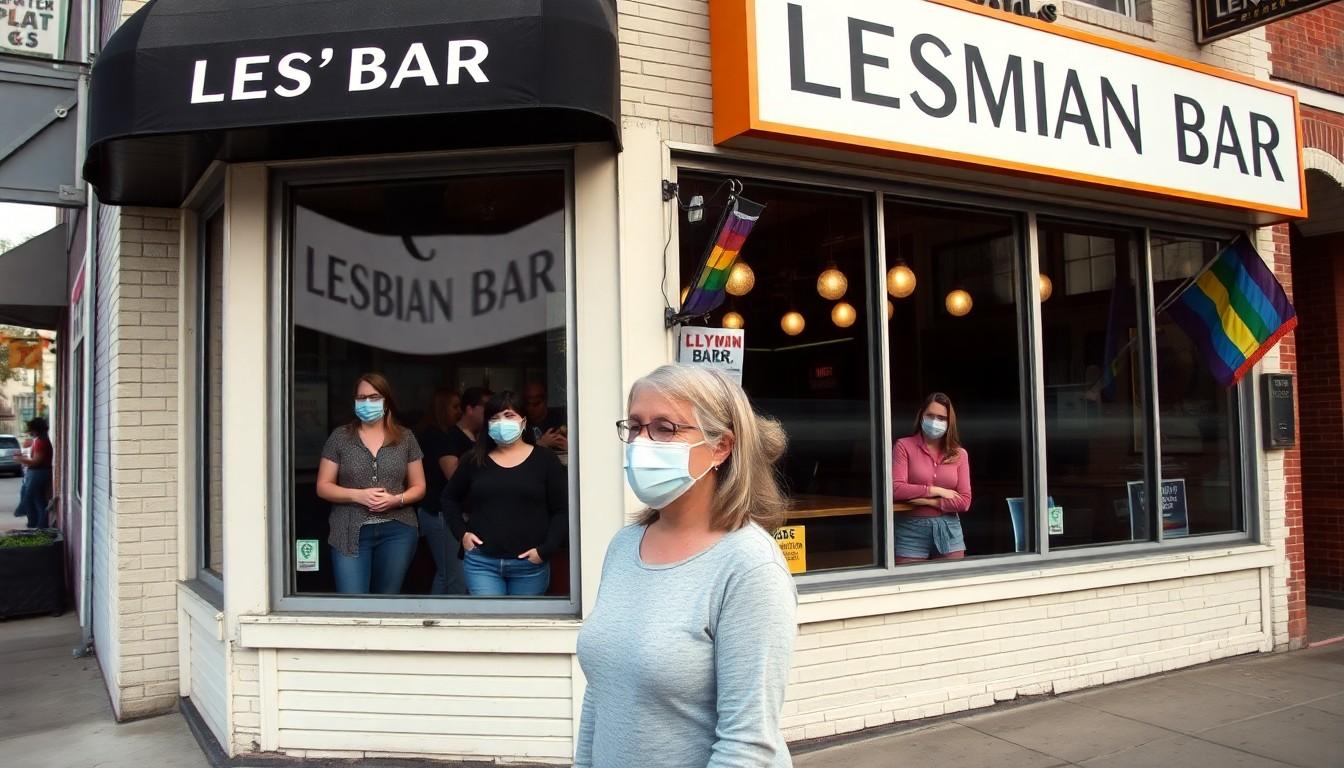
A Greenfield lesbian bar’s attempt to make Saturday nights mask-optional has triggered fierce online criticism, exposing the difficult clash between inclusive public-health ideals and the commercial reality of running a nightlife venue. The Last Ditch dispute also shows how pandemic habits have become cultural signals long after most businesses moved on.
Essential takeaways
- The venue: Last Ditch is a lesbian bar in Greenfield, Massachusetts, built around a strongly health-conscious approach.
- The change: Its owners tried to make masks optional on Saturdays, reportedly to attract more customers and ease financial pressure.
- The backlash: Some patrons argued that relaxing the rule abandoned immunocompromised and disabled members of the community.
- The bigger issue: The row reflects a wider split between collective protection and personal choice.
- The practical problem: A bar must balance accessibility, social connection, staff safety and enough revenue to survive.
One small policy change, one very large argument
Last Ditch’s mask debate has become far bigger than a sign on a door. The Greenfield venue reportedly opened with KN95 masking requirements, then faced intense criticism after introducing mask-optional Saturday evenings. According to LGBTQ Nation, the bar was already carrying substantial debt, making the decision less about abstract politics and more about keeping the lights on.
That tension is easy to understand. A bar depends on people lingering, drinking, talking and returning regularly. If customers feel that the rules make a night out too difficult, attendance suffers. Yet for patrons who remain vulnerable to respiratory illness, removing masks can make the same room feel suddenly unavailable.
It’s an awkward collision between hospitality and public health, with no neat slogan capable of fixing it.
Why some queer venues still put health first
The argument from supporters of strict masking is rooted in more than pandemic anxiety. As the Boston Globe’s coverage indicates, some LGBTQ+ communities see health precautions through the lens of disability justice, where inclusion means considering people who can't safely participate in ordinary social life.
That approach treats masking as a form of shared responsibility rather than a purely personal decision. The aim is to prevent vulnerable people from being pushed out of community spaces, even if the accommodation feels inconvenient to others.
There’s also a historical reason the language carries such emotional weight. LGBTQ+ health activism, particularly during the HIV/AIDS crisis, created a strong tradition of community-led harm reduction. For some patrons, continuing to mask is part of that same moral instinct: protect one another when official systems are inconsistent or unreliable.
The bar’s survival problem is impossible to ignore
The owners’ dilemma is brutally practical. According to TMZ, the attempt to loosen the rule was connected to the venue’s financial difficulties and concern that a strict policy was discouraging customers. A packed dance floor may be good for atmosphere, but empty tables don't pay rent.
For a small independent bar, Saturday night is especially important. It’s the moment when casual visitors, groups and first-time customers are most likely to turn up. A mandatory mask policy can also complicate drinking, conversation and the relaxed social rhythm that makes a bar feel like a bar.
That doesn't automatically settle the argument, but it explains why the business tried to change course. Owners can care deeply about vulnerable customers and still discover that a policy designed to include them is making the venue impossible to sustain.
Masking has become a cultural signal
The reaction also reflects how masks have moved beyond being simple medical equipment. In some progressive spaces, a high-filtration mask can signal care, solidarity and awareness of people at higher risk. In others, it represents restrictions, political division and a refusal to return to ordinary life.
New Boston Post described the dispute as a clash over what inclusion should mean in practice. One side sees mask-optional nights as a modest compromise. The other sees them as a warning that vulnerable people are once again expected to stay home.
That symbolism helps explain the intensity of the response. People aren't only debating whether a mask works in a particular room. They're arguing over who gets to belong there, what a community owes its members and whether economic survival should override a standing safety principle.
Can a compromise work?
The most workable answer may lie between an all-or-nothing mandate and an entirely unrestricted policy. Options could include designated masked events, better ventilation, clear information about crowd levels, outdoor gatherings and specific nights aimed at people who need stronger precautions.
Of course, every compromise has limits. A venue can't promise zero risk, and customers still need honest information before deciding whether to attend. Know Your Meme's record of the controversy shows how quickly a local policy dispute can become an online culture-war spectacle, where nuance is usually the first thing to disappear.
The Last Ditch row may eventually fade from social media, but the underlying question won't. As public venues reopen fully and respiratory illness remains part of everyday life, businesses will keep having to decide how much responsibility they can carry - and customers will keep deciding what level of risk they can accept.
A community space can't survive on principle alone, but it can lose its purpose if the people most in need of community are left outside.
Closing line
For small venues, the safest policy is often the one that protects people without making survival impossible.
Source Reference Map
Story idea inspired by: [1]
Sources by paragraph: