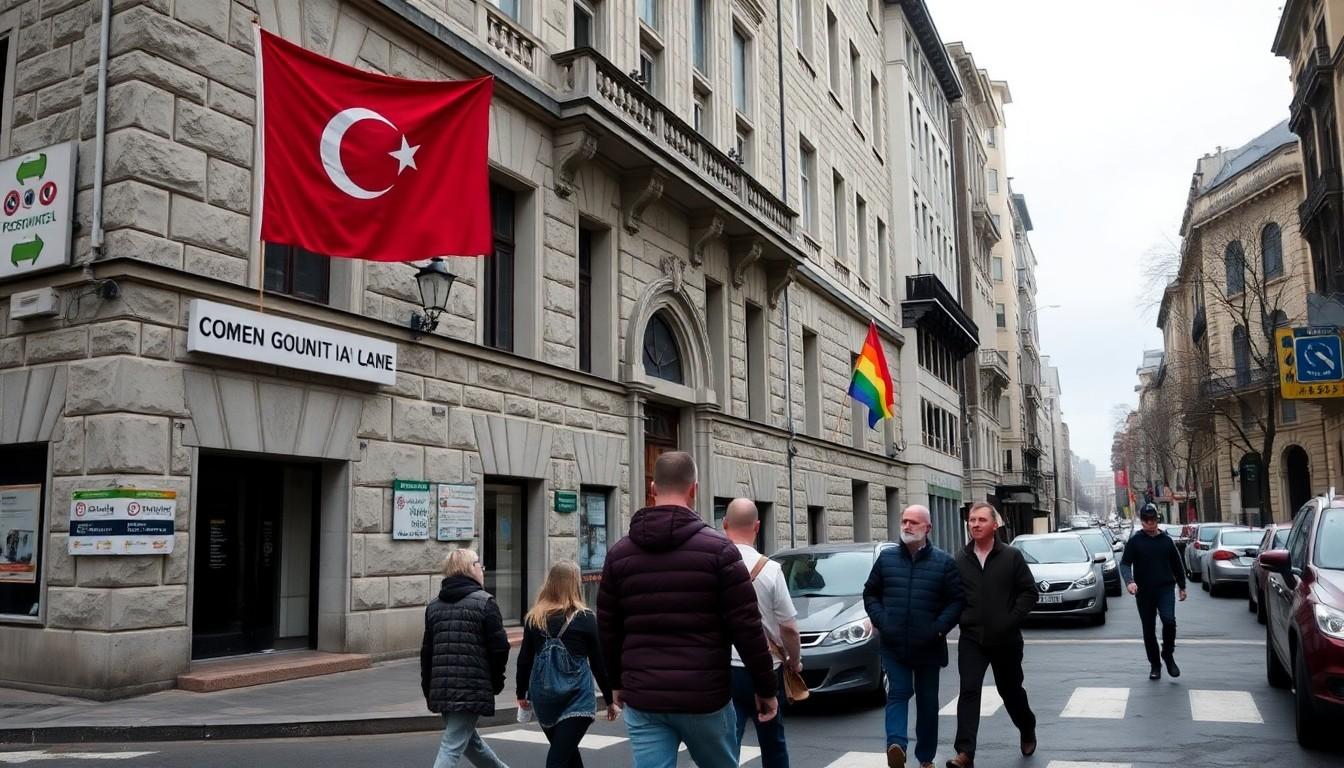
Newcomers and travellers are being urged to take Turkey's worsening LGBTQ climate seriously after coordinated raids across several cities prompted Canada to issue an extreme-caution advisory. The warning matters far beyond holiday planning, highlighting the risks facing queer people with family, study or immigration ties to the country.
Essential Takeaways
- Canada has issued a warning: 2SLGBTQIA+ travellers to Turkey are being advised to exercise extreme caution.
- Raids spread across major cities: Authorities targeted LGBTQ+ groups and venues in Istanbul, Ankara, Izmir and Mersin.
- Legal protection remains limited: Same-sex relationships aren't criminalised, but LGBTQ+ people have few clear safeguards against discrimination or abuse.
- Newcomers face added pressure: People already in Canada may fear returning, while asylum rules can make late claims more difficult.
- Support needs to be culturally aware: Advocates say Canadian organisations must listen to newcomers rather than assume a single Western experience of queerness.
Why Canada's Turkey travel warning matters
The strongest message from the latest developments is simple: Turkey can no longer be treated as a straightforward destination for LGBTQ+ travellers. Canada's updated advisory followed coordinated police action in several major cities, where authorities detained people and targeted organisations connected with the community.
International reporting described the operation as a nationwide crackdown, with officials presenting it as a defence of traditional family values. The language may sound familiar, but the consequences are concrete: raids, fear, disrupted support networks and fewer places where people can gather safely. Al Jazeera and UPI both reported on the arrests and police action, while the Japan Times outlined the broader political context.
For visitors, that means ordinary travel advice isn't enough. A person may need to think carefully about public displays of affection, attending community events, carrying sensitive information on a phone and how to seek help if questioned. It isn't about creating panic, but it is about recognising that visibility can carry a different risk in a rapidly changing political climate.
From regional refuge to rising uncertainty
Turkey, and Istanbul in particular, was once seen by many LGBTQ+ people in the region as a comparatively open place. For people arriving from countries with harsher restrictions, being able to walk with a partner or build a social life could feel quietly transformative.
That reputation has always had limits. LGBTQ+ people in Turkey have faced discrimination, censorship and police pressure for years, even though consensual same-sex relationships aren't illegal. Recent reporting by LGBTQ Nation and the Los Angeles Times described raids affecting bars, activists and HIV-support organisations, suggesting that the pressure is reaching both social spaces and essential services.
The shift is especially painful for people who remember a more hopeful period. One queer newcomer in Calgary told the Calgary Journal that Turkey once felt like a step towards freedom after leaving Iran. Now, she fears that people who relied on Turkey as a safer regional option may find their room to move shrinking fast.
The political pattern behind the raids
Advocates say LGBTQ+ rights are increasingly being used as a political weapon. Governments can frame queer communities as foreign influence, then present restrictions as proof that they're defending national identity. It's a familiar tactic, and it turns real people's lives into campaign material.
The latest operation was reportedly branded "My Family is Safe", a slogan that places LGBTQ+ people outside the imagined boundaries of the nation. Human Rights Watch condemned the raids as a threat to fundamental rights and the rule of law, while international outlets reported that the campaign targeted several cities at once.
That pattern matters in Canada, too, because many newcomers have lived through similar political shifts before. A Calgary advocate who fled Serbia described LGBTQ+ and women's rights as recurring tools in government power struggles. His warning is sobering: rights can appear established until a political movement decides that attacking them is useful.
What this means for Turkish students and newcomers
The travel advisory is only part of the story. The more complicated question concerns Turkish people already in Canada, particularly students and temporary residents who may now worry that going home isn't safe.
Some LGBTQ+ newcomers arrive using study, work or visitor routes and disclose their identity only after reaching a safer environment. That can be a practical survival decision, especially when families, authorities or employers back home may react harshly. But Canada's recent asylum restrictions can make delayed claims harder for some people, creating a frightening gap between having no safe return and struggling to qualify for protection here.
That is why specialist advice matters. Anyone worried about their status should speak promptly with a qualified Canadian immigration lawyer, a registered immigration consultant or an established settlement organisation. Keep copies of identity and immigration documents, record relevant threats or harassment securely, and don't rely on social media posts as a substitute for legal guidance.
Support needs to meet people where they are
Canadian LGBTQ+ organisations also have a role beyond offering a welcome message. Newcomers may need help with housing, employment, language, healthcare, immigration and family safety before they're ready to discuss identity openly. A service that understands those overlapping pressures can feel far safer than one built around assumptions.
Cultural sensitivity is crucial. Some people may not use familiar Western labels, may have complicated relationships with religion or family, or may be supporting relatives still living in Turkey. Trust takes time, particularly when someone has already learned that visibility can bring danger.
The outlook is uncertain, but the immediate lesson is clear. The raids have made travel planning, community support and immigration advice part of the same conversation, and people affected shouldn't have to navigate it alone.
It's a small but vital step to check the latest advice and seek trusted support before making a decision.
Source Reference Map
Story idea inspired by: [1]
Sources by paragraph:
- Paragraph 1: [2], [3]
- Paragraph 2: [4], [6]
- Paragraph 3: [5], [7]
- Paragraph 4: [2], [5]
- Paragraph 5: [7], [4]
- Paragraph 6: [2], [5]
- Paragraph 7: [1], [3]
- Paragraph 8: [1], [7]
- Paragraph 9: [1], [3]
- Paragraph 10: [1], [5]
- Paragraph 11: [1], [7]
- Paragraph 12: [1], [3]
- Paragraph 13: [1], [2]
- Paragraph 14: [1], [5]
- Paragraph 15: [1], [7]
- Paragraph 16: [1], [3]
- Paragraph 17: [1], [2]