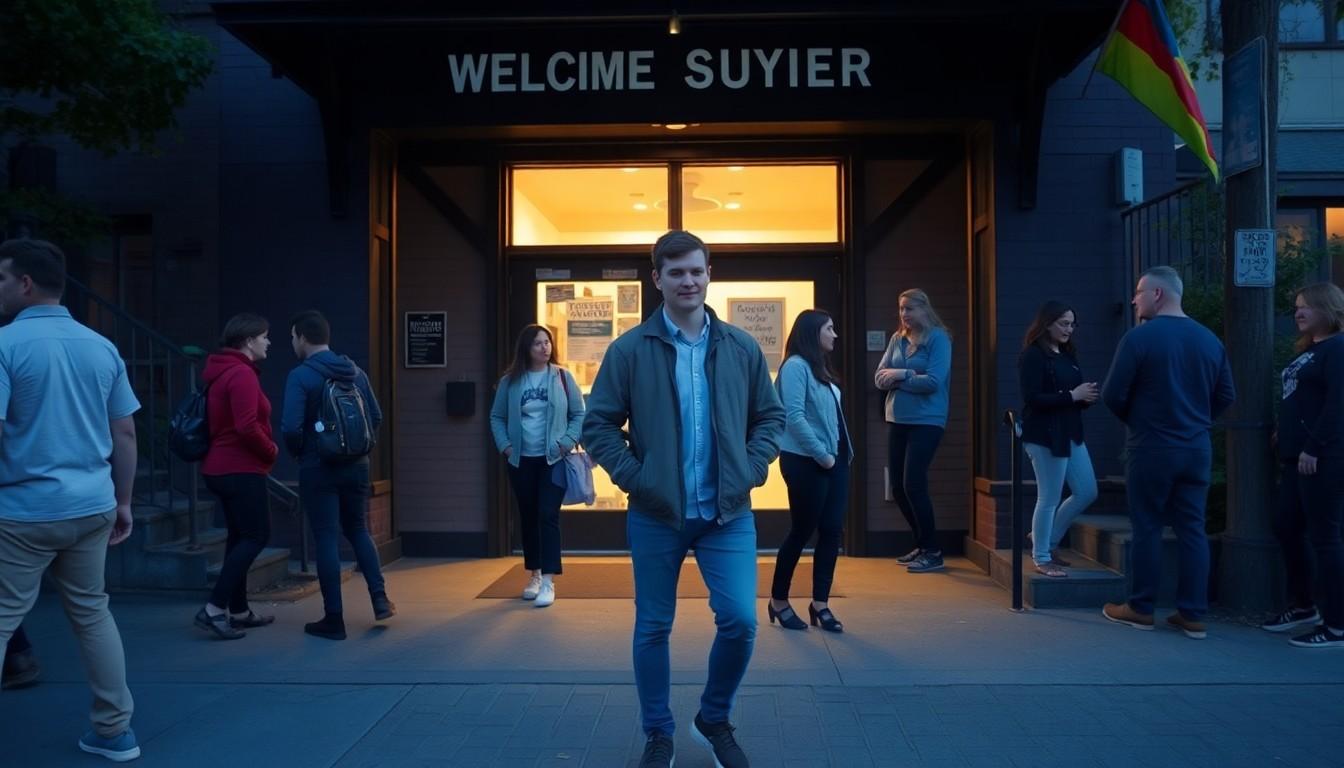
Trans people pushed from hostile US states are arriving in Seattle seeking safety, stability and connection, but rebuilding a sense of home takes more than a change of postcode. Stories from local residents show how friendship, creative communities, faith and affirming support can turn a new city into somewhere that feels liveable again.
Essential Takeaways
- Displacement has a health cost: Losing stable housing and belonging can worsen stress, sleep, anxiety and physical health.
- Community matters: Friends, workplaces, arts groups, faith communities and support services can all help people feel rooted.
- Safety takes time: Arriving in a more welcoming state doesn't instantly erase fear, grief or trauma.
- Small invitations count: A shared meal, local event or regular creative gathering can become the start of a support network.
- Belonging must be practical: Accessible buildings, affordable therapy and gender-affirming services make inclusion more than a slogan.
Seattle is becoming a landing place, not an instant cure
For many Trans people leaving hostile parts of the US, the journey to Seattle is less a fresh start than an emergency exit. Some arrive with jobs and savings; others come after harassment, family rejection, political pressure or a sudden loss of housing. The city may offer a brighter legal and social landscape, but relief can be slow to reach the body.
Research from the Movement Advancement Project has highlighted the wider pressures facing Trans Americans, including restrictive policies and uneven access to healthcare. Its work also shows why moving to a safer state doesn't automatically repair the damage caused by years of instability.
That distinction matters. A person can be physically safer and still feel watchful, lonely or unsure where they belong. Home isn't simply an address; it's the quiet confidence that you can rest, move through daily life and be recognised without constantly defending yourself.
Belonging is part of staying well
The connection between place and health is easy to underestimate. A stable home gives people room to regulate their lives, keep routines and recover from stress. Without that foundation, anxiety can become a background hum, while poor sleep, chronic pain and other health problems become harder to manage.
That is particularly significant for people who have been forced to relocate. LGBTQ+ Americans already face barriers to care, and MAP's research on Trans healthcare restrictions has documented how policy changes can make essential treatment more difficult to access. The result is a move that may solve one danger while leaving several others unresolved.
A welcoming city therefore needs more than a reputation for tolerance. It needs affordable housing, accessible healthcare, supportive employers, reliable public spaces and people prepared to notice when someone is struggling. It sounds basic, but basic is often what makes a place feel safe.
Friendship can do what a postcode can't
One Seattle resident, Mac Mac, left Idaho after being targeted online and finding that his employer wouldn't support open discussion of pronouns or Pride. He told Seattle Gay News that the experience made him fear for the safety of the young people he worked with, not just his own wellbeing.
Mac says a sense of safety arrived gradually, after colleagues offered hugs, reassurance and a clear message that he belonged. It took roughly a year before that support began to feel real. That delay is a useful reminder for anyone welcoming newcomers: kindness may be immediate, but trust often needs repetition.
For Creek, a transfemme artist from Texas, home has grown through punk music, visual art and friendships rather than one particular neighbourhood. She describes it as the people who turn up when she isn't doing well, make art on a whim or share an adventure. Her experience also carries a warning: queer spaces must take racism seriously, because safety is not evenly distributed among Trans people.
Creative and spiritual spaces offer different routes in
Not everyone finds belonging in the same room. Some people need a dance floor, a rehearsal space or an informal art night. Others find steadiness through a congregation, a support group or a quiet one-to-one conversation. The useful question isn't which community is best, but which one allows a person to arrive without performing a version of themselves.
Brother Stephan, a Trans man and spiritual companion, told SGN that his church became home because its members supported him as a Trans and disabled person. He also acknowledged that many people carry serious religious trauma, so returning to faith must be personal and never pressured.
His advice is refreshingly direct: take up space, ask for what you need and make room for those who come after you. That applies beyond disability access. A ramp, a quiet corner, correct pronouns, a clear code of conduct and a friend who walks you home can all turn a welcoming claim into something tangible.
The most useful first step may be one safe person
Toun, a transmasculine mental health therapist and founder of Beyond the Binary, says people rebuilding their lives need both healing and community. A gender-affirming, trauma-informed therapist can help process fear and grief, while low-cost or pro bono services may make support more realistic for people arriving with limited money.
His practical suggestion is simple: find one safe person and one safe space, then let those connections lead to the next. That's sound advice because starting over can make even ordinary choices feel exhausting. A single reliable contact is easier to hold onto than the pressure to build an entire social world immediately.
For newcomers, that might mean visiting an LGBTQ+ community centre, library event, support group or creative gathering. Go slowly, check accessibility and safety details beforehand, and don't assume every queer space will suit you. Your community doesn't have to be huge; four people meeting regularly can be enough to create a beginning.
Seattle's famous freeze isn't the final word
Seattle has a reputation for being socially reserved, but the city's queer communities are already full of ways to connect. Local music nights, book events, bars, art projects and peer-support groups can offer low-pressure entry points, especially when they are organised around a shared interest rather than an expectation of instant intimacy.
The broader challenge is making sure those spaces are accessible to people of colour, disabled people, migrants, older adults and those with limited incomes. Acceptance that stops at visibility isn't enough. People need to feel heard, protected and able to participate without having to educate everyone around them.
There is no neat ending to this kind of displacement. But each invitation, shared meal and practical act of care pushes back against isolation. As MAP and other LGBTQ+ research organisations continue to document, hostile policy creates real consequences; community can soften some of them, but it must be built deliberately and kept open.
Home may begin with a room, but it becomes real through people.
Source Reference Map
Story idea inspired by: [1]
Sources by paragraph: