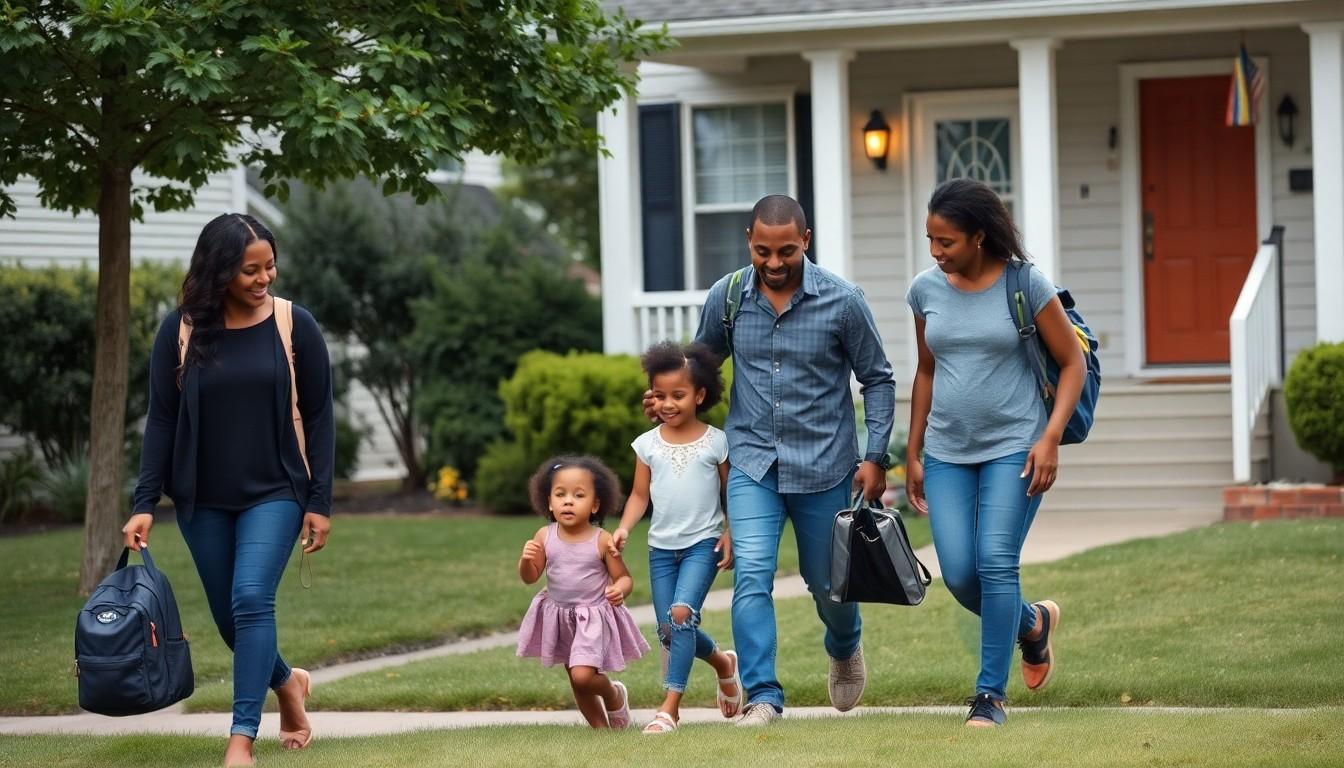
Families in Richmond and beyond are showing how same-sex parents navigate adoption, co-parenting and everyday life while creating homes filled with warmth, routine and support. Their experiences matter because legal paperwork, social expectations and practical hurdles can still make family life more complicated than it needs to be.
Essential Takeaways
- Love looks ordinary: School runs, fussy dinners and weekend activities shape family life, whatever the parents' gender.
- Adoption can be demanding: Same-sex couples may face extra screening, legal steps, expense and agency restrictions.
- Legal recognition matters: Parentage can affect birth certificates, medical decisions, inheritance and everyday security.
- Chosen family helps: Friends, relatives and wider community networks often provide practical and emotional support.
- Race and identity overlap: Transracial and queer families may need to prepare children for different forms of bias.
Family life is usually wonderfully ordinary
The strongest impression from these Richmond families isn't difference. It's dinner chaos: vegetables tossed across a kitchen, children negotiating over snacks, teenagers discussing fragrance and parents trying to get everyone to sit down at roughly the same time.
That ordinariness is important. Research from Pew Research Centre indicates that same-sex parents share many of the same hopes, pressures and daily responsibilities as other parents. The details vary, but the rhythm is familiar: childcare, school, work, meals, homework and the occasional request for ice cream.
For many families, visibility brings both comfort and discomfort. A family may feel entirely normal at home, then attract questions in a playground, on a form or at school. Those small moments can become tiring reminders that society still carries a narrow picture of what a family is supposed to look like.
Adoption and parentage can involve extra hurdles
For same-sex couples considering adoption, the emotional commitment is only the beginning. Legal guides from Quinn Law Centers and Nolo note that prospective parents may encounter agency policies, differing state rules, home studies and additional parentage procedures.
The process can also be expensive and slow. Couples might need background checks, financial reviews, medical assessments, references and legal advice, all while preparing for the uncertainty of matching with a child or birth parent. It can feel less like opening a door and more like completing an obstacle course.
That doesn't mean same-sex adoption is unusual or inherently more complicated in every case. Rules differ by state and agency, and many professionals actively support LGBTQ applicants. Still, prospective parents should ask early whether an organisation has experience with same-sex families, how it handles birth-parent preferences and which legal protections are included.
Why legal recognition still matters
A loving relationship doesn't automatically settle every legal question. According to Justia and Nolo, formal parentage can influence access to medical information, decision-making, inheritance, custody and recognition on official documents.
This is particularly significant when only one parent is genetically related to a child, or when a family has used adoption, donor conception, surrogacy or a co-parenting arrangement. A second-parent or co-parent adoption may provide an additional layer of protection, depending on local law and the family's circumstances.
Virginia families should take advice from a qualified family solicitor before relying on general online information. Surrogacy rules, adoption procedures and parentage recognition can change, and the right paperwork often depends on how a child joined the family. A little legal planning may prevent a great deal of stress later.
Chosen family makes the village real
Some of the families featured have built support systems that stretch beyond the household. Friends help with babysitting, neighbours offer lifts and wider networks provide children with more trusted adults in their lives.
That idea of chosen family has long been important in LGBTQ communities. It can be practical, especially when relatives live far away or don't fully understand a family's needs. It can also be deeply reassuring for children, who grow up knowing that care and belonging aren't limited to one traditional household structure.
Co-parenting arrangements can take this even further. As adoption guidance from Adopting.com explains, successful co-parenting depends on clear expectations around finances, schedules, decision-making and long-term responsibility. Warm intentions are valuable, but written agreements and regular communication make the arrangement safer for everyone.
Raising children across identity and culture
For transracial families, sexuality may not be the only concern. Parents also have to think about race, culture, language, representation and how children will respond to prejudice as they grow older.
That preparation can include choosing schools carefully, seeking out diverse communities, finding books and role models that reflect a child's identity, and making space for honest conversations. It isn't about frightening children. It's about giving them confidence, vocabulary and somewhere safe to turn when something unfair happens.
The same principle applies to trans parents and families with several co-parents. Children benefit when adults speak plainly and calmly about their family structure, rather than treating it as a secret or a problem. The aim is simple: help children understand that their family is secure, even when other people don't immediately know how to respond.
A broader definition of family is taking shape
The Richmond stories suggest that visibility can gradually change attitudes. When neighbours, classmates and colleagues know a family as people rather than as an abstract issue, awkwardness often gives way to familiarity.
That doesn't remove every challenge, and it certainly doesn't make legal protections irrelevant. But everyday contact can make different family structures less mysterious. A parent cooking dinner, organising a lift or cheering from the sidelines is still doing the work of parenting.
For couples planning to grow their families, the practical lesson is to build support early. Investigate agencies, speak to a specialist solicitor, clarify parentage, connect with other LGBTQ parents and create a circle that can help when life gets noisy. The result may look perfectly ordinary from the outside, but getting there can require extraordinary care.
It's family life, with all the mess, humour and love that brings.
Source Reference Map
Story idea inspired by: [1]
Sources by paragraph:
- Paragraph 1: [2], [4]
- Paragraph 2: [2], [4]
- Paragraph 3: [3], [6]
- Paragraph 4: [4], [5]
- Paragraph 5: [6], [7]
- Paragraph 6: [5], [6]
- Paragraph 7: [2], [4]
- Paragraph 8: [5], [6]
- Paragraph 9: [2], [4]
- Paragraph 10: [3], [6]
- Paragraph 11: [2], [4]
- Paragraph 12: [5], [6]
- Paragraph 13: [2], [4]
- Paragraph 14: [3], [6]