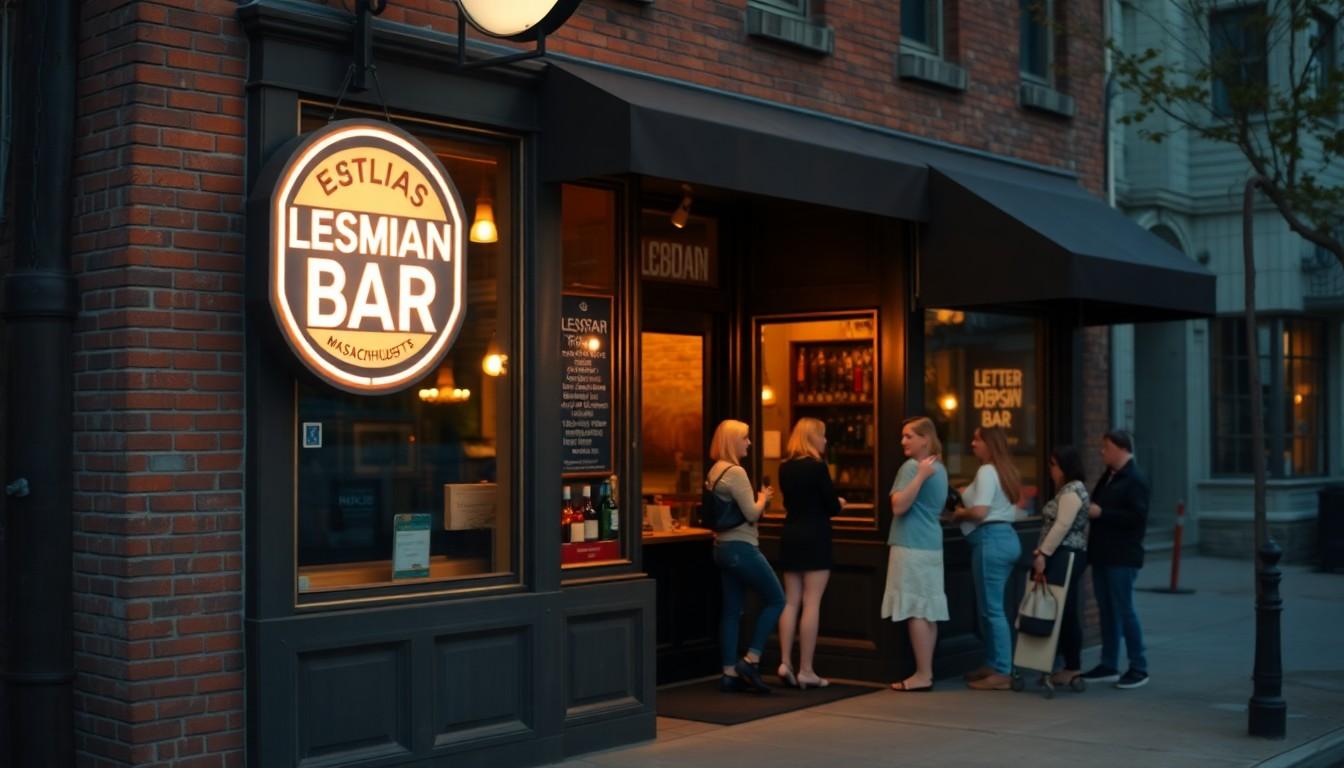
Hollywood is reportedly circling a Boston Globe story about a western Massachusetts lesbian bar, a disputed KN95 mask policy and the furious fallout that followed. The episode became a social-media sensation, drew thousands of new subscriptions for the newspaper and now looks tailor-made for either a documentary or a sharply observed comedy-drama.
Essential Takeaways
- A viral newspaper story: The Boston Globe’s account quickly became one of its most-read pieces.
- Hollywood interest: Representatives have reportedly received enquiries about both scripted and documentary adaptations.
- A built-in cast of characters: The story includes a financially strained bar owner and former customers locked in an extraordinary dispute.
- A media success story: The article reportedly brought in several thousand new subscribers within days.
- Tone will matter: Any adaptation would need to balance public-health tensions, queer community politics and the absurdity of the backlash.
From local dispute to national talking point
The story began with a small venue-level decision but quickly ballooned into something much bigger. A western Massachusetts lesbian bar changed its requirement for KN95 masks, and the reaction from some former patrons became intense, personal and highly public.
That combination is irresistible to the internet: a familiar local setting, a serious underlying disagreement and behaviour that becomes increasingly surreal. According to the Boston Globe’s original report, the dispute involved a bar owner under financial pressure and customers who objected strongly to the policy change. [2]
It’s also the sort of story that invites instant arguments. Was the mask rule a reasonable safety measure, an impossible burden for a struggling business or both at once? The answer depends rather heavily on where you’re standing, which is precisely why the row travelled so far beyond Massachusetts. [5]
Why producers are paying attention
Hollywood has long understood that a compelling article can provide more than a plot. It can offer a setting, a conflict and a group of real people whose choices already have dramatic shape. In this case, the source material reportedly attracted interest in both film and documentary formats. [3]
That doesn’t mean cameras are about to roll. Most optioned articles never become finished productions, particularly in a cautious entertainment market where financiers want recognisable stories with an obvious audience. Still, a piece that has already generated widespread conversation comes with a useful head start. [6]
The Boston Globe also has a powerful recent association with screen storytelling. Its investigative work inspired the Oscar-winning film Spotlight, although this new story belongs to a radically different genre. The earlier film dealt with institutional abuse and journalistic accountability; this one sounds more like a tense community drama with moments of dark comedy. [3]
The audience is already there
The article’s reach appears to have mattered as much as the argument itself. Nieman Lab reported that the story brought several thousand new subscribers to the Boston Globe in only a few days, a striking result at a time when publishers are working hard to turn viral attention into lasting support. [4]
That response helps explain the adaptation chatter. For a newspaper, a story like this is not merely a traffic spike. It can demonstrate that deeply reported local journalism still has the power to travel, provoke discussion and persuade people to pay for access. The emotional temperature may be uncomfortable, but the commercial signal is clear. [4]
Social media also gave the episode a second life. Readers weren’t simply sharing the reporting; they were debating masks, community boundaries, political identity and the responsibilities of a small business. As PinkNews noted, the controversy tapped into wider tensions among people with different views on Covid precautions and queer community spaces. [7]
What kind of film could it become?
The safest version would probably be a documentary, allowing the real participants and the original reporting to carry the weight. That approach could explore the disagreement without forcing anyone into a neat hero-or-villain role, which feels important when the central conflict involves health concerns and a vulnerable community. [7]
A scripted film, meanwhile, could lean into the strange comedy of escalation. The danger is that it might turn a complicated dispute into a simple joke about “the internet”, or flatten lesbian and queer politics into a punchline. The more interesting version would let several people be understandable, unreasonable and occasionally both. [3]
Casting would inevitably become part of the fun. Viewers might imagine a performer with dry comic timing as the bar owner, a quietly dogged actor as the reporter and a recognisable ensemble to capture the competing factions. But the script would need restraint. A real community dispute deserves more than a parade of celebrity impressions. [6]
Why the details will make or break it
Any adaptation should start with the practical realities rather than the memes. How much did the mask policy affect the business? What did customers believe they were protecting? How did private complaints become public confrontation? Those questions would give the story a stronger spine than simply recreating the loudest online moments. [2]
The best long-tail angle here may be a documentary about a Covid-conscious lesbian bar and the community backlash around its changing rules, rather than a broad comedy about political disagreement. That framing keeps the human stakes visible while still leaving room for the absurdity that made the story so shareable.
There’s also a lesson for viewers. Viral stories often feel complete because they arrive with clear villains, memorable details and a satisfying rush of outrage. Real disputes rarely are. As the Hollywood interest shows, the challenge now is turning a chaotic episode into a fair, watchable story without sanding away what made it so unusual in the first place. [5]
It’s a small local controversy with surprisingly large questions attached, and that may be its strongest screen appeal.
Source Reference Map
Story idea inspired by: [1]
Sources by paragraph: