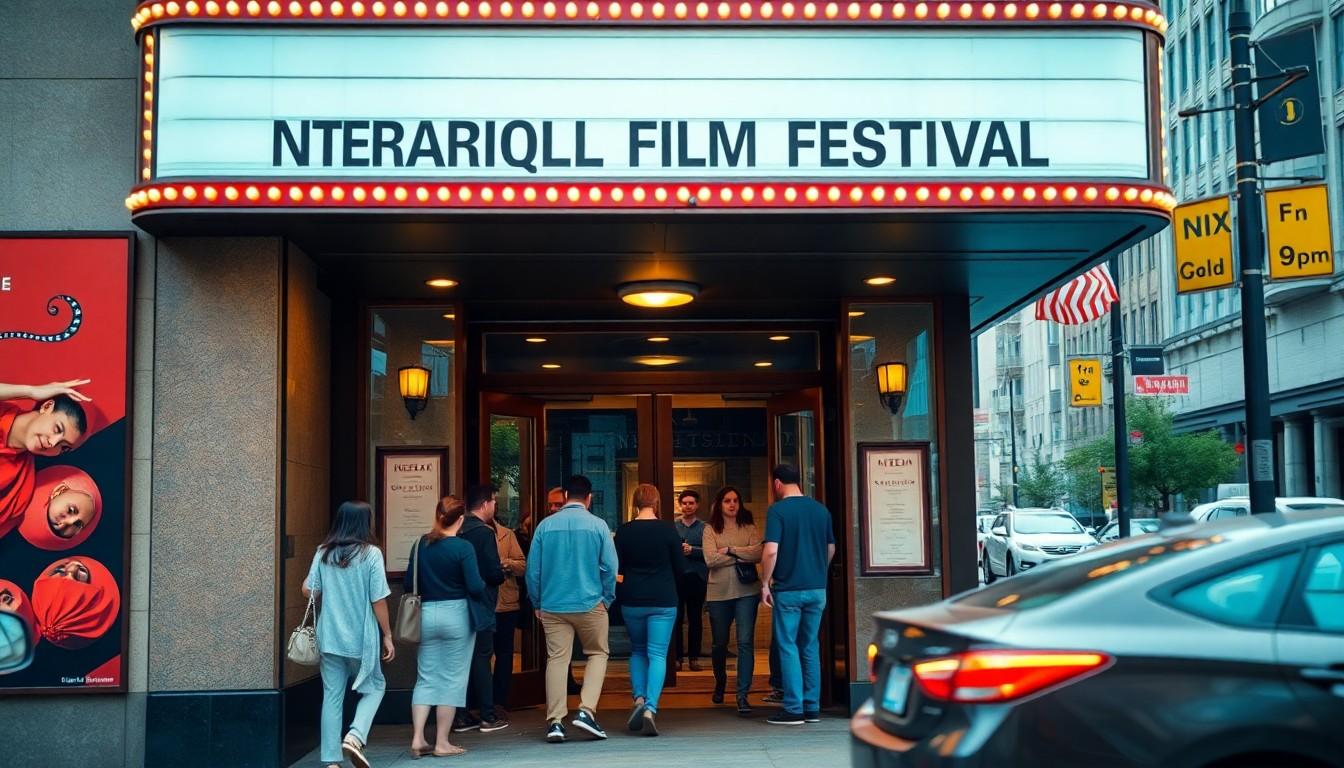
Film fans are looking back at Chicago's 44th Reeling International LGBTQ+ Film Festival, where 13 features offered a lively mix of romance, identity, history and dark comedy. From Montreal to South Africa, the strongest titles showed how contemporary queer cinema can be tender, funny, visually daring and emotionally bruising, even when some entries missed the mark.
Essential Takeaways
- A standout romance: "Montreal, My Beautiful" emerged as the festival's most affecting film, pairing cultural pressure with a moving late-life awakening.
- Identity takes centre stage: Several dramas explore the cost of hiding one's sexuality, creative ambitions or emotional needs.
- The best films balance feeling and craft: Strong performances, assured direction and distinctive visual styles separate the memorable titles from the forgettable ones.
- Comedy proved uneven: "Before I Do" found warmth and honesty, while several broader farces struggled to turn their premises into genuine laughs.
- Expect content warnings: Some selections include explicit sexual material, difficult relationships and themes of social exclusion.
Montreal, My Beautiful leads a stronger festival line-up
The most powerful discovery was "Montreal, My Beautiful", a Chinese-Canadian drama about Feng Xia, an immigrant wife caught in a stifling marriage and a life built around other people's expectations. Its emotional pull comes from the contrast between the quiet routine of her home life and the sudden, almost electric freedom she experiences through a secret relationship with Camille.
Joan Chen gives the film its centre of gravity. Her performance makes Feng Xia's restraint feel physical, as if every polite smile is holding back a much larger life. According to the festival review coverage, the film's portrait of Montreal also adds a welcome sense of place, with the city becoming more than a backdrop to the couple's romance.
The film isn't flawless. Its final stretch loses some momentum, and its sexual content won't suit every viewer. Even so, it stands out as an unusually mature lesbian love story, one concerned not only with desire but with the difficult practical business of starting again.
These films ask what a hidden life costs
"A Man Walks Down the Street" takes a more reflective route, following Ranaan, a closeted man returning to Israel after decades away. Clearing out his late mother's flat forces him to confront an earlier love, the career he abandoned and the many small decisions that gradually shaped his life.
Its use of flashbacks is particularly effective because the past doesn't arrive as tidy explanation. Instead, it flickers into the present, like an old photograph that suddenly changes meaning. The film's central question is uncomfortable but recognisable: how much happiness can be surrendered in the hope of avoiding other people's judgement?
"Julian" approaches queer history through a real-life campaign for marriage equality. Fleur Pierets and Julian Boom set out to renew their vows across the countries where same-sex marriage was legal, turning their relationship into a public statement about visibility and recognition. The story is tender and politically meaningful, although its fractured timeline and repeated home-video material sometimes make the journey harder to follow.
Together, these films show why LGBTQ+ cinema remains so valuable. It can preserve private histories, challenge social habits and give emotional shape to lives that official records often overlook.
Romance works best when it stays honest
"Before I Do" provides the festival with a lighter, more intimate relationship story. Its setting is familiar: friends gather at a lakeside cabin to celebrate a forthcoming wedding, only for old feelings and unresolved doubts to surface. The difference is that the film treats its characters' romantic confusion as something more substantial than a simple plot twist.
The ensemble chemistry gives the film its warmth, while the writing allows its characters to discuss queer relationships with unusual directness. It may look at first glance like a glossy television romance, but its emotional candour is more interesting than its polished surface suggests.
"Black Burns Fast" offers a younger, brighter perspective. At a South African boarding school, Luthando's attraction to the confident new student Ayanda becomes part of a broader coming-of-age story involving friendship, academic pressure and family expectations. The production design and fantasy sequences give it a colourful, playful energy, but the film doesn't ignore the harsher consequences of standing apart in a conservative environment.
Both films understand that romantic discovery rarely happens in isolation. It affects friendships, ambitions and family life too, which is often where the most convincing drama lies.
Visual invention gives the programme extra colour
Not every festival film needs to be naturalistic. "Lunar Sway" makes a virtue of its strangeness, following a bisexual neon artist through a succession of eccentric encounters in a remote British Columbia town. Its vivid palette, oddball characters and dry humour create a dreamlike atmosphere that feels deliberately untidy.
That approach won't appeal to everyone, especially viewers who prefer a clean narrative line. But for anyone seeking something more unusual, the film's loose structure becomes part of its charm. It feels less like a conventional journey towards self-discovery and more like wandering through a series of colourful rooms, never quite sure who will be waiting inside.
"Madfabulous" also uses style to tell its story. Based on the life of flamboyant British aristocrat Lord Henry Paget, it arrives in a whirl of elaborate costumes, theatrical performance and extravagant parties. The early sections take time to settle, but the film grows more compelling as its central figure faces ill health, financial collapse and the hostility of his family.
The result is a bittersweet celebration of self-expression. Paget's world was privileged, but his determination to live openly still carries a recognisable emotional charge. Sometimes being yourself is less a slogan than a daily act of defiance.
The weaker entries struggle with tone and structure
The festival's less successful films reveal a familiar problem: a bold premise can't compensate for uncertain execution. "Body Blow" tries to combine an undercover police thriller with a gay romance, but its many criminal subplots and underdeveloped character motivations leave the story feeling scattered.
"Trial of Hein" has the opposite issue. Its symbolic design and theatrical setting are intriguing, yet the deliberately measured pace becomes heavy, while some of its metaphors feel too carefully displayed. There is a strong idea at its heart, involving the need for acceptance and the instability of memory, but the film doesn't always trust that idea to speak for itself.
Comedy proved especially hit and miss. "Loves Company" begins with an appealing portrait of a faded television performer, then shifts into a fan-thriller scenario that becomes increasingly forced. "Meeting Marsha" has a promising setup involving an aspiring performer, her girlfriend and the birth mother she has never met, but its supposed comic chaos rarely generates enough wit to sustain the story.
Meanwhile, "An Island Away From You" leans heavily on travel-romance clichés, and "Very Deep Inside" prioritises explicit erotic material over character or narrative development. These films may find an audience with particular tastes, but the festival's strongest work demonstrates that queer cinema is most persuasive when style and substance are working together.
Reeling's best films point to a broader future
The festival's most encouraging feature is its range. These films move between languages, generations, countries and genres without treating LGBTQ+ cinema as a single house style. One film can be a heartfelt marriage drama, another a surreal identity comedy, another a historical celebration of flamboyance.
That variety also makes comparison more revealing. The strongest titles tend to give their characters room to be contradictory: loving but selfish, brave but frightened, glamorous but vulnerable. They don't reduce queer experience to a single lesson, and they don't pretend that visibility automatically solves every problem.
For viewers choosing where to begin, "Montreal, My Beautiful" is the clear first stop, followed by "A Man Walks Down the Street" and "Before I Do". Those looking for more adventurous storytelling should try "Lunar Sway", while "Madfabulous" offers a colourful historical alternative. Check availability and content notes first, particularly for the films with explicit sexual material.
Reeling's 2026 programme may not have been perfect, but its best discoveries leave the strongest impression: cinema remains at its most moving when it lets people pursue love, identity and freedom in their own complicated way.
It's a varied, imperfect and often rewarding snapshot of queer cinema today.
Source Reference Map
Story idea inspired by: [1]
Sources by paragraph:
- Paragraph 1: ,
- Paragraph 2: ,
- Paragraph 3: ,
- Paragraph 4: ,
- Paragraph 5: ,
- Paragraph 6: ,
- Paragraph 7: ,
- Paragraph 8: ,
- Paragraph 9: ,
- Paragraph 10: ,