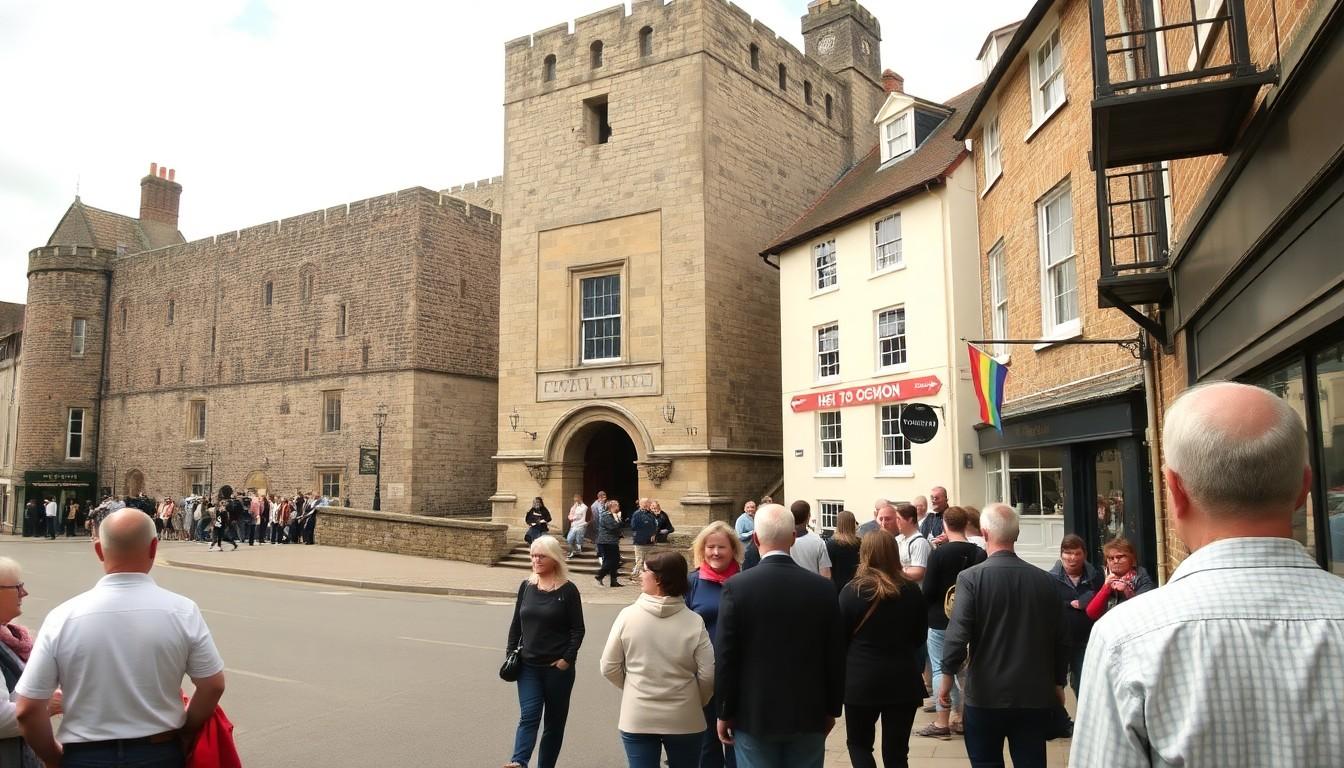
Visitors and residents in Totnes, Devon, have reacted sharply to a 150-metre rainbow flag wrapped around the town’s historic castle during a four-day Pride celebration. The striking display was designed to affirm LGBTQ+ belonging, but it has also reignited a familiar argument: should ancient landmarks remain visually neutral, or can they help reflect the communities around them?
Essential Takeaways
- A dramatic display: Thirty local flag bearers helped raise the 150-metre installation around Totnes Castle.
- A mixed response: Some residents welcomed the message of inclusion, while others questioned the use of a listed historic monument.
- Part of a bigger festival: Totnes Pride promoted more than 40 events spanning arts, music, performance and community activity.
- A long-running debate: The display follows earlier arguments over Pride-linked public art and the use of council resources.
- A powerful backdrop: Totnes Castle remains one of England’s best-preserved Norman motte-and-bailey castles.
A medieval landmark gets a very modern makeover
The rainbow fabric transformed Totnes Castle almost overnight, creating an image that was hard to miss from the Devon town below. Thirty volunteers helped unfurl the huge flag, turning the stone monument into the centrepiece of this year’s Pride celebrations.
The installation, titled Capture the Castle, was intended to make a clear statement about LGBTQ+ presence and belonging. Totnes Pride described it as a reminder that queer people have long been part of the community and will continue to be so.
That message landed differently across the town. Some residents saw a bright, celebratory symbol; others felt the colourful fabric competed with the castle’s centuries-old character. It’s the sort of visual clash guaranteed to stir conversation, especially in a place where history is part of the scenery. Totnes Pride’s own programme presents the festival as a broad celebration of local culture and community. [3], [4]
Why the display has proved so contentious
Critics have questioned whether a Grade I listed monument should be used as a platform for a contemporary campaign. Their concern isn’t necessarily opposition to Pride itself, but whether one cause should be given such a prominent setting at a nationally significant historic site.
That argument has a practical side, too. People familiar with listed buildings point out that even modest changes can require formal permission, making the scale of the flag feel particularly provocative. The issue is therefore about symbolism as much as planning, heritage or fabric.
Supporters have offered a straightforward counterpoint: the castle hasn’t been damaged, its story hasn’t been erased and the display was temporary. From that perspective, the landmark became a backdrop for recognising people who may once have been excluded from public life. The festival’s community-led approach is also reflected in its wider programme and volunteer activity. [5], [7]
Totnes Pride is bigger than one photograph
The flag may have dominated the headlines, but organisers positioned Capture the Castle as one part of a much broader four-day festival. The programme included live music, dancing, arts events, local performers and opportunities for people to gather across the town.
That wider context matters. A single image can make an event look like a one-note publicity stunt, while a festival programme often reveals something more grounded and local. Totnes Pride has presented itself as a celebration of the town’s creative energy, its connection to the River Dart and its reputation for welcoming people from different backgrounds.
The event also relies on practical community support, from volunteers to partner organisations. That gives the festival a more human texture than the giant flag alone suggests. Behind the spectacle are people giving time, organising events and trying to make public space feel more inclusive. [3], [4], [6], [7]
The town has argued about Pride symbolism before
This isn’t Totnes’s first disagreement over Pride-related public art. Earlier proposals, including a permanent rainbow zebra crossing, drew criticism before being rejected by Devon County Council on road-safety grounds.
There have also been arguments about which flags are considered acceptable in public spaces. Those earlier rows help explain why the castle display has become more than a colourful festival image. For some residents, it touches on questions of fairness, public money and whether different symbols would receive the same welcome.
For others, the history of disagreement simply shows that public spaces are never as neutral as they appear. Every banner, sculpture or flag says something about who is being recognised at that moment. Totnes’s latest debate is a particularly vivid example because the backdrop is nearly a millennium old. [5], [6]
Can heritage and Pride share the same view?
Totnes Castle was built after the Norman Conquest and occupies a commanding position above the town. Its preserved motte-and-bailey structure gives it genuine historical weight, so concerns about visual impact are understandable.
But heritage isn’t only about freezing a building in time. Historic places continue to sit within living communities, and those communities change. A temporary display can be seen as an interruption, a celebration or simply another chapter in the site’s long public life.
The argument is unlikely to disappear when the flag comes down. Yet the most useful question may be less about whether the display was universally tasteful and more about whether historic spaces can accommodate modern communities without either side feeling pushed aside. For many supporters, the answer is yes. For critics, the castle’s old stones deserve a quieter role. [2], [3], [4]
The flag has come down, but Totnes’s debate over heritage, identity and public space is still flying high.
Source Reference Map
Story idea inspired by: [1]
Sources by paragraph: