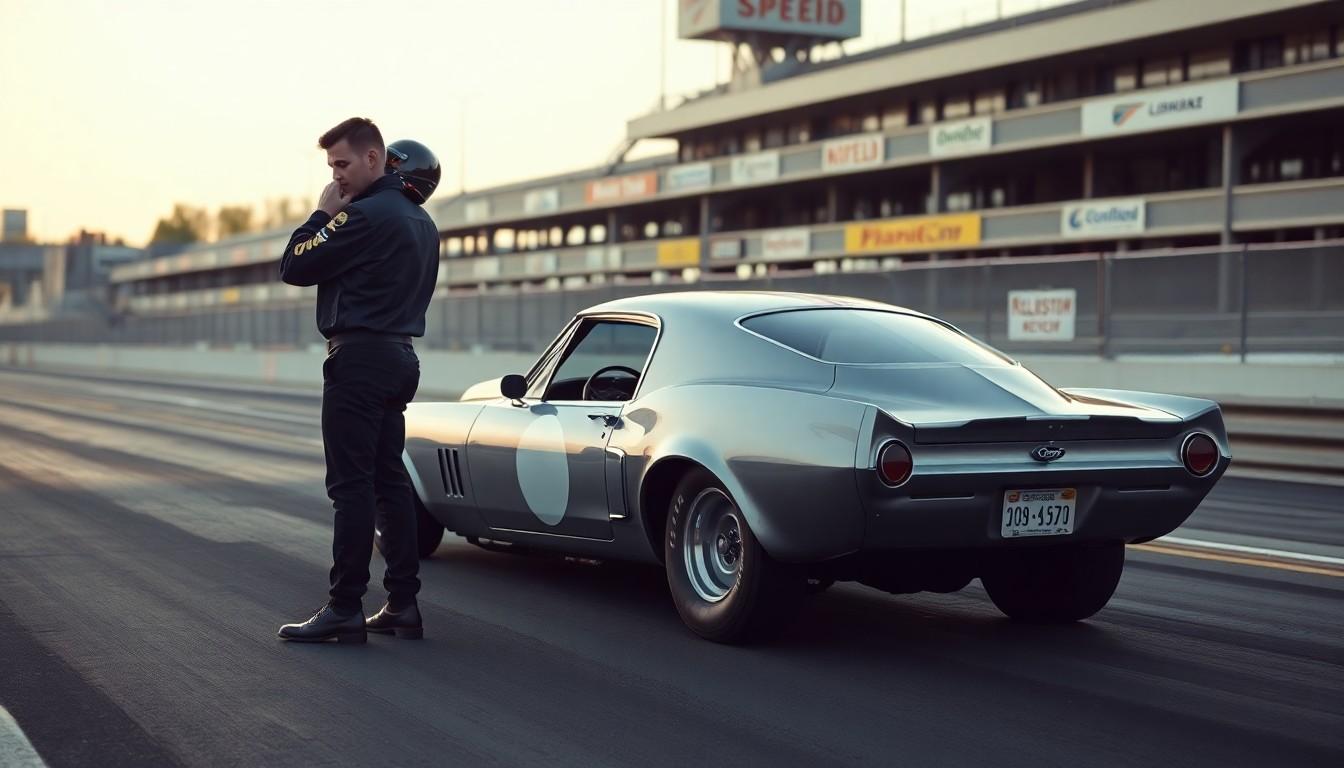
Travis Shumake is bringing an LGBTQ+ spotlight to professional drag racing, combining 250mph launches, a family racing legacy and unapologetic personality. From a Grindr-sponsored fire suit to Hyrox training and a very New York home life, his story shows how one driver is making a traditionally conservative sport feel more welcoming.
Essential Takeaways
- Family roots: Shumake returned to drag racing partly to reconnect with his late father’s legacy.
- Remarkable speed: He drives a funny car capable of reaching around 250mph.
- LGBTQ+ visibility: Shumake is one of the sport’s best-known openly gay professional racers.
- Unexpected sponsorship: Grindr backed his racing programme, creating a striking crossover between queer culture and motorsport.
- Fitness matters: OrangeTheory and Hyrox help him prepare for the physical and mental demands of racing.
A family legacy, rebuilt at 250mph
The loudest part of Travis Shumake’s life is also one of the most personal. Behind the engine roar and launch-day nerves is a son trying to feel close to his father, the late drag-racing figure Tripp Shumake.
As Shumake explained to Queerty, returning to the track gave him a powerful way to share the same world his father had inhabited. He drives a funny car, a carbon-fibre-bodied machine styled to resemble a road car, although his 6ft 4in frame means he has to drive with his knees.
That detail is almost comically practical, but it says plenty about his determination. Racing isn't simply a hobby he picked up on a whim. It's a family language, and he has found his own way to speak it. Sources including OutSports and the Human Rights Campaign have previously followed his route back into professional drag racing. [3], [5]
Why Shumake stands out in drag racing
Drag racing has long carried a macho, traditionally conservative image, making Shumake's visibility especially significant. He's not presenting a carefully softened version of himself, either. The humour, the fashion, the Bravo fandom and the directness are all part of the package.
His openness has attracted both support and hostility. The Human Rights Campaign highlighted his place as an openly gay racer, while Out reported on his position as the first openly gay professional drag racer sponsored by Grindr. [4], [5]
At one point, the Westboro Baptist Church protested outside a drag strip where he was competing. Shumake described the experience as something of a badge of honour, an extraordinary response that turns an ugly confrontation into evidence of how far the sport's public image is changing.
The Grindr sponsorship was bold, but not obvious
A dating and social app sponsoring a professional drag racer was never going to be the most predictable partnership. Grindr's support gave Shumake a distinctive platform, while the racing world offered the brand an unusual route into a high-energy sporting audience.
OutSports and AOL reported on the sponsorship, which helped make Shumake's presence more visible beyond the usual motorsport circles. [3], [7] The partnership also exposed a basic truth about modern sponsorship: brands don't always need a perfect demographic match if the story is memorable enough.
Shumake has said he may bring back the black Grindr racing suit for selected events. It remains one of those rare pieces of sports branding that feels both playful and genuinely historic, rather than simply pasted on for attention.
How do you prepare to drive that fast?
The surprising twist is that Shumake experiences severe motion sickness in ordinary transport. Aeroplanes, cars and even the New York Underground can leave him feeling queasy, yet he can manage a quarter of a thousand miles per hour when he's in control.
His solution is focus. At launch, he uses peripheral vision to pick up the timing lights, then fixes his gaze far down the track. That long-distance focus helps him stay composed while the car accelerates with brutal force.
Fitness is another part of the preparation. Shumake combines OrangeTheory training with Hyrox, the hybrid fitness competition built around running and functional exercises. The sled pushes and pulls may seem a world away from a drag strip, but they build the strength, conditioning and competitive edge that racing demands. [2], [3]
A racer with a life beyond the track
Away from race weekends, Shumake lives in New York with his fiance, Daryl, and their dog, Banks. Their routine includes long city walks, GPS tracking and plenty of television, particularly Bravo shows. It's a wonderfully ordinary counterpoint to a career built around extraordinary acceleration.
The couple met at Palm Springs Pride and plan to marry next November. Shumake has described himself as someone with ambitious wedding tastes and a racing budget, which is perhaps the most relatable line in the entire story.
That contrast is part of his appeal. One weekend he's travelling to a distant track, and the next he's navigating dog walks, gym sessions and several hours of reality television. Industry coverage from Queerty, OutSports and the HRC has helped show the person behind the helmet, not just the headline. [2], [3], [5]
The wider significance is easy to spot. Representation in sport doesn't have to arrive as a solemn statement. Sometimes it comes in a flamboyant fire suit, a sharp joke and a driver who refuses to leave any part of himself in the pit lane.
Shumake's career is still developing, but his impact is already larger than a single race result. He's making room for queer fans, challenging assumptions about who belongs in motorsport and proving that authenticity can travel very quickly indeed.
It's a small but powerful shift: the drag strip is getting more room for everyone.
Source Reference Map
Story idea inspired by: [1]
Sources by paragraph: