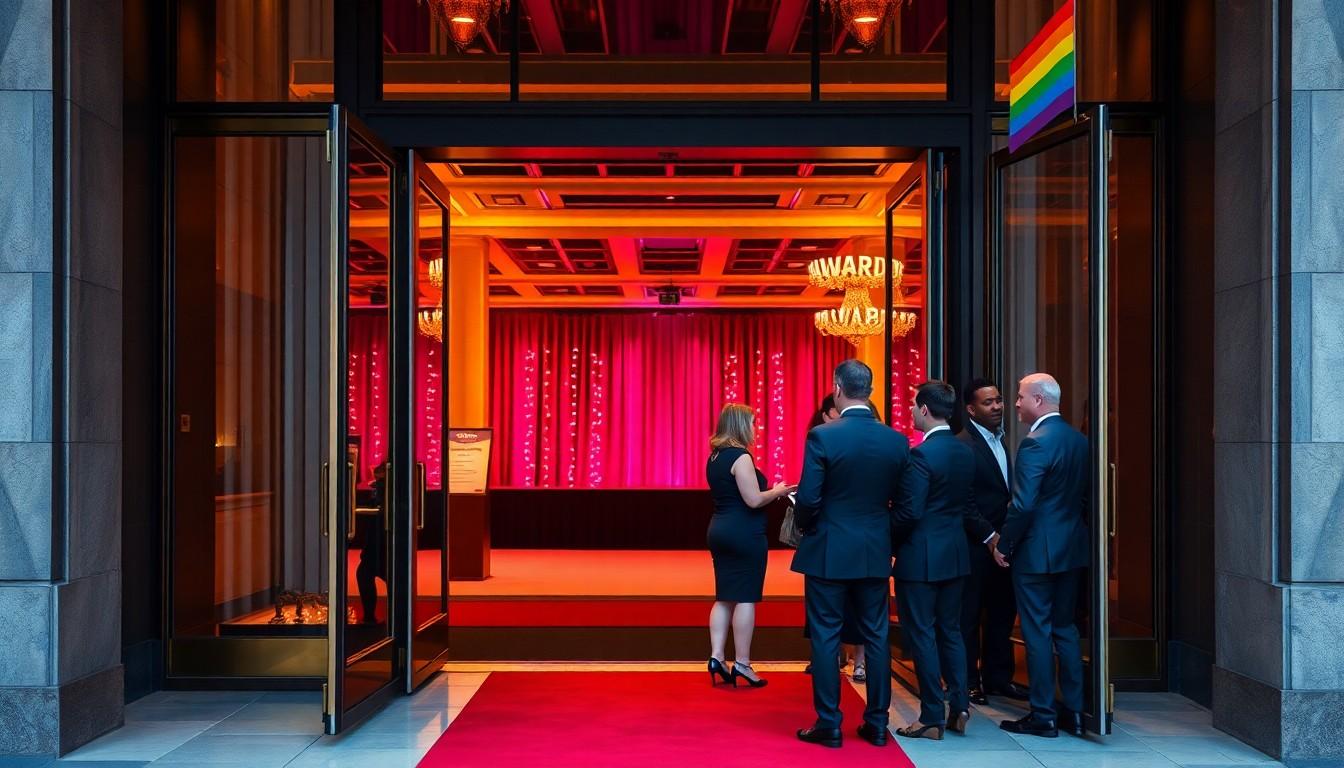
LGBTQ+ advocates gathered in Washington for the Human Rights Campaign’s 2026 National Dinner, where Marcia Gay Harden, André De Shields and Junior LaBeija were recognised for allyship, visibility and cultural impact. With Michigan Governor Gretchen Whitmer delivering the keynote, the evening paired celebration with a clear warning about the equality fight ahead.
Essential Takeaways
- Marcia Gay Harden honoured: The Oscar-winning actor received HRC’s Ally for Equality award for her outspoken support of LGBTQ+ people.
- Cultural pioneers recognised: André De Shields and Junior LaBeija received Legendary Visibility Awards for shaping LGBTQ+ representation and history.
- Whitmer delivered the keynote: Michigan’s governor spoke about equality, personal freedom and her support for LGBTQ+ protections.
- A political evening with warmth: Speeches balanced urgent civil rights messages with pride, remembrance and celebration.
- HRC remains a major force: The organisation says it has around four million members and supporters working across advocacy, education and policy.
A celebration that carried real urgency
The room may have been dressed for a formal dinner, but the mood was far from complacent. The Human Rights Campaign’s 2026 National Dinner brought together campaigners, performers, political leaders and supporters at a moment when LGBTQ+ rights remain fiercely contested.
According to the Human Rights Campaign, the event recognised people whose work has helped make LGBTQ+ lives more visible, understood and defended. There was applause, certainly, but also the sense that this was a gathering designed to recharge people for the work still to come.
HRC president Kelley Robinson set that tone in her address, describing the current period as a “history-making moment” and connecting LGBTQ+ equality with wider struggles involving race, immigration and dignity. It was an expansive message, and a reminder that civil rights movements rarely exist in neat, separate boxes.
Marcia Gay Harden puts allyship into action
Marcia Gay Harden received the Ally for Equality award, presented by actor and fellow ally Camryn Manheim. Her recognition reflects a public record of supporting LGBTQ+ equality and using her visibility to challenge discrimination.
In remarks reported by BroadwayWorld, Harden offered a simple definition of meaningful allyship: listening when people explain who they are, believing them and making space for them. Her wider point was even sharper. Support, she suggested, isn't a red-carpet pose or a line in a speech, but something demonstrated repeatedly through behaviour.
That distinction matters. Celebrity backing can attract attention, but sustained advocacy is what gives it weight. Harden's award celebrates the latter, while also showing how entertainment figures can use familiar platforms to bring equality issues to audiences who might not otherwise engage with them.
André De Shields and Junior LaBeija honoured for visibility
André De Shields and Junior LaBeija each received HRC's Legendary Visibility Award. The honour recognises more than individual careers. It acknowledges the way artists and cultural figures can preserve community memory while pushing representation into the mainstream.
De Shields, a celebrated performer whose stage career includes major musical theatre work, spoke in characteristically expansive terms about the power of culture. His remarks suggested that communities facing hostility aren't without tools; they already possess creativity, history and collective knowledge.
LaBeija's speech reached back through LGBTQ+ history, invoking figures and moments including Marsha P. Johnson, Sylvia Rivera and Matthew Shepard. The references gave the evening a strong sense of lineage. Visibility, after all, isn't only about who appears on a stage today. It's also about remembering who made that stage possible.
Gretchen Whitmer links equality to everyday freedoms
Michigan Governor Gretchen Whitmer delivered the keynote as an ally and parent of an LGBTQ+ child. Her administration has backed protections for LGBTQ+ people in Michigan, and her address placed those policies within a broader argument about personal freedom.
As the Human Rights Campaign has reported, Whitmer framed fundamental rights in practical terms: choosing when to start a family, seeing a doctor, finding secure housing, earning a living and feeling safe locally. That approach cuts through abstract political language. Equality becomes something people experience in kitchens, workplaces, clinics and neighbourhoods.
Her appearance also gave the dinner a clear political dimension. HRC's events aren't simply awards nights for well-known names; they're organising spaces where advocacy, fundraising and policy messaging meet. The polished setting might look glamorous, but the underlying subject is profoundly everyday.
Why these honours matter beyond the dinner
HRC describes itself as the largest LGBTQ+ civil rights organisation in the United States, with work spanning legal advocacy, education, workplaces, schools and communities. Its National Dinner is one of the organisation's most visible annual gatherings, bringing donors and supporters into the same room as prominent advocates and public figures.
The combination of awards was telling. Harden represented active allyship, while De Shields and LaBeija represented cultural history and lived visibility. Whitmer, meanwhile, brought the perspective of elected leadership. Together, the honourees reflected three routes through which change happens: public support, cultural influence and political action.
There was also a quiet reminder that progress needs maintaining. Recognition can preserve history, but it can't replace organising. As the evening made clear, the next chapter of LGBTQ+ equality will depend on people turning admiration into action long after the lights go down.
The message was serious, but the gathering still had a human warmth. That matters too. Communities need moments to celebrate the people who helped them feel seen, particularly when the wider climate can feel exhausting.
A night of recognition, memory and momentum
The 2026 National Dinner placed LGBTQ+ visibility at the centre of a wider conversation about freedom and belonging. Harden's allyship, De Shields and LaBeija's cultural legacies, and Whitmer's political advocacy each offered a different answer to the same question: how do communities protect progress when it is under pressure?
For HRC, the answer remains collective action. For everyone in the room, the evening offered both a tribute to the past and a prompt to keep moving.
Celebration is powerful, but it works best when it sends people back into the world ready to act.
Source Reference Map
Story idea inspired by: [1]
Sources by paragraph:
- Paragraph 1: [2], [3]
- Paragraph 2: [4], [5]
- Paragraph 3: [2], [7]
- Paragraph 4: [3], [6]
- Paragraph 5: [2], [3]
- Paragraph 6: [4], [5]
- Paragraph 7: [2], [4]
- Paragraph 8: [3], [6]
- Paragraph 9: [2], [5]
- Paragraph 10: [3], [7]
- Paragraph 11: [4], [6]
- Paragraph 12: [2], [5]
- Paragraph 13: [3], [4]
- Paragraph 14: [2], [6]
- Paragraph 15: [4], [5]
- Paragraph 16: [2], [3]