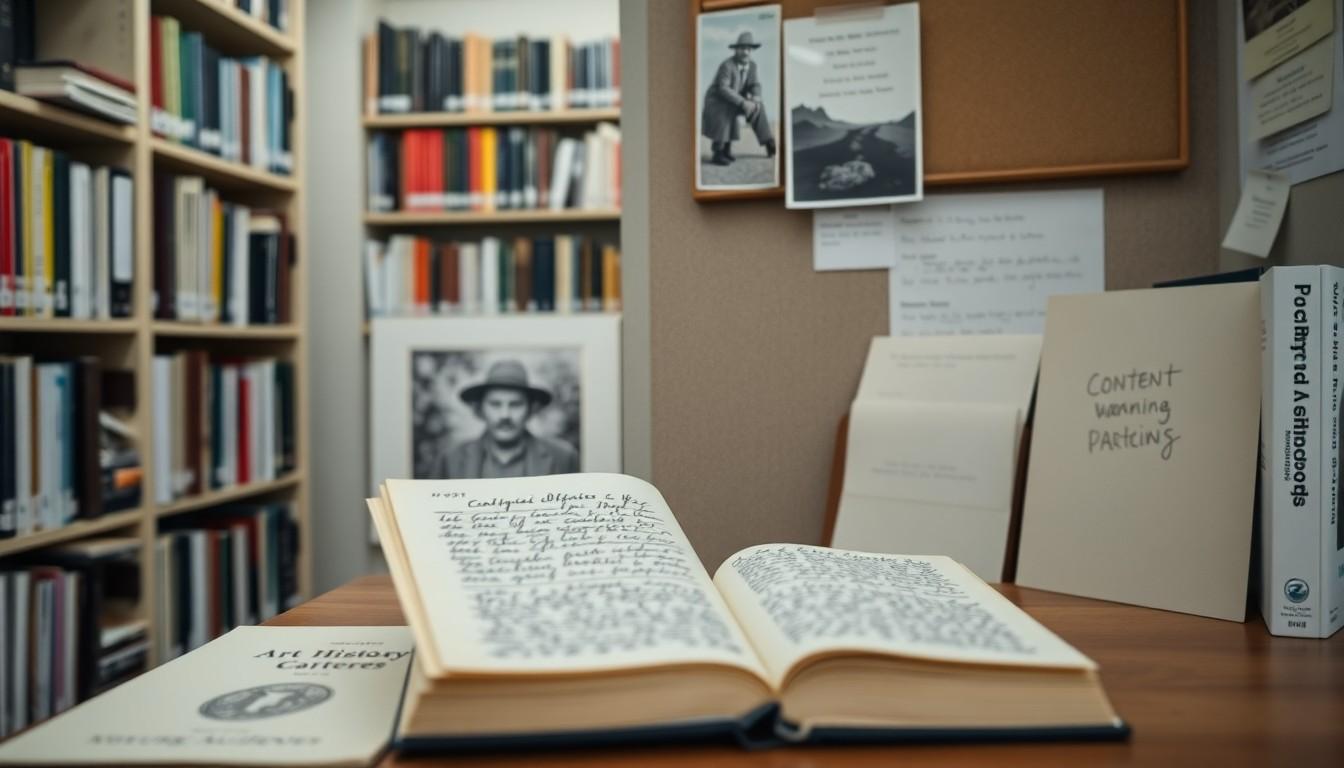
Readers are being invited to look beyond shock and see how gay imagery, history and art can express resilience, tenderness and belonging. Drawing on The Closet Professor and academic perspectives, this thoughtful cultural story explores why depictions of queer life still matter, especially when they challenge silence, respectability and the pressure to conform.
Essential Takeaways
- Art can affirm identity: Gay imagery often carries emotional and political meaning beyond its surface.
- History needs context: Queer lives become clearer when viewed through culture, literature and social change.
- Visibility still matters: Representation can offer recognition to people who have often been left out.
- The subject is broad: The Closet Professor covers LGBTQ+ history, art, politics and culture.
- Maturity and consent matter: Some artworks include non-sexual nudity, so readers should approach them thoughtfully.
Why queer imagery can feel so powerful
A photograph, painting or sculpture doesn't need to be explicit to make people pause. Sometimes a glance, a pose or the simple presence of two men together carries the emotional weight. In queer art, that visibility can feel tender, defiant and quietly radical all at once.
Stanford art historian Richard Meyer has examined the surprising and affirmative force of gay imagery, showing how pictures associated with scandal or controversy can also create pride and connection. The point isn't merely whether an image shocks. It's what the image allows viewers to imagine about queer bodies, relationships and lives. [3]
That tension gives the subject its electricity. A work can unsettle one viewer while reassuring another, particularly when it offers a form of recognition that mainstream culture once denied. The most memorable images often hold both feelings at once: vulnerability and strength.
From hidden lives to a wider cultural record
The Closet Professor presents itself as a resource covering LGBTQ+ studies, including history, art, literature, politics and culture. That broad remit matters because queer experience can't be reduced to a single struggle or a parade of famous names. It also belongs in everyday stories, visual culture and the shifting language people use to understand themselves. [5]
A blog that moves between historical material and visual art can therefore act as an informal archive. It gathers fragments that might otherwise remain scattered: an artist's influence, a political turning point, a literary voice or an image that captures an era's anxieties.
There is a human pleasure in that kind of collecting. Readers aren't simply being handed a lesson; they're being encouraged to make connections, follow their curiosity and notice how the past continues to echo in the present.
The quiet pressure to conform
One reason queer representation remains important is the persistence of conformity. Social expectations can be so ordinary that they become almost invisible, shaping which relationships appear respectable and which bodies are treated as acceptable.
The University of San Francisco's discussion of transformation and conformity explores how people can move beyond restrictive assumptions rather than allowing them to dictate the whole of their lives. That idea sits naturally beside queer art, where a single image can question the rules that viewers have absorbed without noticing. [4]
This doesn't mean every work needs to be overtly political. A calm portrait or affectionate scene may challenge convention simply by existing. For someone who has rarely seen their feelings reflected with dignity, that can be a surprisingly powerful experience.
How to view challenging images thoughtfully
Some material associated with queer art includes nudity, although nudity isn't automatically sexual. Context, intention and presentation all matter, so a useful first step is to ask what an image is doing rather than reacting only to its surface.
Is it exploring beauty, vulnerability, identity, history or the human form? Is it documenting a culture, celebrating intimacy or challenging censorship? Those questions don't remove discomfort, but they can turn an instant reaction into a more informed response.
Readers should also check the setting and the creator's information, particularly when images have been reposted online. The Closet Professor notes that its pictures come from various places and invites copyright holders to make contact where necessary. That reminder is important in a digital culture where images can travel far from their original context. [1]
Why this conversation still has room to grow
The continuing interest in queer history and art suggests that visibility is not a finished project. New readers are still discovering overlooked artists, forgotten communities and images that once circulated only in private or specialist spaces.
The Closet Professor's archive, including its many pages of historical and cultural writing, reflects that appetite for discovery. Its value lies less in offering one final definition of gay culture than in opening doors into several overlapping conversations. [6] [7]
Love, in this context, isn't presented as soft or passive. It can be a source of endurance, a refusal to disappear and a way of making room for lives that have been pushed to the margins. That may be the real strength behind the imagery: it asks us not only to look, but to see.
Explore queer art and history with curiosity, context and care.
Source Reference Map
Story idea inspired by: [1]
Sources by paragraph: