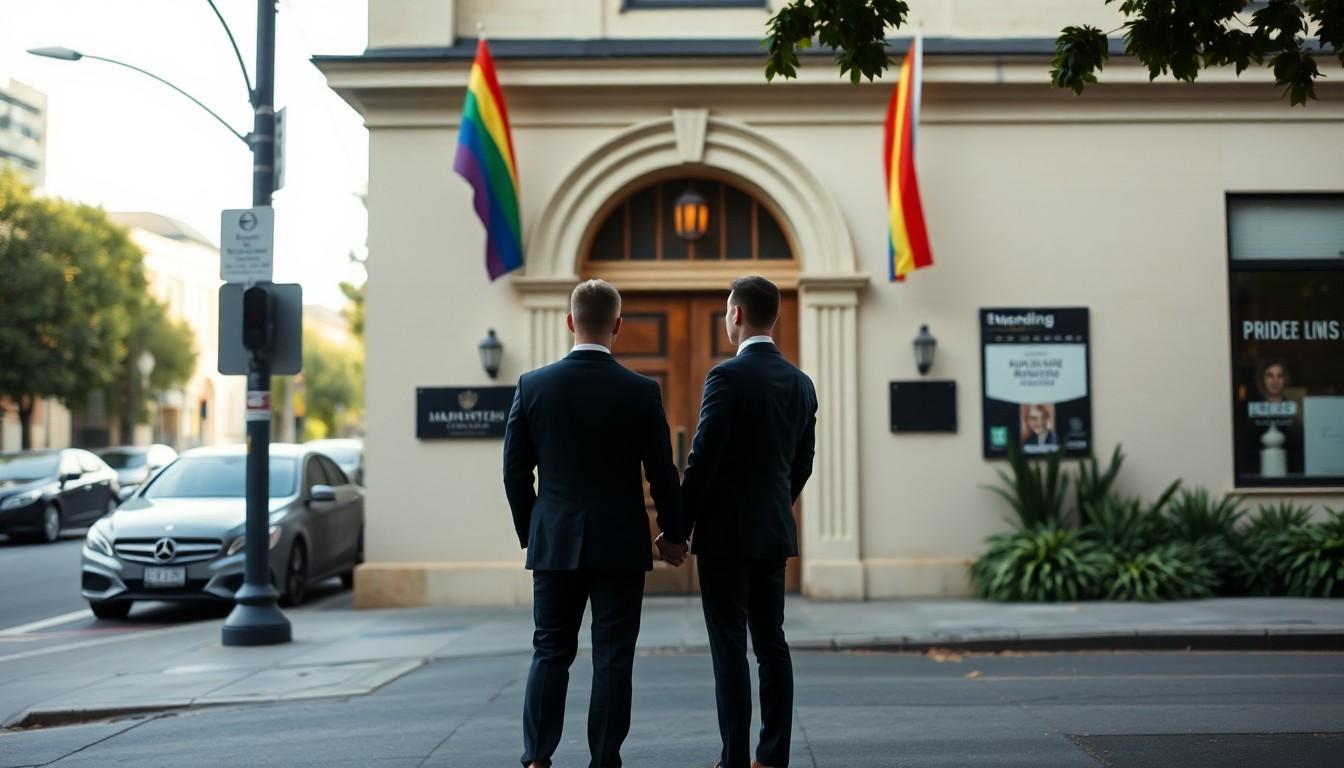
A Melbourne couple's 2016 wedding was both an intimate celebration and a public statement, held before Australia voted for marriage equality. Ten years later, their story offers a warm reminder of how love, family and legal recognition can overlap, while showing why hard-won rights still deserve attention.
Essential Takeaways
- A beach meeting became a marriage: Freddy Grant and Burton Reynolds met in Darwin in 2009 and quickly built a life together.
- The ceremony used UK law: Their wedding took place at the British consul-general's residence because Freddy is British.
- Timing gave it extra meaning: They married in 2016, before Australia's 2017 marriage-equality vote.
- Family recognition mattered: The legal ceremony helped make their relationship more tangible to Burton's Malaysian family.
- The anniversary carries a warning: Their story celebrates progress, but also questions whether rights can ever be treated as permanently secure.
A beach party, a ukulele and an instant connection
Some love stories begin with a grand gesture. This one began with a beach party in Darwin, a ukulele and Beatles songs, according to ABC News. Freddy was travelling from the UK and finding his feet while coming out, while Burt was starting his working life after university.
The pair noticed each other, began talking and gradually found themselves alone together as the party thinned out. Freddy had planned to return home, but the connection was strong enough for him to change his travel plans and come back to Australia. As the National Museum of Australia explains, personal stories like these sit alongside the broader history of marriage equality, turning political change into something recognisably human.
Their 2016 wedding was legal, but not yet ordinary
The couple married in Melbourne during a fierce national argument about whether same-sex marriage should be put to a public vote. Their ceremony wasn't simply a private occasion. ABC News reported that they understood its public symbolism and expected interest from the media.
Because Freddy was British, the couple could marry under UK law on British soil, even though Australia hadn't yet recognised same-sex marriage. That meant choosing between the British consulate and the consul-general's residence. They opted for the latter, turning what might have been a quick lunch-break elopement into a ceremony with unusual historical weight.
The legal landscape changed in Australia in December 2017, when Parliament passed legislation allowing same-sex couples to marry. The Library of Congress notes that the reform followed the national postal survey and marked a major shift in Australian family law.
Why legal recognition changed family conversations
Marriage wasn't only about paperwork for Burt and Freddy. Burton has Malaysian heritage, and the couple knew that queer people in Malaysia can face serious legal and social risks. In that context, official recognition gave their relationship a clarity that family members could understand.
That detail shows why marriage equality matters beyond wedding photographs. A certificate can affect how relationships are discussed, acknowledged and supported, especially across cultures where same-sex partnerships may remain difficult to name openly. The National Museum of Australia places Australia's reform within a longer campaign for equality, shaped by activism, public debate and deeply personal experiences.
For the couple, the message was straightforward: they wanted the same chance to enjoy the everyday parts of life as everyone else. There's something quietly powerful about that ambition. Equality often looks less like a dramatic speech and more like sharing routines, making plans and being recognised at the family table.
The vote brought visibility, but also pain
Australia's 2017 postal survey produced a Yes result, yet the campaign was far from celebratory for everyone. ABC News described the television advertising and public debate as a period marked by hostility, with the couple sometimes becoming unwilling representatives for a cause they hadn't set out to champion.
The national result was 61.6 per cent in favour, according to the Australian National Museum, while a substantial minority voted No. For couples already living under scrutiny, that division could feel intensely personal. Even ordinary wedding ceremonies sometimes reminded them that the traditional definition of marriage had not yet made room for them.
Australia's marriage-equality campaign also sits within a longer, international history of changing laws and public attitudes. As the Library of Congress records, the legislation was a landmark moment, but legal reform rarely erases prejudice overnight. The emotional after-effects can linger well beyond the vote.
Ten years on, love is still a daily choice
Freddy says the relationship works through small, repeated acts of loyalty, shared rituals and choosing each other every day. It's a less glossy picture of romance than the wedding-day headline, but arguably a more useful one. Grand occasions matter, yet lasting partnerships are usually built in the quieter hours, when one person knows when to offer support and when to tread carefully.
Their anniversary also arrives with a note of unease. ABC News reported Freddy's concern about renewed attacks on LGBTQ+ rights and the rise of anti-equality movements online and overseas. Historical accounts of same-sex marriage in Australia show how recently recognition was secured, which makes complacency feel risky.
The couple's story therefore holds two ideas together. Their wedding was a joyful, deeply personal celebration, and it was also a statement made in an uncertain political moment. Ten years later, it remains a reminder that progress can feel both monumental and surprisingly fragile.
A meaningful anniversary can celebrate love while keeping an eye on the rights that make ordinary life possible.
Source Reference Map
Story idea inspired by: [1]
Sources by paragraph:
- Paragraph 1: [2], [3]
- Paragraph 2: [2], [3]
- Paragraph 3: [2], [4]
- Paragraph 4: [2], [3]
- Paragraph 5: [2], [4]
- Paragraph 6: [2], [3]
- Paragraph 7: [2], [4]
- Paragraph 8: [2], [6]
- Paragraph 9: [2], [7]
- Paragraph 10: [2], [3]
- Paragraph 11: [2], [7]
- Paragraph 12: [2], [4]
- Paragraph 13: [2], [6]
- Paragraph 14: [2], [7]
- Paragraph 15: [2], [3]
- Paragraph 16: [2], [4]
- Paragraph 17: [2], [7]
- Paragraph 18: [2], [3]