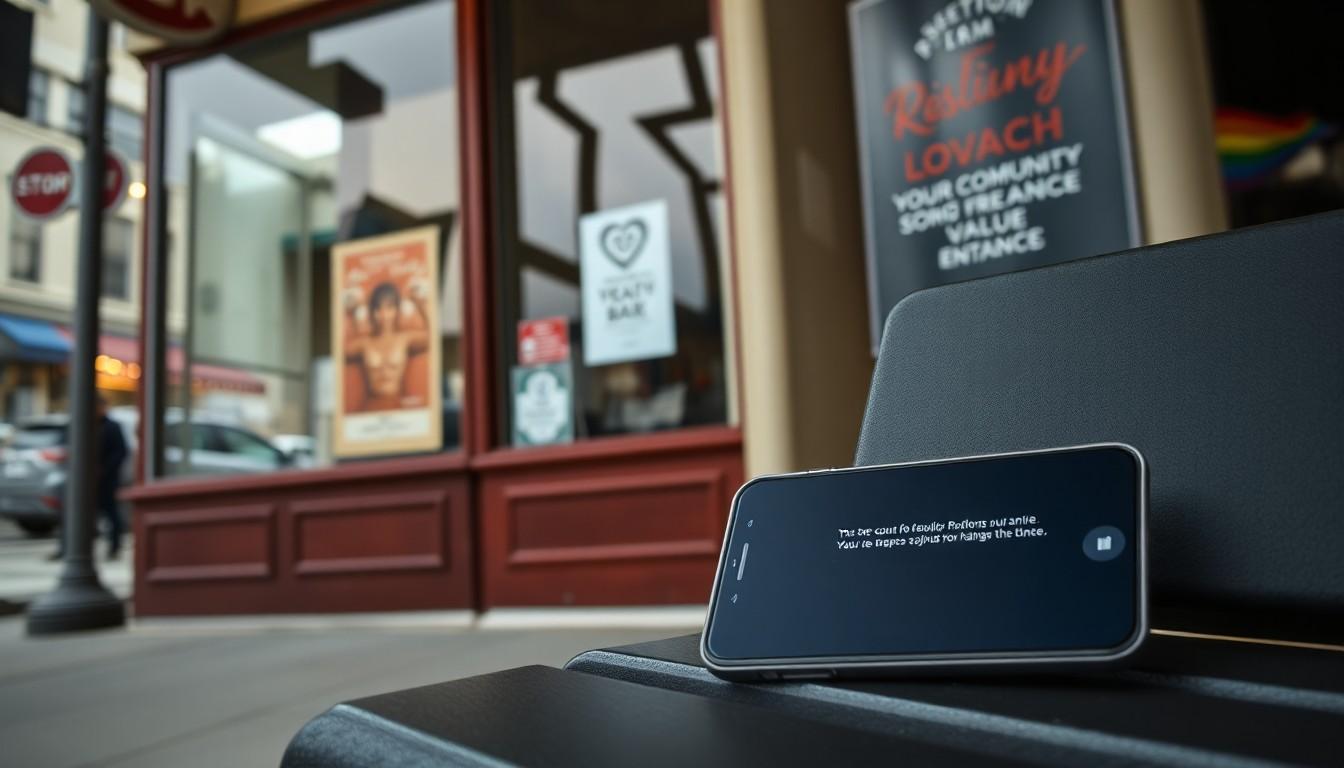
Queer bars, clubs and community groups in San Francisco are warning that sudden Instagram suspensions could threaten their visibility just as major leather and LGBTQ+ events bring vital customers to the city. The dispute highlights a wider problem for small venues: relying on a powerful platform that can erase years of audience-building without a clear explanation or practical appeal.
Essential Takeaways
- Accounts are disappearing: Several San Francisco LGBTQ+ venues and organisations have reportedly faced suspensions, deletions or repeated takedowns.
- The timing hurts: Lost visibility before Pride, Dore Alley and Folsom Street Fair can mean fewer visitors during crucial trading weekends.
- Appeals feel opaque: Business owners say automated decisions often provide little detail and no meaningful route to discuss corrections.
- Platforms face a tricky balance: Meta’s rules target explicit sexual content and safety risks, but critics say enforcement can sweep up legitimate queer culture.
- A backup plan matters: Venues are rebuilding mailing lists, websites and alternative social channels rather than relying on Instagram alone.
When an Instagram account vanishes overnight
For a small bar, an Instagram page isn't just a gallery. It's a digital front desk, event calendar, poster wall and emergency noticeboard rolled into one. When that page suddenly shows an unavailable message, customers may assume the venue has closed.
That fear is particularly sharp in San Francisco's South of Market district, where leather bars, kink clubs and queer organisations have spent decades building identities that don't fit neatly into mainstream advertising. According to Mission Local, at least six local LGBTQ+ businesses and groups have recently experienced account restrictions or removals.
The practical damage can be immediate. A venue might lose access to thousands of followers, scheduled promotions and years of photos just before the weekends that keep it afloat. As GO Magazine has reported, the pattern has affected more than one local queer bar, turning a platform problem into a business risk.
Big event weekends make the stakes higher
San Francisco's Folsom Street Fair is not an ordinary Sunday in the diary. It draws huge crowds and creates a concentrated burst of trade for nearby bars, clubs, retailers and community groups. If visitors can't find opening times, ticket links or event updates, they may simply go elsewhere.
The same pattern has played out around other leather-community events. The San Francisco Chronicle reported on concerns surrounding The Stud's Instagram account, while local coverage has also highlighted problems affecting venues such as Beaux and Powerhouse.
That timing makes a suspension feel less like a routine inconvenience and more like a slammed door. For businesses already dealing with higher rents, expensive supplies and changing drinking habits, losing a major promotional channel can be painfully hard to absorb.
Why Meta's rules are causing friction
Meta says its safety policies are designed to restrict harmful or sexually explicit material, including content involving nudity and exploitation. The company's LGBTQ+ policy pages also describe efforts to support LGBTQ+ communities and protect users from abuse.
The difficulty lies in how those broad rules are applied. Queer venues may post images involving leather clothing, bodies, nightlife or sexual subcultures without intending to publish pornography. An automated system, however, may recognise visual or textual signals before it understands the cultural setting.
According to Metro Weekly and Underscore SF, venue operators have questioned whether enforcement is consistent, particularly when comparable material aimed at straight audiences appears to remain online. That doesn't prove deliberate bias in every case, but it explains why owners are asking for clearer standards rather than special treatment.
Automated decisions leave owners guessing
Business owners say the most frustrating part isn't always the removal itself. It's the silence afterwards. A generic policy notice doesn't tell a bar which photograph caused the problem, whether an old post triggered a review, or what needs changing before the account can return.
That uncertainty encourages defensive behaviour. The Leather and LGBTQ+ Cultural District has reportedly moved towards text-heavy posts and reviewed older material after receiving warnings, according to Mission Local. In effect, organisations are moderating themselves around an invisible rulebook.
Meta's enforcement systems rely heavily on automated detection, and its own policy information presents large-scale content review as a necessary safety measure. But scale isn't the same as accountability. When an account is a venue's main public channel, a useful appeal should explain the issue, identify the remedy and provide a realistic opportunity to respond.
The smartest response is bigger than Instagram
For queer businesses, the immediate priority is keeping customers informed without abandoning the audience that Instagram still provides. A prominent website, a regularly updated email list and a clear events calendar can create a more stable home base.
Owners should also keep downloadable copies of photographs, captions, follower-facing announcements and event details. A second social account can help, but it shouldn't be the entire backup plan; another platform may impose its own rules or suffer the same sudden failure.
The longer-term lesson is uncomfortable but useful. Social media can deliver remarkable reach at modest cost, yet that convenience comes with borrowed land and a landlord no small business can call. As the San Francisco examples show, a venue's online presence needs the same resilience as its physical one.
A lively community shouldn't disappear because an automated system missed the context.
Source Reference Map
Story idea inspired by: [1]
Sources by paragraph:
- Paragraph 1: [2], [4]
- Paragraph 2: [3], [7]
- Paragraph 3: [2], [5]
- Paragraph 4: [4], [7]
- Paragraph 5: [3], [6]
- Paragraph 6: [6], [5]
- Paragraph 7: [2], [4]
- Paragraph 8: [6], [7]
- Paragraph 9: [5], [6]
- Paragraph 10: [2], [7]
- Paragraph 11: [4], [6]
- Paragraph 12: [3], [5]
- Paragraph 13: [2], [7]
- Paragraph 14: [4], [6]
- Paragraph 15: [3], [5]