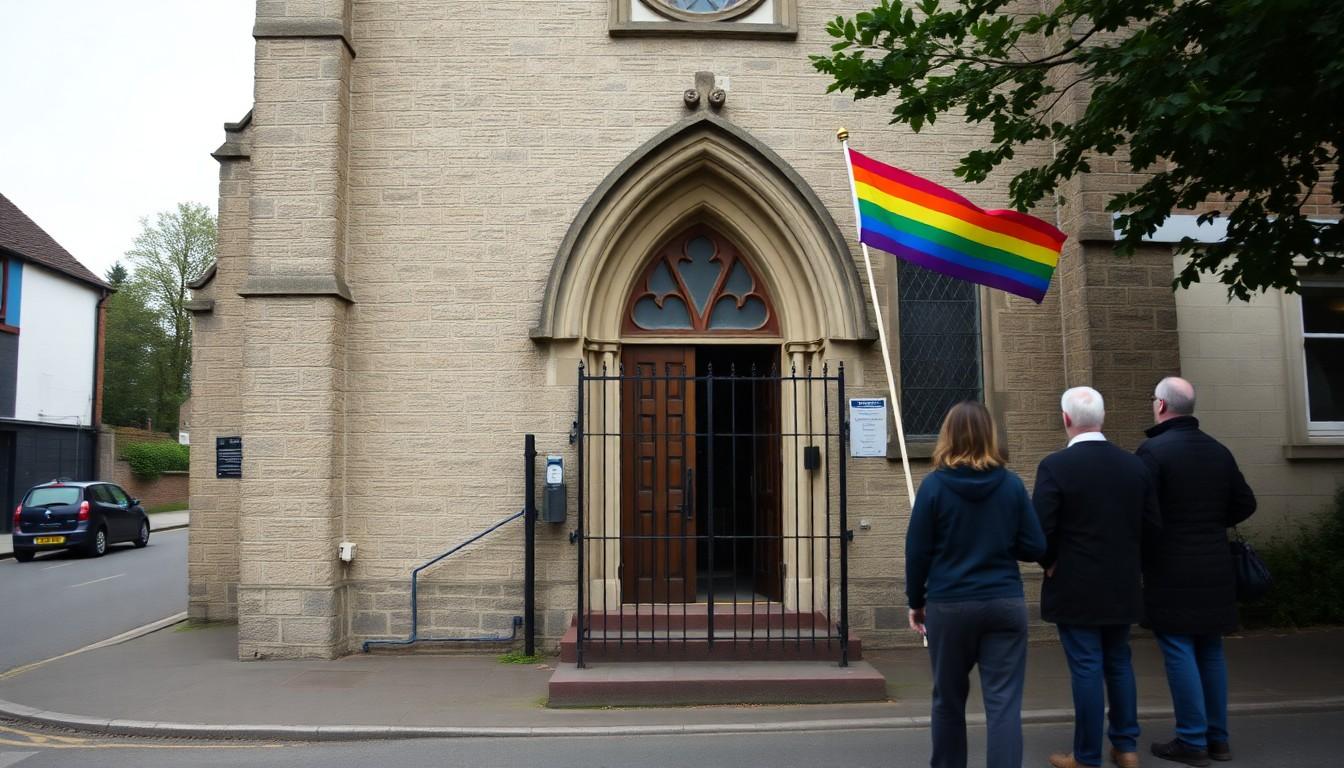
Britain’s proposed conversion therapy ban has reopened a difficult question: how can lawmakers protect people from coercion without criminalising consensual conversations, counselling or religious support? Government documents, consultation responses and campaign groups reveal a debate where definitions, evidence and safeguards matter just as much as the headline promise of protection.
Essential Takeaways
- The central problem: There is no universally agreed definition of conversion therapy, making the scope of any law crucial.
- Government proposal: Ministers have explored criminal and civil measures aimed at harmful attempts to change sexual orientation or gender identity.
- Evidence matters: The official assessment reviews reported harms, but campaigners disagree about what practices legislation should cover.
- Free expression concern: Religious groups and therapists worry that vague rules could chill private advice, prayer or pastoral care.
- Practical test: Any ban needs clear thresholds around coercion, abuse, consent and demonstrable harm.
Britain is still arguing over what the law should cover
The sharpest issue isn't whether abusive practices should be stopped. Few people would defend coercion, threats or degrading treatment. The harder question is where a law should draw the line between harmful conduct and conversations that may be unwanted, challenging or simply uncomfortable.
The Government's consultation materials acknowledge that the phrase conversion therapy is used in different ways. Official proposals have therefore focused on behaviour and harm rather than relying on a single, universally accepted definition. That sounds sensible, but the detail will decide whether the legislation is narrow and workable or broad enough to create uncertainty.
As the Government's frequently asked questions explain, the proposed framework is intended to address practices that seek to change or suppress a person's sexual orientation or gender identity. The distinction between voluntary support and pressure is likely to become the law's most important balancing act.
Why the evidence is proving so contested
Government research describes reported experiences of conversion practices and examines the available academic and qualitative evidence. It presents a picture of people experiencing distress, isolation and pressure, although the quality and consistency of evidence vary across studies and categories of practice.
That uneven evidence doesn't make the reported harm unimportant. It does, however, mean Parliament will need to be precise about what is being prohibited, how intent is established and what standard of proof applies. A law built on a broad label rather than clearly described actions could leave ordinary people guessing where the boundary lies.
The consultation analysis also shows disagreement among respondents. According to the Government's published feedback, there was substantial support for action, but views differed over definitions, exemptions, enforcement and the treatment of religious settings. That split is a reminder that headline agreement can conceal very different expectations.
Protection and freedom are not opposing afterthoughts
Campaign groups such as Stonewall and the Global Interfaith and Equality Service argue that a ban is needed to protect vulnerable people from practices they regard as damaging. The case is especially compelling where a person is dependent on family, faith leaders, a therapist or another authority figure.
But critics fear that a loosely drafted law could discourage legitimate counselling or pastoral conversations. The concern isn't necessarily about defending abuse. It's about whether a person should be free to seek advice that reflects their beliefs, including advice they may later reject.
The Government's consultation page says any approach must be compatible with freedom of speech and religion. That principle needs more than a reassuring sentence in a policy document. It needs plain statutory wording, clear guidance and safeguards that ordinary counsellors, clergy and families can understand without hiring a lawyer.
What a workable ban would need to clarify
First, lawmakers should describe prohibited conduct in concrete terms. Threats, confinement, violence, deception, financial exploitation and sustained psychological pressure are easier to identify than a vague attempt to influence someone's beliefs or identity.
Second, consent needs careful handling. Consent isn't meaningful where a person is a child, dependent on the practitioner, misled about what is being offered or subject to serious pressure. At the same time, adults should not automatically lose the ability to discuss difficult personal questions simply because those conversations involve sexuality or gender.
Third, enforcement should focus on conduct that causes or risks serious harm. The University of Birmingham has argued that delays in delivering a ban are damaging, while campaigners continue to press for legislation. That urgency is understandable, but speed shouldn't replace drafting that can survive real-world cases.
The next debate will be about trust
A credible law must reassure survivors that abusive practices will be taken seriously while reassuring therapists, faith communities and families that honest conversation isn't being criminalised by accident. Those goals are compatible, but only if ministers listen beyond the loudest campaign messages.
The Government's own consultation process offers a useful starting point: identify the harm, test the evidence and publish the reasoning. Britain's challenge now is to turn that process into rules that are firm enough to protect vulnerable people and precise enough to command public confidence.
It's a sensitive debate, but careful definitions are where meaningful protection begins.
Source Reference Map
Story idea inspired by: [1]
Sources by paragraph:
- Paragraph 1: [2], [4]
- Paragraph 2: [5], [3]
- Paragraph 3: [2], [4]
- Paragraph 4: [5], [3]
- Paragraph 5: [3], [5]
- Paragraph 6: [6], [4]
- Paragraph 7: [2], [4]
- Paragraph 8: [5], [3]
- Paragraph 9: [2], [4]
- Paragraph 10: [5], [6]
- Paragraph 11: [7], [4]
- Paragraph 12: [2], [3]
- Paragraph 13: [4], [6]
- Paragraph 14: [2], [5]