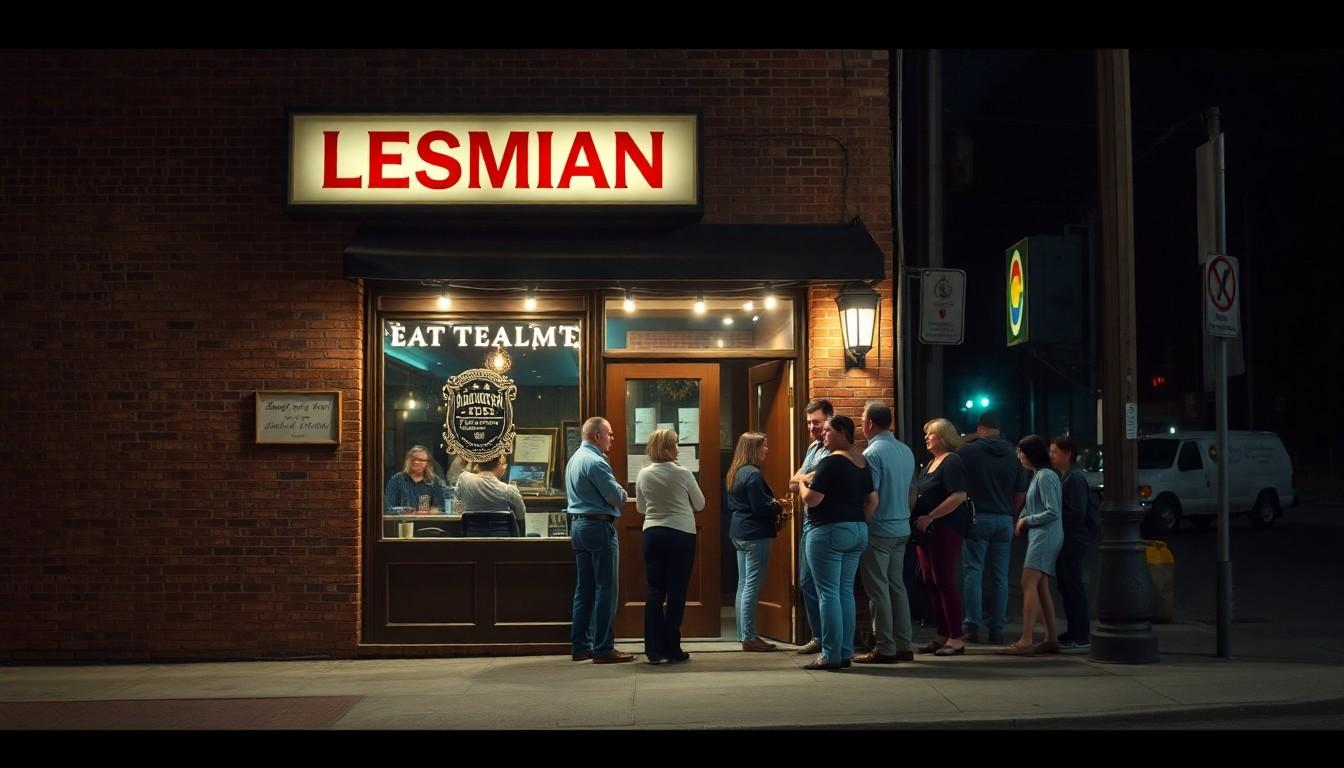
Readers and Hollywood insiders are circling a viral Boston Globe feature about a Western Massachusetts lesbian bar, after a dispute over its KN95 mask policy turned into a surprisingly dramatic culture story. Its sharp characters, combustible conflict and huge online readership have made it an unexpected adaptation prospect.
Essential Takeaways
- A viral hit: The Boston Globe feature became one of the publication's most-read stories.
- A ready-made drama: The story centres on a financially strained bar owner and angry former customers.
- Two possible routes: Industry interest reportedly includes scripted television, film and documentaries.
- A familiar launchpad: The Globe has a strong screen-adaptation legacy, most famously through Spotlight.
- A wider lesson: In a cautious entertainment market, proven audience interest can make a project look less risky.
Why this small-town bar story caught fire
The drama began with a seemingly straightforward change: a Western Massachusetts lesbian bar dropped its requirement for KN95 masks. What followed was anything but routine. Former patrons objected fiercely, and the argument spilled into public view with the kind of emotional intensity usually associated with prestige television.
Annalisa Quinn's Boston Globe article made the conflict feel immediate and tactile. There was the strained atmosphere of a community space under pressure, the practical burden of keeping a venue afloat and the uncomfortable question of what happens when shared rules no longer feel shared. According to The Hollywood Reporter, the feature quickly spread across social media and became one of the Globe's biggest stories.
That combination is powerful. It isn't simply a disagreement about health policy; it's also a story about trust, identity, money and belonging. In other words, it has plenty for a screenwriter to work with.
From Spotlight to a very different kind of headline
The Boston Globe's reputation was forged through its reporting on abuse within the Catholic Archdiocese of Boston. That work earned the paper a Pulitzer Prize and later became the basis for Spotlight, the acclaimed film that won the Academy Award for Best Picture. Pulitzer records and the Globe's own historical material document the investigation's significance and its lasting impact.
The lesbian bar story belongs to a completely different category. It isn't an institutional investigation or a conventional true-crime narrative. Instead, its appeal lies in the volatile intimacy of a community dispute, where every decision can feel personal and no one appears entirely detached.
That contrast is part of the fascination. The same newspaper associated with one of modern journalism's most consequential investigations is now attracting Hollywood attention for a story that feels smaller, stranger and distinctly of its time.
Hollywood sees a contained story with big emotions
According to The Hollywood Reporter, United Talent Agency, which represents the Globe, has received enquiries about potential adaptations in both scripted and documentary formats. The interest makes sense: the article offers a contained setting, a limited group of central figures and a conflict that escalates without needing expensive spectacle.
At its centre is a bar owner dealing with debt and operational pressures, alongside former customers who feel betrayed by the policy change. Those opposing perspectives could support a documentary built around testimony and accountability, or a scripted version that explores the private fears behind the public confrontation.
Still, adaptation interest isn't the same as a green light. Many articles are optioned, while only a small number become films or series. The difference usually comes down to access, rights, financing and whether the story can sustain its tension beyond the original piece.
Why article adaptations matter in a nervous market
The entertainment business has become increasingly cautious, with buyers looking for concepts that arrive with some built-in recognition. A widely shared article doesn't guarantee success, but it can offer something valuable: evidence that people are already curious.
Industry observers quoted by The Hollywood Reporter describe a market in which decision-makers are reluctant to take big risks. A project based on a high-performing article can therefore feel like a safer starting point, even when the subject is unconventional. The audience has already shown up, at least in its first form.
That doesn't remove the creative challenge. A feature story may be gripping because of its language, reporting and compression, while a film or series needs scenes, chronology and character development. The most successful adaptation would need to preserve the story's human friction without turning a real community conflict into a cheap spectacle.
What could happen next?
A documentary might arrive first because the real participants and the original reporting provide a natural foundation. It could examine the dispute while also asking broader questions about public health, queer community spaces and the financial fragility of independent nightlife.
A scripted adaptation would have more freedom, but it would also face greater scrutiny. Casting, tone and the handling of real people would matter enormously, particularly when the story involves an identifiable venue and a community already divided by the controversy.
For the Globe, the immediate result is already significant. The paper told The Hollywood Reporter that the article had attracted many thousands of subscriptions, as well as national and international attention. Sometimes the most revealing cultural stories aren't the grand historical investigations. Sometimes they're the messy arguments playing out in a room where everyone thought they knew one another.
It could become a film or documentary, but for now, its biggest achievement is simpler: it turned an intensely local dispute into a national conversation.
A small bar story has become a surprisingly large Hollywood conversation.
Source Reference Map
Story idea inspired by: [1]
Sources by paragraph:
- Paragraph 1: [5], [6]
- Paragraph 2: [2], [3]
- Paragraph 3: [4], [7]
- Paragraph 4: [5], [6]
- Paragraph 5: [2], [3]
- Paragraph 6: [4], [7]
- Paragraph 7: [5], [6]
- Paragraph 8: [2], [3]
- Paragraph 9: [4], [7]
- Paragraph 10: [5], [6]
- Paragraph 11: [2], [3]
- Paragraph 12: [4], [7]
- Paragraph 13: [5], [6]
- Paragraph 14: [2], [3]
- Paragraph 15: [4], [7]
- Paragraph 16: [5], [6]
- Paragraph 17: [2], [3]