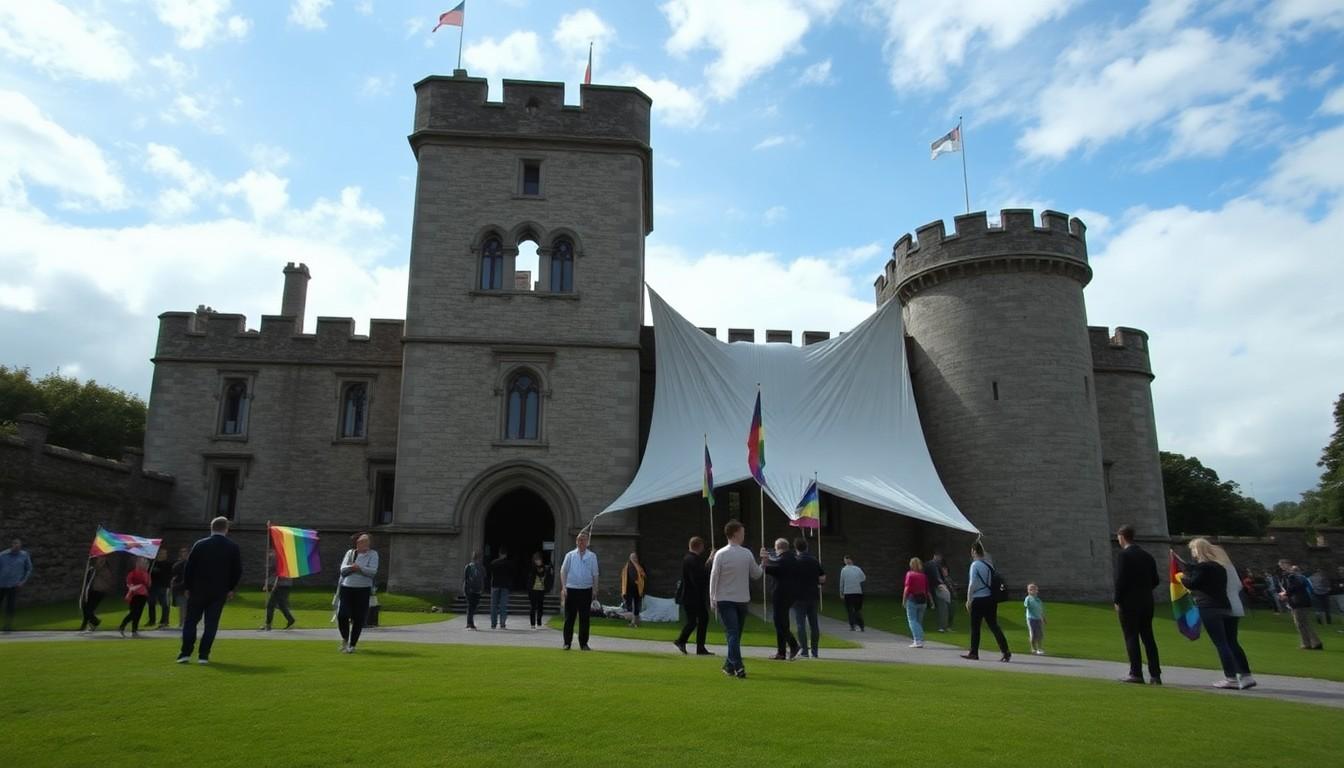
Visitors gathered at Totnes Castle in Devon as a 150m rainbow flag transformed the historic landmark for the town's latest Pride celebration. The striking public artwork formed the centrepiece of a four-day programme of music, film, art and family activities, celebrating the area's creative spirit while making a clear statement about LGBTQ+ visibility.
Essential Takeaways
- A dramatic display: The 150m flag covered Totnes Castle during the Pride weekend.
- A strong turnout: Around 400 people gathered in the castle grounds for the unveiling.
- A carefully planned event: Thirty flag bearers helped unfurl the huge banner after a rehearsal.
- More than a photo opportunity: The programme included live music, cinema, art and family-friendly activities.
- Community collaboration: Torbay Pride lent the flag, while English Heritage supported the planning.
A castle becomes a canvas for Pride
The most eye-catching moment came when Totnes Castle disappeared beneath a sweep of rainbow colour. With the stonework wrapped in a 150m flag, the medieval site became both a gathering place and a giant outdoor artwork.
Around 400 people watched from the grounds as 30 flag bearers unfurled the banner at 10:00 BST. It must have been a satisfying sight: centuries-old masonry, bright fabric and a crowd waiting for the final reveal.
Why Totnes chose the castle
Organisers wanted the event to feel distinctive rather than simply follow a familiar festival template. Ceri Goddard of Totnes Pride said the castle was chosen to underline the message that queer people have long been part of the community and will continue to be visible within it.
That idea gives the display more weight than a colourful backdrop. A historic landmark can sometimes feel remote or untouchable, but the flag brought it into the present, making the building part of a living conversation about belonging.
Four days of music, art and family events
The castle wrapping was one part of a wider four-day programme. Totnes Pride's listings included live performances, creative events, film and activities designed to welcome families, giving people several ways to take part rather than concentrating everything into one parade or evening party.
That broader approach reflects how Pride events have evolved across the UK. Alongside celebration, they often offer space for local artists, community groups and venues, helping the occasion feel rooted in the town rather than imported for a weekend.
Big public art takes serious planning
A flag of this scale doesn't simply appear on a castle wall. Goddard said there were logistical challenges, but organisers held a rehearsal and worked with English Heritage to plan the installation safely and carefully.
The banner was lent by Torbay Pride, another example of how neighbouring groups can share resources and create a more ambitious public display together. The result looked effortless from the crowd, even if plenty of quiet coordination had gone into making that moment happen.
A memorable symbol for the town
Totnes is known for its alternative culture and creative identity, so the castle display felt well matched to its surroundings. It was bold, unmistakably public and just a little theatrical, which is often exactly what makes community celebrations memorable.
For anyone passing through, the image offered a simple reminder that heritage sites aren't frozen in time. They can host new traditions too, and in Totnes, this one arrived in vivid colour.
It's a small town celebration with a wonderfully large visual statement.
Source Reference Map
Story idea inspired by: [1]
Sources by paragraph:
- Paragraph 1: [2], [3]
- Paragraph 2: [4], [5]
- Paragraph 3: [6], [7]
- Paragraph 4: [2], [5]
- Paragraph 5: [3], [6]
- Paragraph 6: [4], [7]
- Paragraph 7: [2], [3]
- Paragraph 8: [5], [6]
- Paragraph 9: [2], [4]
- Paragraph 10: [3], [5]
- Paragraph 11: [6], [7]
- Paragraph 12: [2], [3]
- Paragraph 13: [4], [5]
- Paragraph 14: [6], [7]
- Paragraph 15: [2], [3]
- Paragraph 16: [5], [6]
- Paragraph 17: [4], [7]
- Paragraph 18: [2], [3]
- Paragraph 19: [5], [6]
- Paragraph 20: [4], [7]
- Paragraph 21: [2], [3]
- Paragraph 22: [5], [6]
- Paragraph 23: [4], [7]
- Paragraph 24: [2], [3]