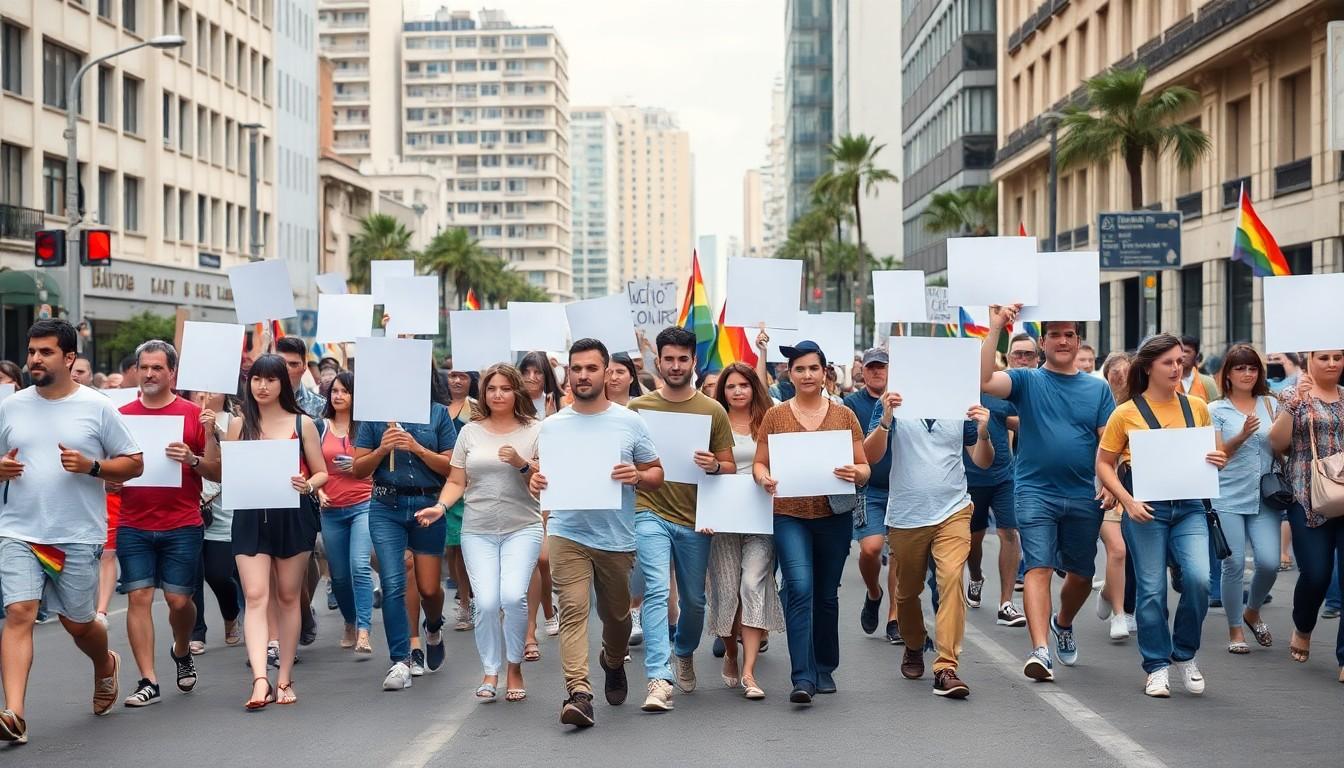
Thousands joined Montevideo Pride 2026 to celebrate LGBTQ+ identity while calling for practical change. From healthcare and housing to jobs, education and safety, the city’s diversity march made a clear point: legal rights matter only when people can use them in everyday life.
Essential Takeaways
- A powerful theme: “Live with dignity, exist with pride” connected celebration with demands for equality.
- A colourful gathering: Rainbow flags, trans, bisexual, non-binary and intersex symbols filled the route.
- Practical priorities: Speakers highlighted work, housing, education, healthcare and protection from violence.
- A public event: The march travelled from Plaza Cagancha towards Plaza 1 de Mayo, with performances and speeches.
- Health was part of the conversation: The pre-march programme included testing, workshops and vaccination information.
Pride in Montevideo was joyful, but never just a party
The first thing visitors would have noticed was colour. Flags, scarves, painted faces and bright outfits transformed central Montevideo into a moving celebration, while smaller identity flags made the crowd feel increasingly broad and specific at once.
Yet beneath the music and good humour sat a serious message. According to la diaria, organisers framed the event around dignity, arguing that discrimination still affects access to work, education, housing and healthcare. It was a reminder that Pride can be both a celebration of being seen and a demand to be treated properly once the parade is over.
The march gathered at Plaza Cagancha before moving towards Plaza 1 de Mayo, near the Legislative Palace. Event information from Gay Prides describes Montevideo's celebration as a major annual gathering for LGBTQ+ communities and allies.
“Live with dignity, exist with pride” set the tone
This year's slogan gave the event its emotional centre. It moved the conversation beyond visibility and towards the material conditions that make a safe, independent life possible.
That distinction matters. A right written into law doesn't automatically mean a trans person can find work, a same-sex family feels recognised, or an LGBTQ+ patient receives informed and respectful treatment. Montevideo's Department of Social Inclusion lists diversity and equality among its areas of work, reflecting the wider effort to turn public commitments into services and support.
The organisers' message was direct: people don't want symbolic approval in place of budgets, implementation and accountability. It's a less glamorous demand than a glittering stage, but arguably the one with the greatest impact.
Healthcare and access took centre stage
Health featured prominently before and during the march. Montevideo.com.uy reported that the pre-march programme included testing, health workshops and vaccination, offering a practical layer to an event often associated mainly with speeches and celebration.
That approach makes sense because healthcare barriers can be subtle as well as dramatic. A patient may avoid an appointment after being misgendered, face assumptions about their relationships or struggle to find a practitioner familiar with gender-affirming care. Small moments of poor treatment can quickly become a reason to stay away altogether.
For anyone attending similar events, the useful takeaway is simple: look beyond the parade route. Information stalls, screening services and community organisations can provide more immediate help than a slogan on a banner, especially for people who are newly exploring support.
The march connected local rights with wider struggles
The programme also addressed gender-based violence, bodily autonomy, rising hate speech and international crises. Organisers linked these issues through a shared concern about who gets to live safely, make decisions about their body and participate fully in society.
The event's route and traffic arrangements were publicised in advance, with Montevideo.com.uy reporting planned road closures and diversions. That practical planning matters in a city-centre march, helping residents, visitors and participants navigate the day without losing sight of the event's purpose.
There was also a strong intergenerational feeling. Pride remembers those who fought before today's laws existed, while continuing to ask whether those victories have reached the people most at risk. The answer, judging by the demands voiced in Montevideo, is still uneven.
A celebration that keeps asking what comes next
Montevideo Pride 2026 was named in tribute to Luis Magallanes, known for his drag character Dulce Polly, who died earlier this year. The tribute added a note of memory to the celebration, acknowledging the performers, activists and community figures who helped make public LGBTQ+ life more visible.
That blend of remembrance and action is part of Pride's enduring strength. The march can be loud, playful and wonderfully extravagant, but it also creates a public space for people who are often told to keep their identity private.
For attendees, the best way to engage is to enjoy the atmosphere while listening to the demands. Bring water, check travel updates, support local community groups and remember that inclusion is measured after the music stops, in classrooms, clinics, workplaces and homes.
Pride is at its most powerful when celebration opens the door to change.
Source Reference Map
Story idea inspired by: [1]
Sources by paragraph: