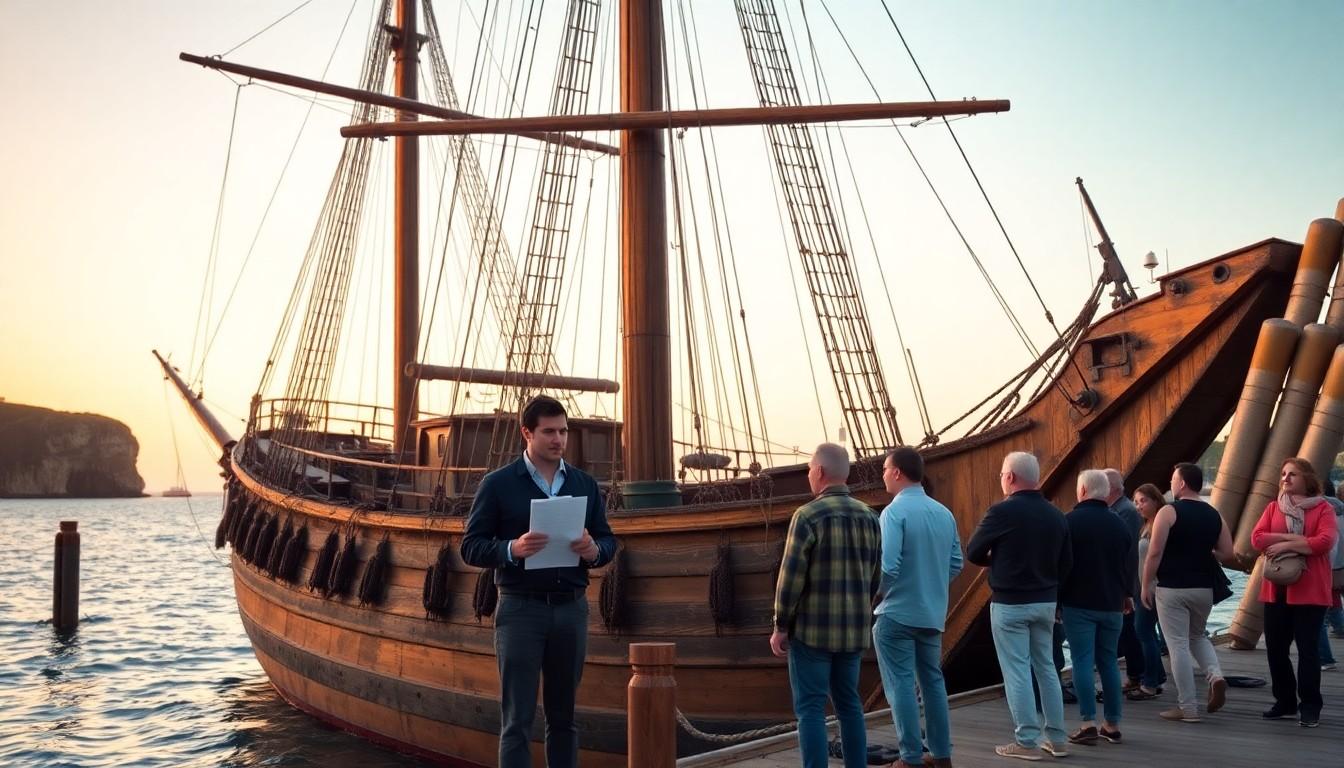
Hayley Kiyoko has pitched a bold new kind of pirate adventure: a fantastical, same-sex romance inspired by Keira Knightley’s swashbuckling turn. Her idea arrives as the singer and filmmaker builds a bigger space for sapphic stories across music, books and film, giving queer audiences another reason to hope for richer mainstream representation.
Essential Takeaways
- A playful pitch: Kiyoko wants to make a lesbian pirate film or series with the adventure and romance of a classic blockbuster.
- A growing filmmaker: Her debut feature, Girls Like Girls, developed from her song and bestselling novel.
- Representation matters: Kiyoko has long connected with audiences seeking visible, affirming queer stories.
- Period drama next: She also hopes to adapt her novel Where There’s Room for Us, despite the financial risks of historical filmmaking.
- A wider creative movement: Other panellists shared ambitious queer and socially resonant projects of their own.
Hayley Kiyoko wants pirates, romance and plenty of drama
The pitch is wonderfully easy to picture. Think windswept decks, glittering costumes, dangerous flirtations and a heroine who has no interest in hiding who she loves. Kiyoko described her dream as a lesbian version of the swashbuckling world associated with Keira Knightley, but with the dial turned firmly towards fantasy and queer romance.
That combination feels especially well suited to Kiyoko, whose work has often paired bright pop sensibilities with emotionally direct storytelling. LGBTQ Nation has highlighted the importance of her sapphic perspective to fans looking for stories that feel hopeful rather than purely tragic.
There’s no studio announcement yet, so this remains a dream project. Still, it’s the sort of idea that instantly communicates its tone, audience and commercial appeal. A queer pirate adventure could offer spectacle without treating representation as a solemn side note.
From viral song to feature film
Kiyoko’s filmmaking ambitions didn’t appear overnight. Her feature debut, Girls Like Girls, grew out of the song and music video that first brought her queer storytelling to a broad audience, then gained a stronger path to production after the story became a bestselling novel.
That journey says plenty about how challenging original LGBTQ+ projects can be to finance. CinemaBlend reported that the film’s development involved expanding a familiar song-based idea into a fuller narrative, giving investors a more substantial foundation than a music video alone.
The result is a useful lesson for emerging creators. A popular song may open the door, but a novel, screenplay or recognisable story world can help prove that an audience will stay for the whole journey. In Kiyoko’s case, the creative pieces reinforced one another rather than competing for attention.
Why Kiyoko’s queer stories connect
Kiyoko’s appeal comes partly from her directness. Her public work has made sapphic identity feel central, joyful and visible, rather than something kept at the edge of the frame. Teen Vogue has previously explored the way audiences responded to queer representation in popular culture, including Kiyoko’s reaction to Velma being confirmed as a lesbian.
That visibility matters because mainstream entertainment still often makes queer viewers wait for emotional payoff. A character might be hinted at, sidelined or left with a carefully ambiguous ending, while the straight romance gets the sweeping music and final kiss. Kiyoko’s projects tend to ask for the full treatment: the longing, the mess, the joy and the happy possibility.
Her earlier interviews also show how closely she connects music, performance and identity. Harper’s Bazaar has profiled the expectations surrounding her pop career, a pressure that makes her move into books and film feel particularly significant. She isn’t simply changing lanes; she’s building a larger creative world.
The next project could be a period romance
Kiyoko is also hoping to bring her second novel, Where There’s Room for Us, to the screen. She acknowledged that period pieces can be difficult to finance, but that challenge hasn’t dulled her enthusiasm. In fact, the project’s historical setting could give her another way to explore queer lives beyond the present day.
Historical queer storytelling can be costly, with costumes, locations and production design all demanding attention. Yet it can also make the past feel startlingly close. The emotional questions remain familiar: who gets to be seen, who has to stay quiet and what happens when people choose each other anyway.
That appetite for period and politically charged queer stories was echoed by the other filmmakers at the event. Wash Westmoreland discussed his interest in adapting The Glamour Boys, while Adam Shankman spoke about a screen version of Spring Awakening. Their ideas suggest that queer cinema isn’t limited to one genre; it can be a musical, a historical drama, a thriller or, yes, a gleefully extravagant pirate romance.
Could a lesbian pirate blockbuster really happen?
The entertainment industry has become more receptive to distinctive genre concepts, but financing remains the tricky part. A pirate film needs scale, while a queer romance needs enough creative freedom to feel genuine. Balancing those demands would be difficult, though not impossible.
Kiyoko’s advantage is that she already brings an audience across several formats. Her music, novels and films create a kind of built-in conversation, while her fans are invested in the emotional world as much as the celebrity name. CinemaBlend’s coverage of her work shows how closely viewers follow the choices behind her films, including decisions about character arcs and endings.
For now, the idea is best enjoyed as a thrilling possibility. But the response to it also says something practical: audiences know exactly what they want, and they’re ready for queer stories with scale, romance and a little theatrical swagger. A ship, a storm and two women falling in love? It’s hard to argue with the blueprint.
A lesbian pirate adventure could be the big, colourful queer fantasy audiences have been waiting for.
Source Reference Map
Story idea inspired by: [1]
Sources by paragraph:
- Paragraph 1: [2], [4]
- Paragraph 2: [3], [5]
- Paragraph 3: [6], [7]
- Paragraph 4: [4], [5]
- Paragraph 5: [2], [3]
- Paragraph 6: [5], [7]
- Paragraph 7: [4], [5]
- Paragraph 8: [2], [3]
- Paragraph 9: [5], [6]
- Paragraph 10: [4], [7]
- Paragraph 11: [2], [5]
- Paragraph 12: [6], [7]
- Paragraph 13: [2], [4]
- Paragraph 14: [5], [7]
- Paragraph 15: [2], [6]