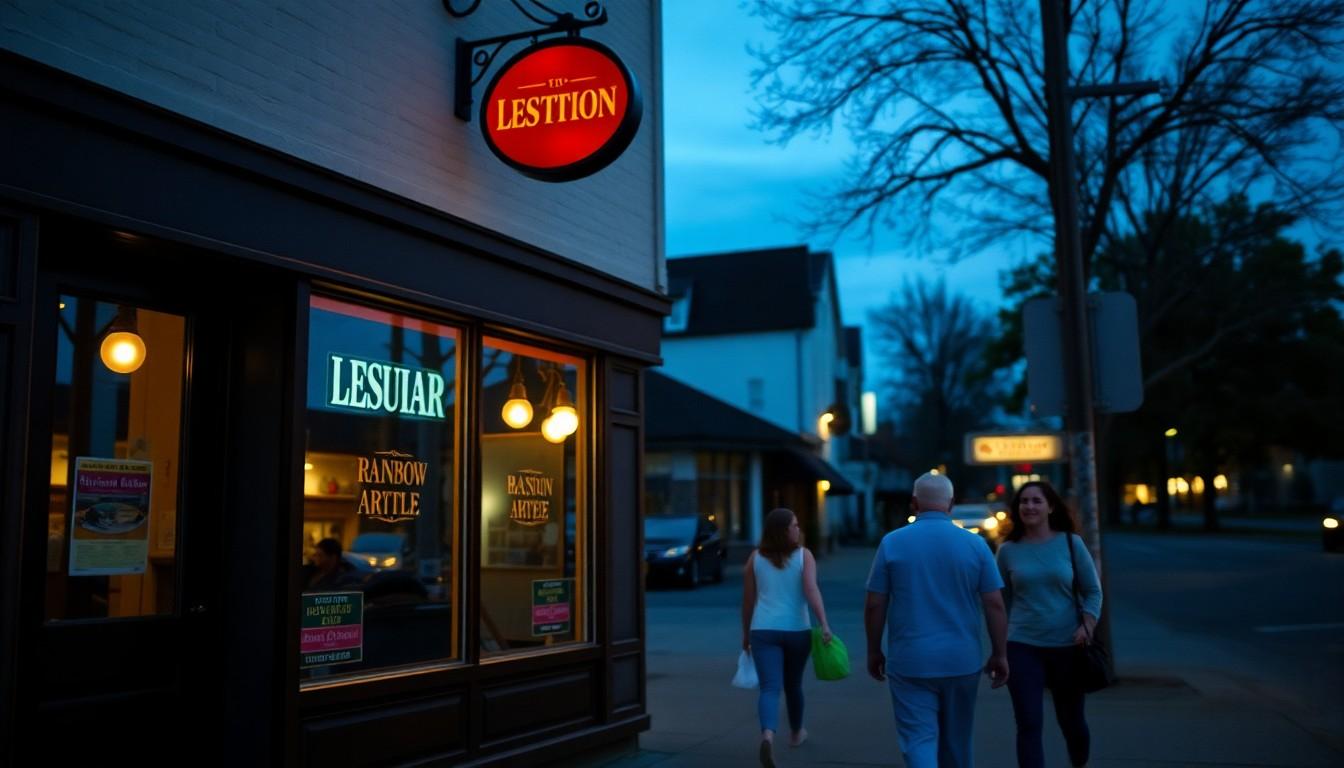
Readers rallied around a Boston Globe story about a Western Massachusetts lesbian bar, with the piece reportedly attracting several thousand new subscribers in roughly 72 hours. The surge highlights how deeply reported local journalism can cut through online noise, especially when a community’s identity, finances and internal tensions collide in one vivid story.
Essential Takeaways
- A striking conversion: The story reportedly brought in several thousand new Boston Globe subscribers within about three days.
- A local subject with national resonance: The bar’s financial struggles and changing mask rules sparked debate far beyond Western Massachusetts.
- Reporting mattered: The Globe’s account gave readers a fuller picture than the sharp reactions circulating online.
- A lesson for publishers: Specific, human stories can perform better than broad, impersonal coverage when they create genuine curiosity.
- Context remains crucial: The controversy involved public-health policy, LGBTQ+ community space and the difficult economics of keeping a venue open.
One local bar, suddenly at the centre of attention
The Boston Globe’s Western Massachusetts lesbian bar story found an unusually powerful audience because it offered more than a controversy. It presented a real place, a threatened community institution and a knot of financial and political questions that readers couldn’t easily dismiss with a quick scroll.
According to Nieman Journalism Lab, the article generated “several thousand” new subscriptions in around 72 hours. That’s a remarkable result for a regional feature, particularly at a time when publishers are working hard to persuade readers that paying for journalism is worth it.
The story’s appeal was partly sensory and emotional. A bar is concrete: a room, a stage, familiar faces and the quiet fear that one night it might no longer be there. That immediacy gives local reporting a human pulse that dashboards rarely capture.
Why the reporting travelled beyond Massachusetts
The Globe’s account focused on a lesbian bar in Greenfield, Massachusetts, while also touching on wider arguments about masks, safety and who gets to set rules in shared spaces. The Boston Globe’s own follow-up described the reporting process and the story’s last-ditch circumstances, adding texture to an article that had already prompted intense discussion.
Meanwhile, LGBTQ+ Nation reported on the backlash surrounding the venue’s decision to loosen its masking requirements. Other coverage, including material highlighted by AllSides, framed the dispute as part of a broader clash over public-health expectations and community trust.
That combination made the story unusually shareable. Readers weren’t simply choosing sides; many were trying to understand how a financially fragile venue had arrived at such a combustible moment.
The subscription lesson is hiding in the detail
The most important takeaway for news publishers isn’t that every controversial article will produce a subscription rush. It’s that readers often pay when a story makes an unfamiliar world feel immediate, complicated and worth returning to.
The Globe appears to have benefited from a classic local-news advantage: proximity without smallness. The subject was rooted in one Massachusetts town, but the questions around belonging, survival and public responsibility were widely recognisable.
There’s also a useful distinction between attention and loyalty. A viral post may generate clicks, but a carefully reported feature can persuade readers that the publication has access, judgement and persistence. Those are the qualities people are more likely to pay for.
A controversy with no easy ending
The reporting also exposed how quickly a community dispute can become a national culture-war story. Coverage from Howie Carr’s outlet and other partisan or aggregation-focused sources treated the Globe’s article with scepticism, while LGBTQ+ outlets emphasised the pressure facing an important but indebted venue.
That split is revealing. Once a local story escapes its original setting, different audiences often use it to confirm what they already believe. The danger is that the bar itself, and the people trying to keep it alive, can disappear beneath the argument.
Good journalism can’t prevent that entirely, but it can give readers enough detail to resist the simplest version of events. In this case, the financial strain, changing rules and emotional stakes all mattered at once.
What other newsrooms can learn
For publishers, the practical lesson is fairly straightforward. Invest in stories with a clear sense of place, follow the people involved over time and don’t sand away contradictions in pursuit of a neat headline.
It also helps to publish explanatory follow-ups. The Boston Globe’s reporter-focused piece gave readers a chance to see how the original story came together, while the wider reaction showed why the subject had struck such a nerve.
Most importantly, local journalism works best when it treats communities as more than backdrops. Readers can tell when a story has been reported from a distance. They can also feel when a newsroom has taken the time to listen.
A bar can be small, but the questions around it can be enormous. That may be why this story converted curiosity into subscriptions so quickly.
The episode is a reminder that vivid local reporting can still make people stop, care and pay attention.
Source Reference Map
Story idea inspired by: [1]
Sources by paragraph:
- Paragraph 1: [2], [3]
- Paragraph 2: [2], [7]
- Paragraph 3: [3], [4]
- Paragraph 4: [4], [6]
- Paragraph 5: [5], [7]
- Paragraph 6: [2], [3]
- Paragraph 7: [2], [4]
- Paragraph 8: [3], [6]
- Paragraph 9: [4], [5]
- Paragraph 10: [5], [7]
- Paragraph 11: [2], [3]
- Paragraph 12: [2], [6]
- Paragraph 13: [3], [5]
- Paragraph 14: [2], [7]
- Paragraph 15: [2], [3]