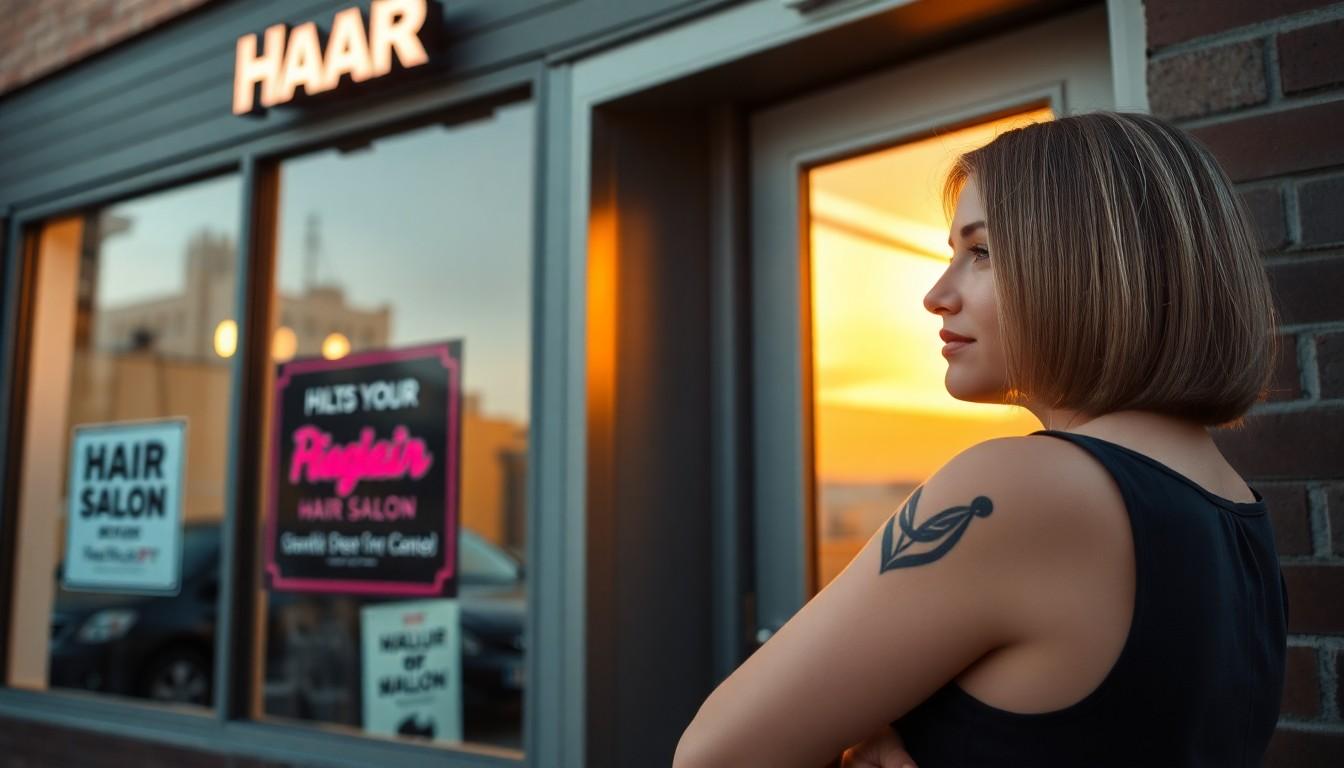
People navigating divorce and other major life changes are increasingly using personal style, from a bold haircut to meaningful tattoos, as a way to reconnect with themselves. One writer’s chin-length bob became less about appearance and more about choice, identity and finally making decisions for her own body.
Essential Takeaways
- The haircut was symbolic: A new bob marked personal agency after years of accommodating other people.
- Tattoos can carry meaning: Research and industry commentary link body art with identity, memory and life transitions.
- Short hair isn't a rulebook: A bob or pixie can feel fresh without defining someone's sexuality or personality.
- Regrowth keeps the stakes low: Hair changes, unlike many tattoos, can be adjusted or grown out.
- Practical styling still matters: Layers can offer movement while leaving enough length for scrunchies and quick updos.
The haircut was really about taking back control
The most striking part of this divorce haircut isn't the chin-length shape or the layers. It's the decision behind it. After years of keeping long hair, the writer visited Motive Salon on Pittsburgh's Northside and chose a bob that felt like her own idea, rather than another response to someone else's expectations.
That distinction matters. A haircut can look like a small lifestyle change from the outside, yet feel surprisingly large when it follows years of being told how to dress, wear your hair or present yourself. Commentary from tattoo studios such as Ray Studios and Kairo's Tattoo Studio similarly frames body choices as visible expressions of identity, rather than simple decoration.
There’s also something pleasingly practical about the decision. Hair grows, so the change doesn't have to be permanent. Even the most dramatic chop comes with an escape route, which makes experimentation feel much less intimidating.
Why big transitions invite visible changes
Divorce, illness, ageing and other turning points often unsettle the stories people have been living inside. A tattoo, a new hairstyle or a wardrobe shift can provide a tangible way to say, quietly or loudly, that the next chapter belongs to you.
Psychology-focused coverage from Biology Insights describes tattoos as connected to self-expression, memory and personal meaning. Southern Ink Atlanta also highlights life transitions as moments when people often choose body art to mark change. The impulse isn't necessarily to become a completely different person. Sometimes it’s simply about making the outside feel closer to the inside.
That’s why the haircut lands so well. It isn't a makeover built for applause. It’s a personal reset, complete with jokes about bangs, divorce and the familiar awkwardness of trying something new.
Tattoos and hair tell different stories
A short haircut and a tattoo can sit in the same emotional category, but they carry different practical consequences. Hair offers flexibility: it can be trimmed, restyled or left to grow. A tattoo asks for more thought, particularly when it marks a relationship, belief or moment that may evolve over time.
Still, both choices can become part of a personal language. Jade and Dagger’s discussion of tattoos and community presents body art as a way for people to express belonging as well as individuality. Meanwhile, research covered by the Association for Information Science and Technology suggests that personal symbols can help people organise and communicate aspects of identity.
For anyone considering a meaningful tattoo after a major change, waiting until the idea still feels right after the initial rush is sensible. Think about placement, size and whether the design represents you, rather than simply the situation you're leaving behind.
How to choose a post-divorce haircut that feels like you
Start with the feeling you want, not just a photograph. Do you want something light, sharp, soft, low-maintenance or visibly different? A chin-length bob with layers can offer movement and shape, while a pixie cut creates a more immediate shift. Your hair texture, face shape and daily routine should guide the final version.
Bring a few reference images, but leave room for your stylist to adapt them. A good consultation should cover maintenance, fringe options, styling time and what happens when the cut grows out. If you cook, work at a laptop or need your hair off your face, keeping enough length for an elastic or scrunchie can be a small but valuable win.
Most importantly, don't choose a style to prove that you've moved on. Choose one that makes getting ready feel more like yourself. Your reflection doesn't need to perform recovery for anyone else.
The most lasting change may be giving up approval
The writer's strongest reflection isn't about whether the bob looks better than long hair. It's the realisation that repeatedly pleasing other people can become a form of self-erasure. That insight reaches beyond divorce, touching clothes, jewellery, tattoos and all the everyday decisions that quietly become negotiated with somebody else.
Body-art studios including Southern Ink Atlanta and Jade and Dagger treat these choices as personal milestones, but the deeper milestone is ownership. A tattoo may preserve a moment, while a haircut can create one. Neither fixes heartbreak, yet both can offer a physical reminder that choice is still available.
And if the scrunchies remain useful, even better. Personal reinvention doesn't have to mean throwing away every old habit. Sometimes it means keeping what works, changing what doesn't and deciding the difference for yourself.
A new haircut won't solve a divorce, but it can make the next morning feel unmistakably yours.
Source Reference Map
Story idea inspired by: [1]
Sources by paragraph: