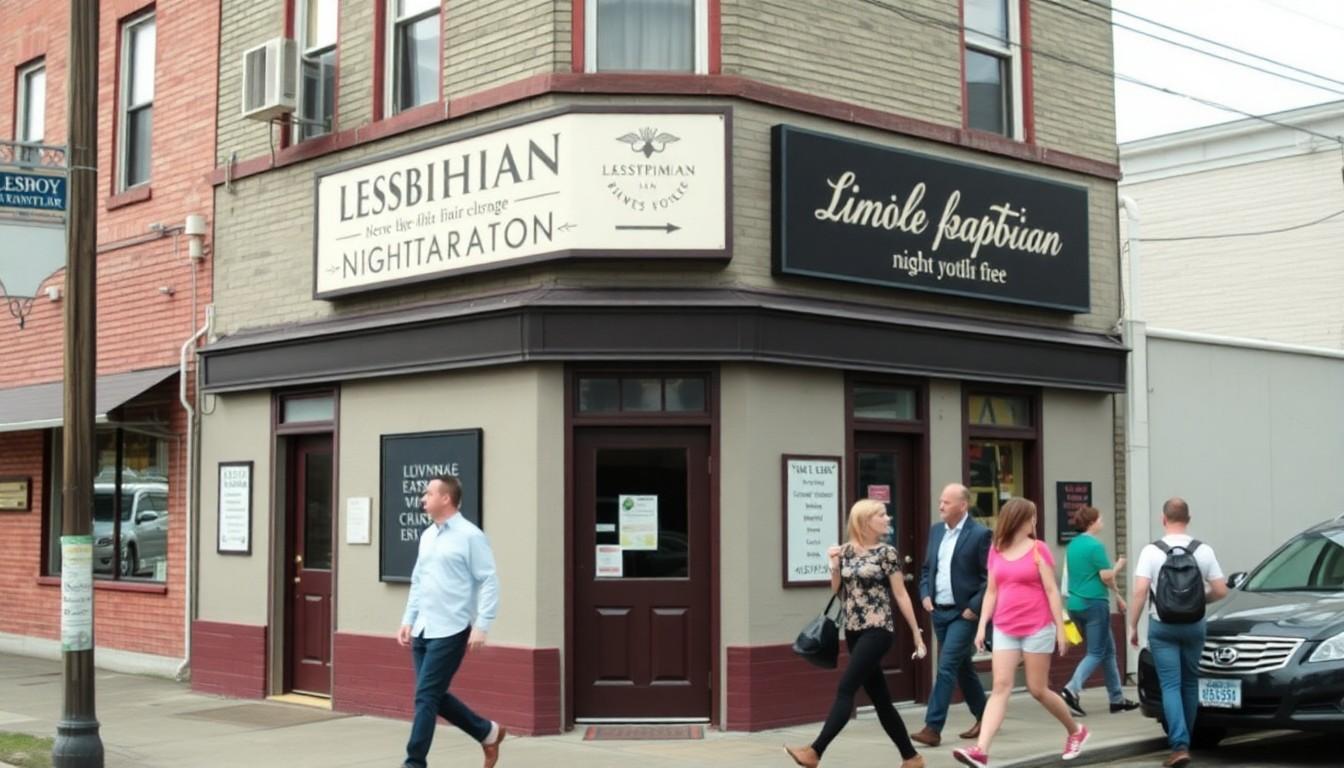
A Massachusetts lesbian bar’s decision to make masks optional for one night has ignited a fierce online backlash, exposing the financial pressures facing queer venues and the way social media can turn a small policy change into a national argument.
Essential Takeaways
- A struggling venue: Last Ditch reportedly faced heavy debt and falling takings before changing its Saturday mask policy.
- A limited change: The bar made masking optional on one night rather than abandoning precautions altogether.
- Online backlash: Critics accused the venue of risking disabled customers’ safety, while others defended its right to survive.
- A wider argument: The row reflects a deeper split over public health, inclusion and the direction of progressive politics.
- The practical lesson: Small businesses need policies that protect vulnerable customers without making survival impossible.
A small policy change became a very large argument
The dispute began with a modest announcement: Last Ditch, a lesbian bar in Greenfield, Massachusetts, would allow customers to go mask-free on Saturday nights. For a venue already struggling to pay its bills, it was presented as a practical attempt to attract more people through the door.
Instead, the change became an online flashpoint. Social media users accused the bar of abandoning disabled and immunocompromised patrons, while supporters argued that a small queer venue couldn't carry the full burden of pandemic-era expectations indefinitely. The Boston Globe's reporting helped propel the story into the national conversation, according to coverage of the controversy.
That contrast is what makes the episode so revealing. In a physical bar, a policy notice might prompt a quiet discussion. Online, it became a referendum on morality, public health and political identity, with very little room left for nuance.
Last Ditch was balancing safety against survival
Behind the outrage was a less glamorous problem: money. Reports said the bar had accumulated substantial debt, while co-founder Jackie Matellian had taken on several jobs and even lived in a vehicle for a period as she tried to keep the business afloat. LGBTQ+ venues often operate on narrow margins, so a disappointing Saturday can matter far more than customers realise.
The masking requirement may have helped some patrons feel safer, but it could also deter others from attending. That doesn't make either side automatically right. It does show why small venues increasingly find themselves making decisions that are both commercial and intensely political.
Coverage from LGBTQ Nation and TMZ described the backlash as disproportionate to the change itself. For owners, the uncomfortable truth is that inclusivity can become difficult to sustain when every adjustment is treated as a test of ideological purity.
Why the internet made the row feel bigger
Online communities can offer genuine support, especially to people who feel overlooked in ordinary public spaces. They can also magnify conflict at remarkable speed. A bar's Instagram post became a rallying point for criticism, counter-criticism and accusations ranging from ableism to hypocrisy.
The controversy also exposed a familiar social media pattern: each attempted clarification creates a new detail to debate. The wording of a post, the accessibility of an image and the identity of individual commenters all became part of the argument. Know Your Meme documented how the dispute developed into a wider piece of online discourse rather than remaining a local business story.
That cycle is exhausting for everyone involved. Disabled customers may feel that their concerns are being dismissed, while operators may feel that no compromise will ever be accepted. Meanwhile, people who have never visited the venue can end up speaking most loudly about its future.
The bigger political argument is about priorities
The row has been seized on by commentators who see it as evidence that progressive politics became too focused on language, identity and symbolic disputes. Others see it as a reminder that disabled and vulnerable people are too often expected to accept reduced access whenever a business faces pressure.
Both interpretations contain part of the truth, but neither fully explains the situation. A mask policy is not simply a culture-war badge. It can affect staff, customers, revenue and public health all at once. The more useful question is often not whether a venue is perfectly consistent, but whether it is communicating clearly and offering meaningful choices.
That distinction matters as politics shifts towards affordability, housing and wages. The question people ask is increasingly practical: what can they afford, where can they go and who gets to participate? A cash-strapped community venue sits directly at the intersection of those concerns.
What other venues can learn from the backlash
For businesses facing a similar decision, clarity is crucial. Explain whether a policy applies to every service, selected nights or specific areas, and say what protections remain in place. Better ventilation, air filtration, outdoor seating, capacity limits and mask-friendly events can offer more flexibility than a simple all-or-nothing rule.
Timing matters, too. If a venue is changing a rule because attendance has fallen, it should say so plainly rather than relying on a brief social media graphic. Customers may still disagree, but they are more likely to understand the pressures when the explanation feels honest and specific.
Last Ditch's experience suggests that no policy can satisfy everyone, particularly when online arguments reward outrage. Still, a thoughtful compromise is not the same as surrender. For a small venue, it may be the only way to keep the lights on and the doors open.
The Last Ditch controversy is a reminder that culture-war arguments often grow fastest where real-world pressures are hardest. Behind the hashtags are rent, wages, accessibility and the simple wish to have somewhere welcoming to meet. That's a far more complicated story than the internet usually allows.
It's a small policy dispute, but it says plenty about the difficult choices facing community venues today.
Source Reference Map
Story idea inspired by: [1]
Sources by paragraph:
- Paragraph 1: [2], [6]
- Paragraph 2: [3], [4]
- Paragraph 3: [6], [7]
- Paragraph 4: [2], [3]
- Paragraph 5: [2], [6]
- Paragraph 6: [4], [7]
- Paragraph 7: [5], [6]
- Paragraph 8: [2], [5]
- Paragraph 9: [3], [6]
- Paragraph 10: [5], [7]
- Paragraph 11: [2], [4]
- Paragraph 12: [3], [6]
- Paragraph 13: [2], [5]
- Paragraph 14: [6], [7]
- Paragraph 15: [2], [3]
- Paragraph 16: [4], [5]
- Paragraph 17: [2], [6]
- Paragraph 18: [3], [7]