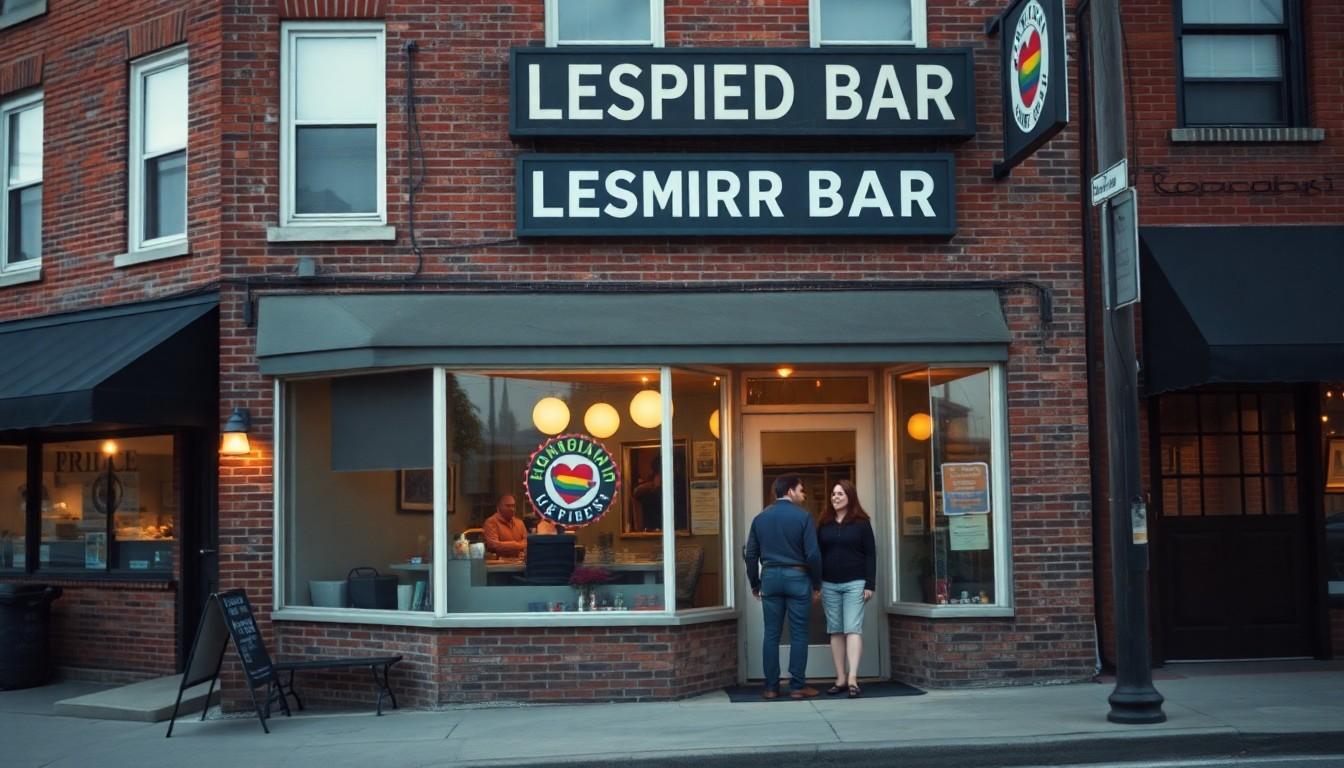
A viral Boston Globe story about Last Ditch, a lesbian bar in western Massachusetts, has sparked arguments over masks, activism and online outrage. But beneath the culture-war noise lies a more urgent question: how can fragile LGBTQ+ spaces stay welcoming, financially viable and genuinely useful to the communities they serve?
Essential Takeaways
- The dispute began with masks: Last Ditch made Saturday nights mask-optional after usually requiring face coverings.
- The backlash travelled fast: Local criticism soon became national social-media ammunition.
- Small venues are vulnerable: Rising costs, changing nightlife habits and limited queer spaces make survival difficult.
- Perfection has a price: Community demands can be well-intentioned but impossible for one bar to meet.
- Digital outrage distorts reality: Remote commentators may have little connection to the people or place involved.
A small bar became a national punchline
The Last Ditch controversy started with a practical change that might ordinarily have stayed local. The western Massachusetts venue, known for its mask policy, announced that Saturday evenings would no longer require face coverings. Almost immediately, the decision became a flashpoint over health, accessibility and what a community space owes its patrons.
The Boston Globe's feature brought the dispute to a much wider audience, highlighting the personalities and internal disagreements behind the policy. According to the Globe's coverage, the story's unusual details helped it travel well online, where complicated local tensions can quickly become irresistible culture-war content.
That shift matters. A debate about one bar's capacity, finances and public-health rules was soon treated as evidence about an entire political movement. As the Globe reported, Senator Ted Cruz and several conservative commentators joined the online pile-on, turning a local LGBTQ+ venue into a convenient prop.
The real issue isn't only masks
Masking is an important part of the story, particularly for immunocompromised and disabled people who often have few dependable social spaces. But the wider argument is also about the burden placed on small organisations expected to solve every failure of society at once.
Last Ditch appears to have been trying to balance several competing needs: safety, access, social connection, entertainment and basic financial survival. Those aims can overlap, but they don't always sit comfortably together. A venue that promises everything to everyone may find itself judged harshly whenever reality forces a compromise.
The Boston Globe's reporting and follow-up coverage suggest that the dispute exposed a deeper frustration within the local queer community. People wanted the venue to be safer and more inclusive, while the operator needed a model that could actually keep the doors open. That isn't a trivial tension, and it won't be resolved by louder comments sections.
Western Massachusetts has already lost queer spaces
Last Ditch didn't emerge in a thriving market. It opened after other LGBTQ+ venues in the area closed, leaving residents with fewer places to meet, perform, dance and build relationships. The Globe's reporting has placed the dispute against that backdrop of closures and economic pressure.
Running any small bar is punishing at the moment. Rent, staffing, insurance, food and energy costs have all climbed, while nightlife habits have shifted since the pandemic. Sober-curious customers, tighter household budgets and competition from home-based socialising make the old bar model even harder to sustain.
For queer venues, the challenge is sharper. They often provide more than drinks, hosting drag, karaoke, comedy, film nights, music and community events. Losing one can mean losing a whole network of informal support. The venue may look modest from outside, but for regulars it can be the only place where a certain kind of life feels ordinary.
How to support a queer bar without demanding perfection
The first practical step is to distinguish between a genuine safety concern and a demand that no small venue could meet. If masking is essential for you, check the venue's current policy, attend quieter events, wear a well-fitting respirator and ask whether it offers outdoor, lower-capacity or otherwise adapted sessions.
It also helps to support the venue directly rather than assuming criticism is the only form of accountability. Buy a ticket, order food, pay for a performance, donate if there's a campaign, or share accurate information with people who might attend. A bar can't operate on goodwill alone, however admirable its intentions may be.
The Globe's coverage also points to the value of proportion. A concern can be valid without proving that the people running a venue are malicious. Likewise, a venue can make mistakes without becoming disposable. That distinction is easy to lose online, where every disagreement seems to demand a verdict.
Online outrage rarely builds a physical community
The most striking feature of the Last Ditch saga is how quickly people outside Greenfield became invested in judging it. Some commentators appeared to have no practical relationship with the venue, yet their reactions helped shape the public image of a place serving a relatively small local population.
That distance can be dangerous. Social media rewards the sharpest accusation, not the most useful conversation, while national political figures have every incentive to turn a niche dispute into a viral talking point. The Boston Globe reported on the involvement of prominent conservative voices, showing how quickly a local LGBTQ+ disagreement could be recast as ammunition against queer and trans people more broadly.
Meanwhile, the people who actually need somewhere to gather are left with the consequences. A community doesn't become resilient through perfect agreement. It grows through repeated, imperfect encounters: the karaoke night, the awkward meeting, the fundraiser, the friend made near the bar. Those small moments are less glamorous than an online pile-on, but they're the parts that last.
The future depends on realistic expectations
Last Ditch's predicament is a reminder that inclusion needs infrastructure. A welcoming ethos matters, but so do staffing, pricing, clear rules, sensible boundaries and enough paying customers to cover the bills. Without those foundations, even the most generous project becomes fragile.
There should still be room for criticism, especially when health and accessibility are involved. Yet criticism works best when it aims to improve a place rather than destroy it. As the Globe's reporting and community coverage show, the question isn't whether queer venues should be accountable. It's whether accountability can leave enough room for them to survive, learn and keep serving people.
A small bar cannot repair every structural injustice. It can, however, offer a warm room, a safe-ish night out and a chance to feel less alone. That may sound modest, but in a town with few alternatives, it is far from insignificant.
It's worth protecting the imperfect spaces where real community happens.
Source Reference Map
Story idea inspired by: [1]
Sources by paragraph:
- Paragraph 1: [2], [5]
- Paragraph 2: [2], [3]
- Paragraph 3: [4], [7]
- Paragraph 4: [2], [5]
- Paragraph 5: [3], [5]
- Paragraph 6: [2], [6]
- Paragraph 7: [2], [5]
- Paragraph 8: [3], [6]
- Paragraph 9: [2], [7]
- Paragraph 10: [4], [5]
- Paragraph 11: [2], [6]
- Paragraph 12: [3], [5]
- Paragraph 13: [2], [7]
- Paragraph 14: [5], [6]
- Paragraph 15: [2], [3]