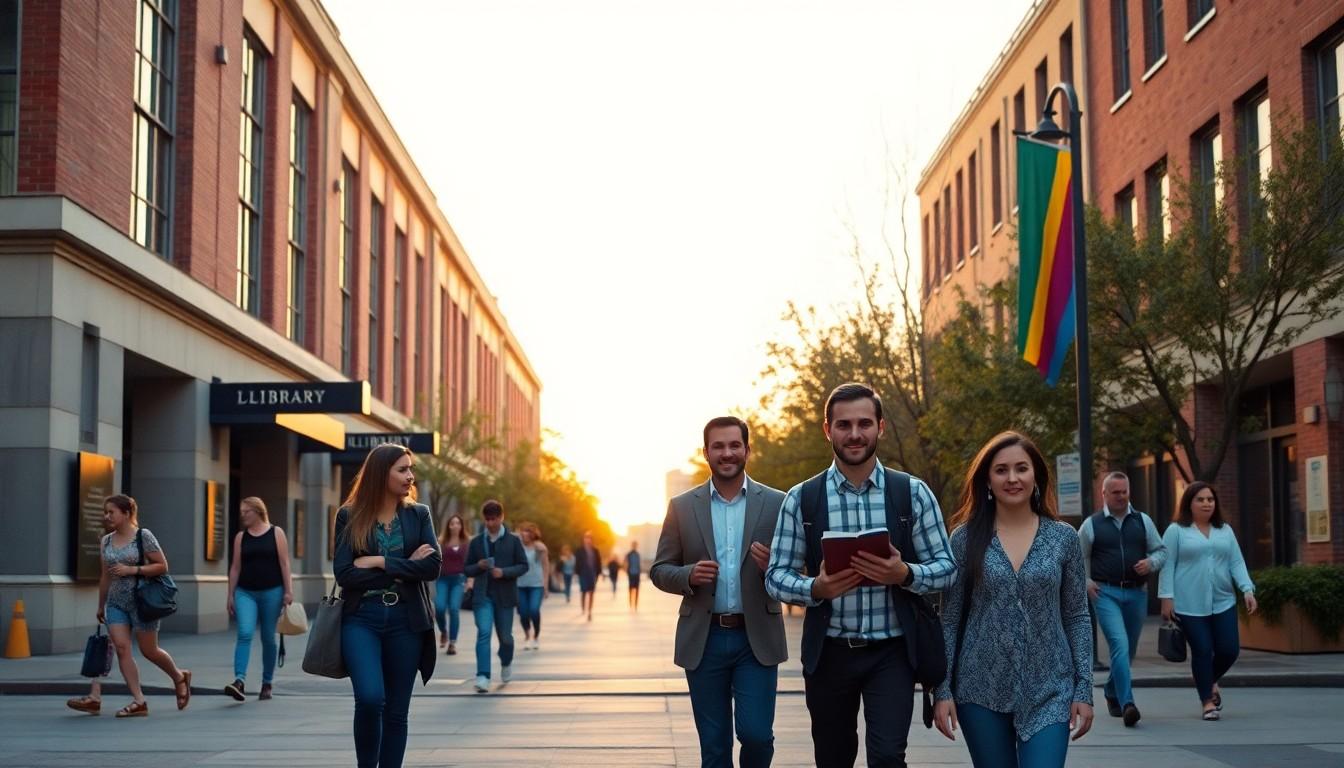
Readers are returning to queer history books and scholarship as debates over visibility, gender and representation intensify across the United States. Michael Bronski's work offers a useful reminder that LGBTQ+ people aren't a footnote to American history. Their lives, ideas and activism have helped shape the country's culture, politics and understanding of freedom.
Essential Takeaways
- A broader historical lens: Queer history is presented as part of American history, not a specialist sidebar.
- Visibility brings resistance: Social progress has repeatedly prompted political and cultural backlash.
- Trans leadership matters: Trans and nonbinary people are increasingly central to the movement's public voice.
- Movements overlap: LGBTQ+ liberation, racial justice and feminism have influenced one another.
- The archive is expanding: New research is moving beyond famous individuals towards everyday lives and communities.
Queer history belongs in the main story
The most compelling idea in Bronski's work is also the simplest: queer people have always been part of the American story. Their influence appears in politics, literature, entertainment, social movements and everyday life, even when conventional textbooks have left them out.
That wider approach matters because history isn't simply a list of approved names and dates. As the American Library Association's recognition of Bronski's book suggests, queer history has become an important field of public education, giving readers a fuller account of how the nation developed. [3]
For many readers, this can feel less like discovering a new past than finally being handed the missing pages. Scholarship reviewed by Lambda Literary has similarly highlighted the value of placing LGBTQ+ lives within the broader sweep of US history, rather than treating them as an isolated subject. [4]
Why visibility so often triggers backlash
Progress rarely arrives without a reaction. Bronski argues that increased visibility can make queer communities more recognisable and powerful, but it can also make them a more obvious target for organised opposition.
That pattern is familiar. Social changes that once seemed marginal can become part of ordinary public life, prompting opponents to focus on new flashpoints. Research into online political communication suggests that digital networks can intensify polarisation, making cultural disputes feel constant, personal and inescapable. [6]
Technology has changed the scale of the argument, too. Social media, surveillance tools and artificial intelligence can help communities organise and share information, but they can also spread misinformation and harassment at remarkable speed. In today's culture wars, knowing how digital systems work is becoming part of knowing how to stay safe.
Trans history is changing the movement's centre
The growing visibility of trans and nonbinary people isn't a sudden invention. It's the latest stage in a much longer history of people challenging fixed ideas about gender, identity and social roles.
What has changed is the public space available to tell those stories. Earlier generations often had to communicate through coded language, private networks or specialist publications. Today, trans people are more visible in journalism, scholarship, entertainment and activism, although that visibility remains uneven and frequently contested.
Academic research into LGBTQ+ movements also points towards a more complex understanding of identity and organising. Rather than assuming one shared experience, newer work examines how sexuality, gender, race, class and politics overlap in real lives. [5] That may sound obvious, but it changes the questions historians ask and the people they choose to centre.
The movements were never truly separate
Modern queer liberation is often discussed alongside Black Lives Matter, feminism and other campaigns for social justice. That isn't simply a matter of adding more groups to the same list. The movements have shaped one another through shared organisers, overlapping communities and common arguments about bodily autonomy and equality.
The history of activism is therefore less like a series of neatly separated lanes and more like a busy junction. People carry strategies from one campaign into another, while ideas about power, protest and representation evolve along the way.
Digital research on social movements reinforces this connected picture, showing how online platforms can help groups build solidarity across geography while also exposing them to surveillance and coordinated opposition. [7] The result is a movement landscape that's broader, faster and noisier than the old model of a single community newspaper or national organisation.
A better way to teach America's past
Why do some stories become standard classroom material while others remain obscure? Often, it's because the accepted national narrative prefers tidy beginnings, clear heroes and uncomplicated progress. Queer history tends to disrupt all three.
Books such as Bronski's challenge that tidy version by asking readers to see same-sex desire, gender nonconformity and queer organising within wider American developments. Beacon Press describes the book as an account of the country's history through the experiences and influence of LGBTQ+ people, rather than as a narrow chronology of identity politics. [2]
The next phase of queer historiography is likely to move further away from the search for one famous person or definitive milestone. Researchers are increasingly interested in communities, relationships, cultural production and the ordinary decisions that helped people survive and create change.
That shift is welcome. A history made only of icons can inspire, but a history filled with ordinary people can also make the past feel possible. It shows that change wasn't delivered by a handful of superheroes. It was built, awkwardly and persistently, by people who kept showing up.
What queer history can teach the present
The practical lesson is that backlash doesn't necessarily signal failure. It can reflect the fact that an idea, community or form of visibility has become difficult to ignore.
That doesn't make the harm less real, and it shouldn't encourage complacency. But historical perspective can help separate a temporary political campaign from a deeper social transformation. Reviews and academic discussions of Bronski's work have emphasised precisely this tension: progress can be uneven, contested and still unmistakable. [4]
For readers trying to understand today's debates, queer history offers more than reassurance. It provides context, vocabulary and a longer view. And sometimes, when the news cycle feels relentless, that longer view is exactly what keeps the present from looking like the whole story.
Queer history isn't an optional extra in America's story; it's one of the threads holding it together.
Source Reference Map
Story idea inspired by: [1]
Sources by paragraph:
- Paragraph 1: [2], [3]
- Paragraph 2: [4], [5]
- Paragraph 3: [6], [7]
- Paragraph 4: [2], [4]
- Paragraph 5: [5], [7]
- Paragraph 6: [3], [4]
- Paragraph 7: [2], [5]
- Paragraph 8: [6], [7]
- Paragraph 9: [4], [5]
- Paragraph 10: [2], [3]
- Paragraph 11: [4], [5]
- Paragraph 12: [6], [7]
- Paragraph 13: [2], [4]
- Paragraph 14: [3], [5]
- Paragraph 15: [4], [7]
- Paragraph 16: [2], [3]
- Paragraph 17: [4], [5]
- Paragraph 18: [6], [7]
- Paragraph 19: [2], [4]
- Paragraph 20: [3], [5]
- Paragraph 21: [4], [7]
- Paragraph 22: [2], [3]
- Paragraph 23: [4], [5]
- Paragraph 24: [6], [7]
- Paragraph 25: [2], [4]
- Paragraph 26: [3], [5]
- Paragraph 27: [4], [7]