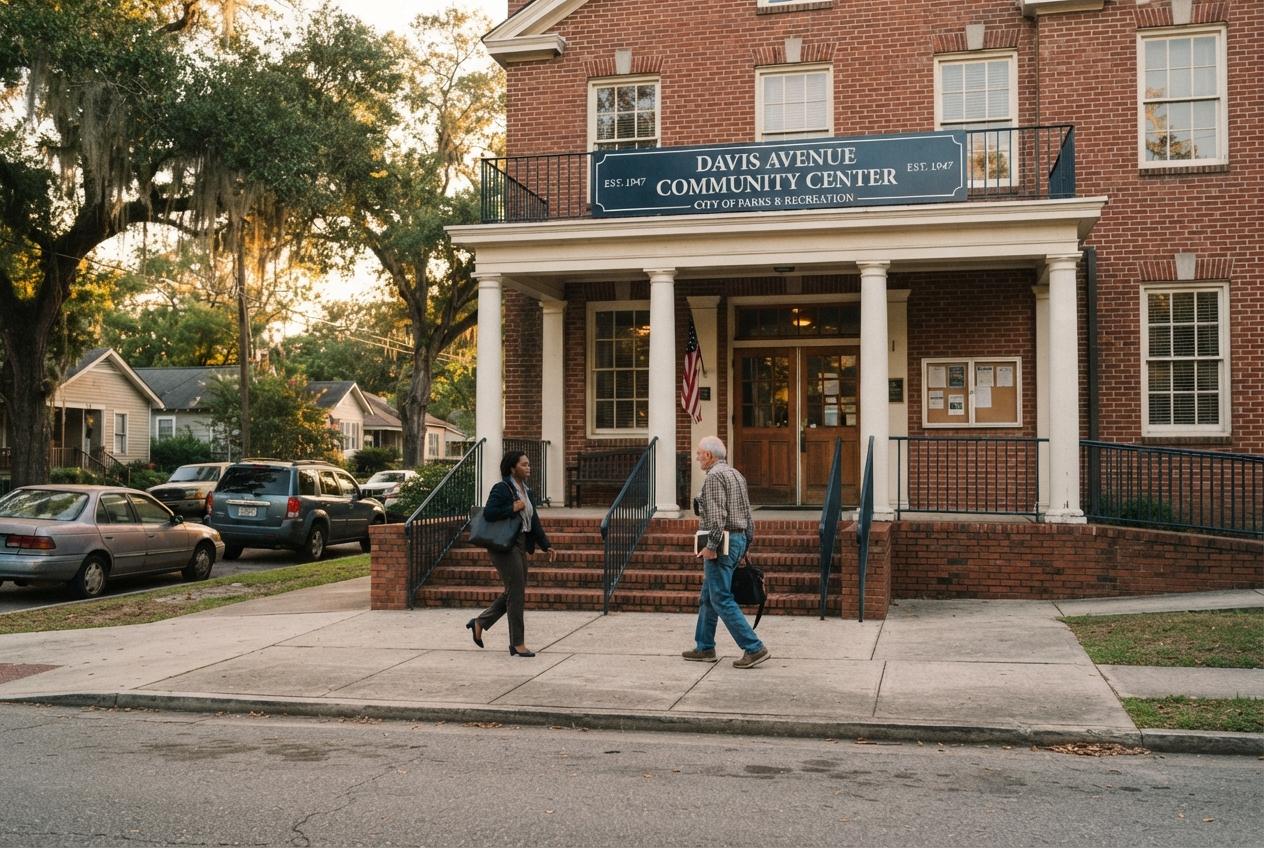
Communities across the American South are facing renewed pressure over LGBTQ+ visibility, from street banners to contested library books. Yet behind the political noise, personal relationships, local organising and everyday acts of acceptance continue to create pockets of hope, showing why inclusion remains harder to silence than its opponents might wish.
Essential Takeaways
- Public battles are growing: Anti-LGBTQ+ campaigns are appearing in civic spaces, schools, libraries and state politics.
- Book challenges are rising: The American Library Association reported a sharp increase in challenges to books held by libraries in 2023.
- Alabama is a key flashpoint: Library boards and campaigners have clashed over cataloguing and access to books featuring LGBTQ+ themes.
- Personal relationships matter: Coming out within a family, congregation or friendship group can prompt meaningful change.
- Visibility remains resilient: Even when public programmes are cancelled or challenged, LGBTQ+ people continue to tell their stories.
The loudest arguments are happening in ordinary places
The latest culture-war skirmishes aren't confined to statehouses. They're appearing on lamp posts, in library meetings and around the question of which stories children should be allowed to read.
In Mobile, Alabama, privately funded banners warning about so-called gender ideology were displayed after Pride messages had appeared on city streets. The dispute ended with the city abandoning its private banner programme altogether, a tidy administrative solution that also removed a visible platform for competing messages.
That outcome may feel small beside national politics, but public visibility is rarely trivial. A rainbow banner, a library display or a local history talk can reassure someone who feels isolated. Remove those moments and the silence can feel deliberate.
Library shelves have become political battlegrounds
The pressure on libraries reflects a much wider national trend. The American Library Association said challenges to books reached record levels in 2023, with many complaints focused on LGBTQ+ characters, race, sexuality and other supposedly unsuitable themes.
Kirkus Reviews, citing the association's figures, reported that the number of challenged titles rose by 65% in 2023. That jump matters because a challenge doesn't need to end in a ban to have an effect. Staff time is consumed, trustees are pressured and readers can begin to wonder whether certain subjects are considered dangerous simply because they exist.
Alabama has seen its own share of high-profile disputes. Reporting by the Alabama Reflector described a state library services board motion concerning the cataloguing of controversial books, while the Alabama Reporter examined dozens of titles challenged at the Prattville Public Library. The practical lesson for readers is straightforward: ask whether a book has actually been removed, restricted or merely questioned. Those are different outcomes, even if the public debate blurs them.
Why representation still reaches beyond the shelf
A book featuring a queer teenager, a same-sex couple or a transgender character isn't just a political object. For some readers, it's the first sign that their life can be described with warmth rather than shame. For others, it offers a chance to understand a classmate, sibling or friend.
That doesn't mean every title suits every age group. Libraries already use age guidance, collection policies and local oversight. Alabama Public Library Service later launched a form for concerns about children's library books, showing how formal processes can channel objections more constructively than public pressure campaigns.
The useful question isn't whether a story makes someone uncomfortable. It's whether the book is appropriate for its intended readers, has literary or educational value, and is being assessed through a fair process rather than a political slogan.
The South's contradictions are part of the story
The American South is often portrayed as the heartland of anti-LGBTQ+ politics, and recent legislation elsewhere has reinforced that reputation. The Human Rights Campaign described Florida's package of measures signed by Governor Ron DeSantis as an exceptionally broad collection of discriminatory laws.
But the region's social fabric also creates opportunities for change. People live close to extended family, congregations, neighbours and long-standing community networks. Those relationships can preserve prejudice, certainly, but they can also make it harder to reduce a real person to a talking point.
A public campaign may describe LGBTQ+ people in abstract, threatening language. That framing becomes more difficult to maintain when the person involved is a beloved niece, a trusted colleague, a church friend or the child next door. Politics can harden positions; personal knowledge can soften them.
Hope is quieter, but it keeps turning up
Organisations preserving LGBTQ+ history have faced criticism and institutional pressure, yet their work remains important. Archives, oral histories and community projects record lives that might otherwise disappear from the official version of the South.
That matters especially when public voices are being constrained. A cancelled banner scheme or contested library collection can make visibility look fragile, but it isn't the same as erasure. People continue coming out, forming families, writing books, building friendships and showing up at meetings.
The most hopeful change may not arrive as a dramatic political conversion. Sometimes it's a parent listening, a librarian defending a fair policy or a congregation choosing care over condemnation. Those moments are easy to miss, but they're where lasting acceptance often begins.
Truth doesn't vanish because someone tries to remove it from view.
Explore local stories, support fair library policies and make room for people to be known as themselves.
Source Reference Map
Story idea inspired by: [1]
Sources by paragraph:
- Paragraph 1: [2], [7]
- Paragraph 2: [4], [5]
- Paragraph 3: [2], [3]
- Paragraph 4: [2], [3]
- Paragraph 5: [4], [5]
- Paragraph 6: [6]
- Paragraph 7: [2], [6]
- Paragraph 8: [7]
- Paragraph 9: [4], [5]
- Paragraph 10: [2], [3]
- Paragraph 11: [6], [7]
- Paragraph 12: [2], [4]
- Paragraph 13: [5], [6]
- Paragraph 14: [7]
- Paragraph 15: [2], [3]
- Paragraph 16: [4], [5]
- Paragraph 17: [6], [7]
- Paragraph 18: [2], [3]