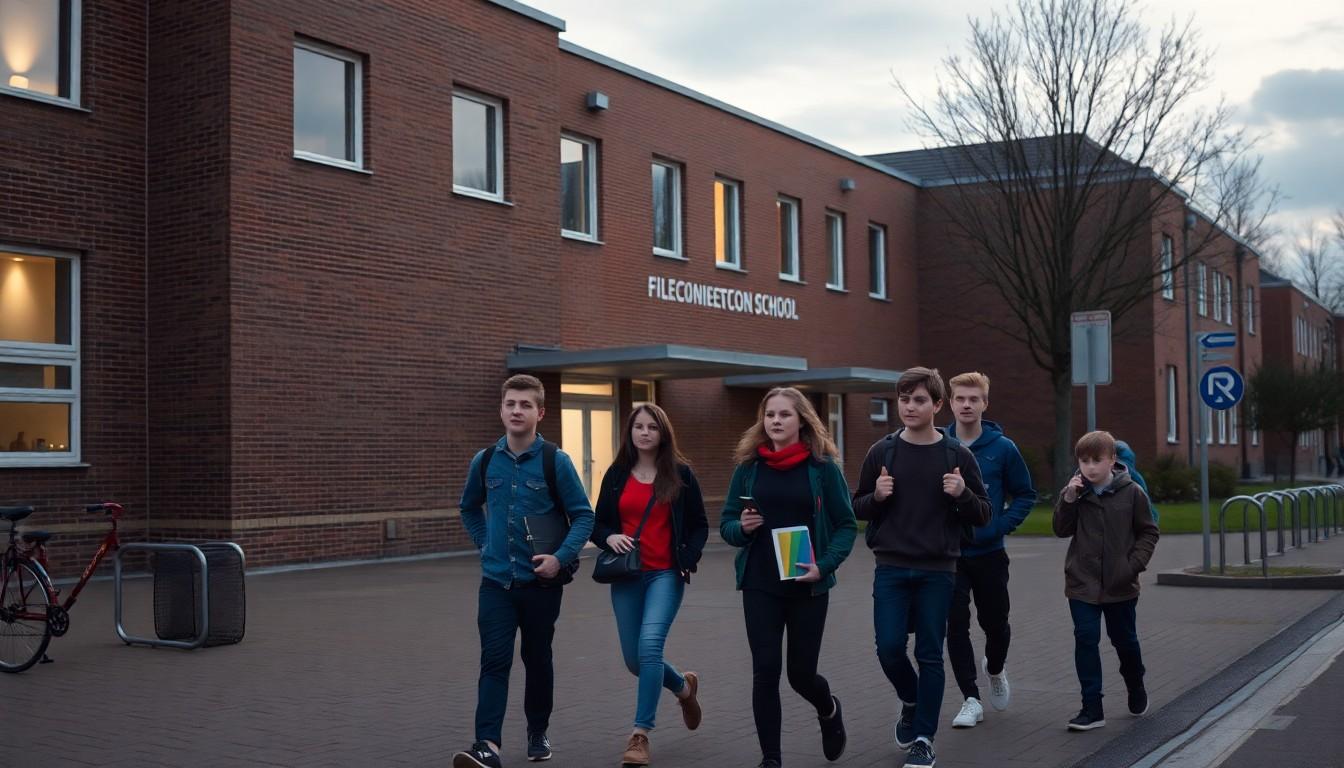
Dutch teenagers are becoming less accepting of homosexuality, with boys showing the sharpest decline. New research has prompted difficult conversations in classrooms, where ideas about being “normal”, visibility and identity reveal a generation caught between inclusion, social pressure and growing conservatism.
Essential Takeaways
- Acceptance has dropped sharply: Among Dutch teenage boys, acceptance fell from 40% in 2021 to 22% in 2025.
- Girls have shifted too: Acceptance among girls declined from 78% to 51% over the same period.
- Visibility remains contested: Some pupils support LGBTQ+ inclusion but feel rainbow symbols, Pride and queer representation can seem overwhelming.
- Social pressure matters: Researchers link changing attitudes to political polarisation, online influence and wider insecurity.
- Schools remain important: Student alliances and inclusive teaching can give LGBTQ+ pupils a safer place to be themselves.
The numbers have changed the classroom conversation
The most striking finding is the speed of the reversal. According to Trimbos, acceptance of homosexuality among young people in the Netherlands has fallen considerably, with teenage boys recording the steepest drop. The figures have made what can feel like an abstract cultural debate suddenly very immediate in schools.
In one busy South Holland school hall, pupils joked, interrupted one another and tested the boundaries of the discussion. Yet beneath the noise was a familiar tension: many students said they supported gay people, but attached conditions to that support. For some, acceptance seemed easier when LGBTQ+ identity stayed quiet and unobtrusive.
That distinction matters. Being tolerated in private isn't the same as being accepted in public, particularly when a pupil is expected to dress, speak or behave in a way others regard as “normal”.
Why are young people becoming more conservative?
Sociologists point to several overlapping explanations. Trimbos' work on young people's wellbeing describes a generation dealing with uncertainty, pressure and concerns about the future. Housing worries, international conflict and mental-health strain can all make stability feel more attractive than social change.
The wider political climate also plays a role. Traditional ideas about family life and gender are more visible online, while influencers can package conservative lifestyles as a reassuring alternative to a complicated world. Meanwhile, social platforms often reward sharp opinions, mockery and culture-war arguments rather than patient understanding.
There may also be a generational blind spot. If young people haven't learned how LGBTQ+ rights were won, Pride symbols can look like unnecessary spectacle rather than part of a longer struggle for safety and equality. That doesn't excuse prejudice, but it helps explain why visibility can provoke such mixed reactions.
Visibility can feel powerful, or simply exhausting
For LGBTQ+ pupils involved in a school's Gender and Sexuality Alliance, visibility is not a decorative extra. It can mean telling classmates that they're welcome, challenging homophobic jokes and showing a student that they aren't alone. Trimbos' youth work emphasises the value of listening to young people themselves, rather than treating them as a single, predictable group.
Some pupils, however, feel that queer representation has become too prominent. They mention rainbow bracelets, colourful hair, Pride celebrations and LGBTQ+ storylines, arguing that nobody should make sexuality their entire personality. Others worry that straight teenagers are being overlooked.
That reaction deserves a careful answer. Most people reveal something about themselves through clothes, relationships, music or social media, and heterosexuality is rarely treated as an excessive public identity. The standard often shifts when the person is queer. What seems “too much” may simply be unfamiliar, visible or challenging to old expectations.
The pressure to fit in cuts both ways
One student described wondering whether it was acceptable to be straight, after seeing so much LGBTQ+ content online. Her experience shows that inclusion can feel complicated when young people are still working out who they are. Teenagers need room to explore identity without being pushed towards a label, whether that label is queer, straight or something else.
But that uncertainty shouldn't be confused with a genuine equality problem. A school can make space for questioning pupils while still standing firmly against homophobia. Inclusive toilets, queer literature and Pride activities aren't demands that every student adopt an identity. They're signals that different identities are allowed to exist.
Trimbos' research on youth mental health also underlines why this balance matters. Young people already face considerable pressure to perform, belong and appear certain. The healthiest approach is not to remove visibility, but to make it less intimidating and less compulsory: support should be available without forcing participation.
Schools still have a practical role to play
The classroom is one of the few places where teenagers from different backgrounds regularly meet, so schools can do more than react when a homophobic incident occurs. Clear rules, reliable pastoral support and lessons that explain LGBTQ+ history can give students context as well as protection.
Student groups can help too, although their work shouldn't fall entirely on pupils who are already carrying the burden of explaining themselves. Teachers and school leaders need to back inclusion consistently, including when rainbow displays or discussion events attract criticism from parents or students.
The outlook isn't fixed. Attitudes can change again, especially when young people meet LGBTQ+ classmates, teachers and relatives as ordinary people rather than as symbols in an online argument. As one student observed, the goal is simple enough: everyone should be able to be themselves without having to pass a test of “normality”.
It's a small phrase, but a big standard for any school.
Source Reference Map
Story idea inspired by: [1]
Sources by paragraph:
- Paragraph 1: [2], [4]
- Paragraph 2: [3], [6]
- Paragraph 3: [2], [7]
- Paragraph 4: [4], [5]
- Paragraph 5: [2], [3]
- Paragraph 6: [6], [7]
- Paragraph 7: [2], [4]
- Paragraph 8: [3], [5]
- Paragraph 9: [2], [6]
- Paragraph 10: [4], [7]
- Paragraph 11: [3], [5]
- Paragraph 12: [2], [4]
- Paragraph 13: [5], [6]
- Paragraph 14: [2], [7]
- Paragraph 15: [3], [4]