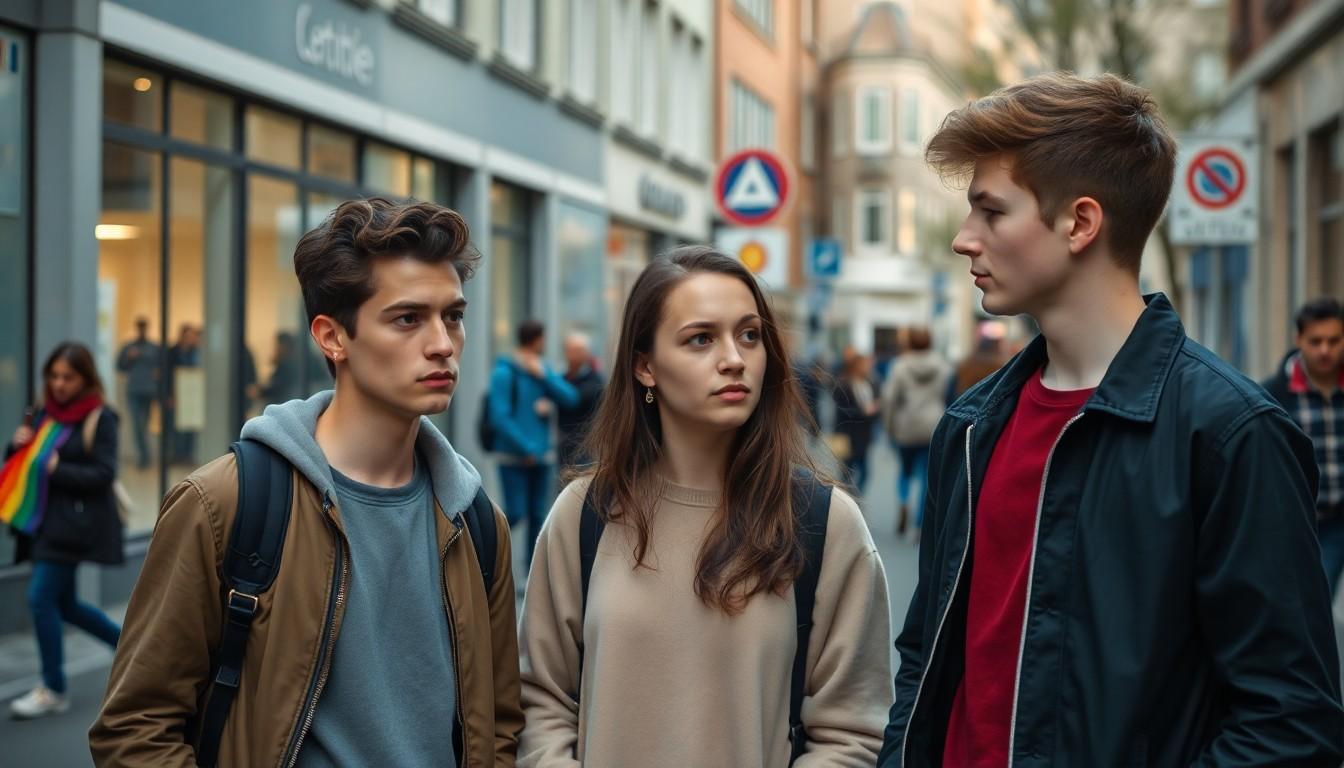
People across Belgium may be equal under the law, but growing intolerance, online hostility and everyday intimidation show that LGBTQ+ acceptance can't be taken for granted. New research suggests young people are becoming less supportive of gay and lesbian communities, while campaigners warn that violence and under-reporting remain serious concerns.
Essential Takeaways
- Acceptance is slipping: VUB research found growing intolerance towards lesbian and gay people among young people.
- Violence is rising: ILGA-Europe has reported a worrying increase in anti-LGBTI violence across Europe.
- The problem isn't limited to one group: Hostility can appear across generations, communities and political backgrounds.
- Many incidents go unreported: Victims may fear dismissal, escalation or an inadequate response from authorities.
- Safe spaces matter: Community-led initiatives can help LGBTQ+ people build confidence, support and physical safety.
Legal equality hasn't ended everyday intimidation
A threatening stare in a gym, an aggressive confrontation in a changing room or shouted abuse in the street can make ordinary routines feel carefully negotiated. For many queer people, the calculation is constant: where to walk, whether to hold a partner's hand and how much attention an incident might attract.
That gap between legal protection and lived experience is at the heart of Belgium's LGBTQ+ challenge. ILGA-Europe's reporting has tracked a deteriorating climate for LGBTI people, including increased reports of verbal and physical attacks. The figures are stark, but they also represent only the incidents that reach authorities or support organisations.
For someone facing abuse, a quiet journey home can feel like a victory. That's precisely why public acceptance needs to be measured not only through legislation, but through safety, confidence and the freedom to be visible.
Young people's attitudes are moving in the wrong direction
Research from VUB points to a rise in homophobic attitudes among young people since 2018. The increase appears across different groups, although it is particularly visible among boys, religious young people, those with a migration background and pupils following vocational education.
The important detail is that no single community explains the trend. The evidence suggests a broader shift, rather than a problem neatly contained within one demographic. That makes the response more complicated, but also more urgent.
VUB's findings sit alongside wider European warnings about hostile environments for LGBTQ+ people. As ILGA-Europe has reported, anti-LGBTI violence has reached a deeply concerning level across the continent. The message is uncomfortable but clear: progress can reverse.
Online culture is shaping offline behaviour
Researchers and campaigners increasingly point towards a more polarised public conversation about sexual diversity. Arguments over school education, rainbow symbols and gender equality are no longer confined to formal politics. They appear in comment sections, short videos and influencer-led online communities, where anger travels quickly and nuance often doesn't.
The so-called manosphere is part of that picture. It promotes rigid ideas about masculinity and traditional gender roles, sometimes alongside hostile claims about gay, lesbian and trans people. For teenagers still working out how identity and relationships fit together, repeated exposure can make prejudice seem normal rather than extreme.
That doesn't mean every young person using social media is being radicalised. But the digital environment can reward provocation, and a joke that once stayed in a private group chat can now reach thousands of people before anyone challenges it.
Under-reporting leaves the full picture hidden
The official numbers almost certainly don't capture the entire scale of the problem. Victims may decide not to contact the police, particularly if they believe the incident won't be taken seriously or worry that reporting it could trigger further abuse.
A lack of evidence can make matters harder too. An insult shouted in the street may last only seconds, while the emotional impact lingers for much longer. Without witnesses, footage or a clear record, people can feel that the burden of proving what happened has been placed entirely on them.
That is why reporting systems need to be straightforward, respectful and consistent. A victim shouldn't have to become an amateur investigator before their experience is heard. Better recording of incidents would also help policymakers understand where attacks are happening and which communities need support.
Safe spaces offer more than reassurance
Community projects can provide something official campaigns often struggle to deliver: immediate, practical solidarity. Queer-friendly sports clubs, youth groups and support networks give people room to meet others without first having to scan the room for danger.
They can also help build physical and mental resilience. A welcoming gym, for example, isn't simply somewhere to exercise. It can become a place where people regain confidence, learn how to respond to threatening situations and feel less isolated.
Still, community organisations can't carry the whole burden. Campaigners are calling for stronger education on diversity, more effective political leadership and better follow-up when hate incidents are reported. Those changes may sound institutional, but their effect is personal: they help make holding hands in public feel ordinary again.
The next test is whether progress becomes visible
Belgium's legal framework remains important, but rights on paper don't automatically change behaviour in a gym, on a tram or outside a café. The fall in acceptance among young people is a warning that social progress needs renewing with every generation.
Schools, families, platforms, police forces and politicians all have a role to play. So do bystanders, whose intervention can sometimes stop a frightening moment from becoming a more serious attack.
The most useful measure of LGBTQ+ equality may be surprisingly simple: whether people feel free to live openly without constantly planning their escape route.
A law can protect equality, but everyday courage and collective action make it real.
Source Reference Map
Story idea inspired by: [1]
Sources by paragraph:
- Paragraph 1: [2], [3]
- Paragraph 2: [4], [6]
- Paragraph 3: [3], [7]
- Paragraph 4: [2], [4]
- Paragraph 5: [4], [5]
- Paragraph 6: [3], [6]
- Paragraph 7: [2], [7]
- Paragraph 8: [3], [6]
- Paragraph 9: [2], [4]
- Paragraph 10: [4], [5]
- Paragraph 11: [3], [7]
- Paragraph 12: [2], [6]
- Paragraph 13: [3], [4]
- Paragraph 14: [2], [5]
- Paragraph 15: [3], [6]
- Paragraph 16: [2], [4]
- Paragraph 17: [3], [7]
- Paragraph 18: [2], [6]
- Paragraph 19: [3], [4]
- Paragraph 20: [2], [7]