Friends and community members are remembering Bill Beasley, the Atlanta-born activist whose work stretched from 1950s civil rights protests to early gay liberation and Bay Area LGBTQ+ organising. A 2009 San Francisco Pride Lifetime Achievement Grand Marshal, Beasley leaves behind a story of courage, coalition-building and a belief that justice movements were strongest when they stood together.
Essential Takeaways
- A bridge between movements: Beasley connected Black civil rights activism with LGBTQ+ liberation.
- Early protester: He joined Atlanta lunch-counter demonstrations as a teenager and was arrested during one action.
- Gay liberation organiser: In Los Angeles, he helped build the Gay Liberation Front and organise the 1972 Pride march.
- Bay Area leader: He worked with community organisations and served on the San Francisco Pride board.
- A lasting honour: San Francisco Pride recognised his decades of service with its 2009 Lifetime Achievement Grand Marshal award.
A life shaped by protest and principle
Bill Beasley's activism began in Atlanta, where he took part in sit-ins and pickets challenging segregation. He was just 19 when he entered the Civil Rights Movement, stepping into a campaign that demanded both courage and stamina.
That early experience gave his later work a distinctive depth. Beasley understood discrimination not as an abstract idea but as something enforced in everyday places, from lunch counters to public institutions. His story shows how the era's movements overlapped, even when history often tells them separately.
From Atlanta to gay liberation in Los Angeles
After coming out in the late 1950s, Beasley moved through St Louis and Los Angeles, where he became increasingly involved in LGBTQ+ organising. He joined the Gay Liberation Front and helped establish Christopher Street West, the organisation associated with the early development of Los Angeles Pride.
He also helped organise the 1972 Los Angeles Gay Pride March, at a time when LGBTQ+ communities were turning protest into visible public tradition. Pride was not yet the polished, sprawling celebration many people recognise today. It was grassroots, sometimes precarious and powered by people willing to do the unglamorous work of building something from scratch.
Why his intersectional vision still matters
Beasley's activism didn't stop at LGBTQ+ rights. He opposed the Vietnam War and protested the use of napalm and other toxic weapons, reflecting a broad understanding of liberation that included racial equality, peace and human dignity.
That approach feels particularly relevant now. San Francisco Pride's Grand Marshal history places his 2009 Lifetime Achievement honour within a wider tradition of recognising organisers whose contribution extends beyond a single event or identity group. The award is a reminder that community progress is usually cumulative, built by people who keep showing up.
His Bay Area chapter was just as important
After settling in the Bay Area, Beasley continued supporting LGBTQ+ institutions, including Berkeley's Pacific Center for Human Growth and East Bay Gay Day. He also served on the San Francisco Pride board, helping strengthen the networks that kept local activism visible and organised.
For many community leaders, this kind of work is less dramatic than a march or arrest, but no less essential. Boards, support centres and local gatherings create the steady infrastructure people rely on between moments of national attention.
Remembering a compassionate community leader
Faith remained part of Beasley's life through his long association with St Columba Catholic Church. He brought together religious conviction, acceptance and social activism in a way that resisted the idea that faith and LGBTQ+ advocacy must sit on opposite sides.
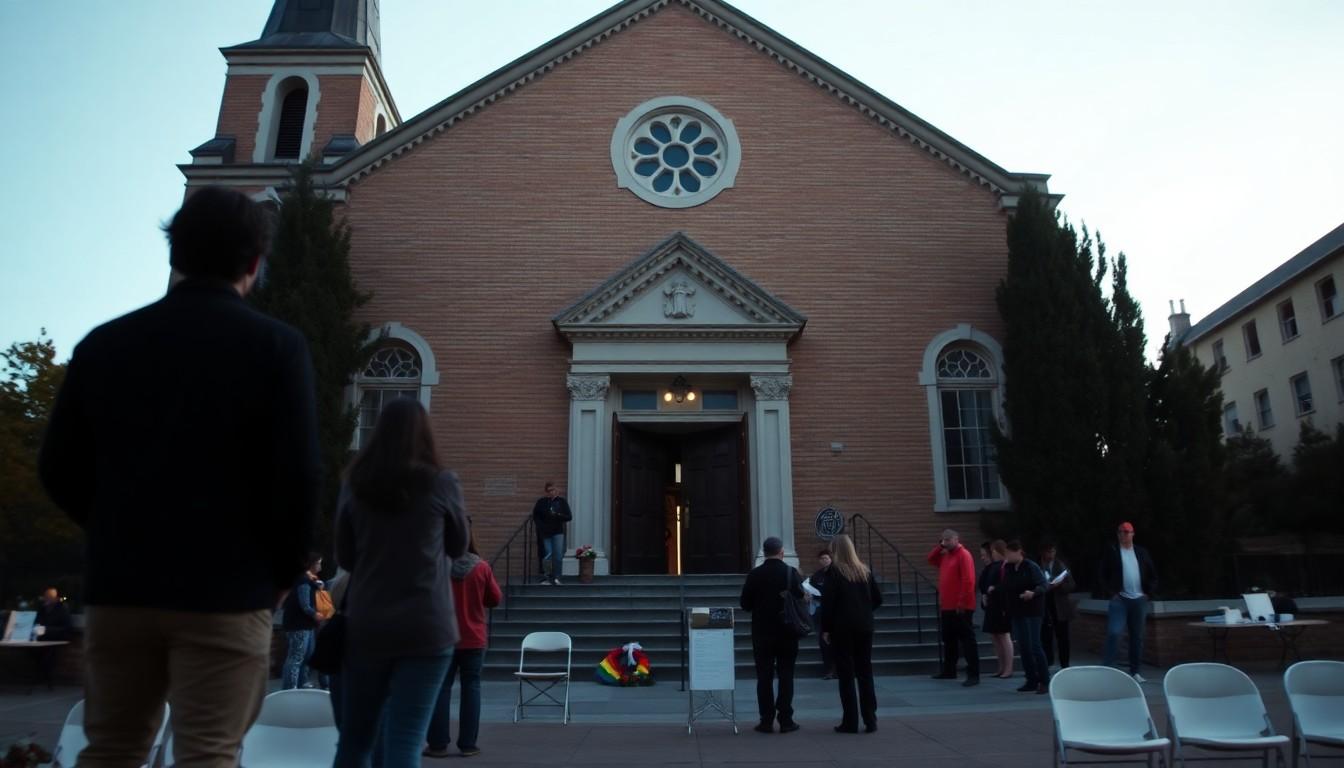
A Celebration of Life is scheduled for 24 September 2026 at Saint Columba Catholic Church in Oakland. The gathering will offer friends, relatives and community members a chance to remember a man whose activism crossed generations, cities and movements.
Beasley's legacy is especially powerful because it isn't confined to one famous moment. It lives in the connections he made, the organisations he helped build and the people who saw possibility in his example.
His life is a reminder that lasting change is often built by those who link one struggle to another.
Source Reference Map
Story idea inspired by: [1]
Sources by paragraph:
- Paragraph 1: [2], [4]
- Paragraph 2: [3], [4]
- Paragraph 3: [4], [5]
- Paragraph 4: [4], [6]
- Paragraph 5: [2], [4]
- Paragraph 6: [4], [7]
- Paragraph 7: [2], [3]
- Paragraph 8: [4], [5]
- Paragraph 9: [2], [4]
- Paragraph 10: [3], [6]
- Paragraph 11: [4], [7]
- Paragraph 12: [2], [4]
- Paragraph 13: [3], [5]
- Paragraph 14: [2], [6]
- Paragraph 15: [4], [7]
- Paragraph 16: [2], [3]