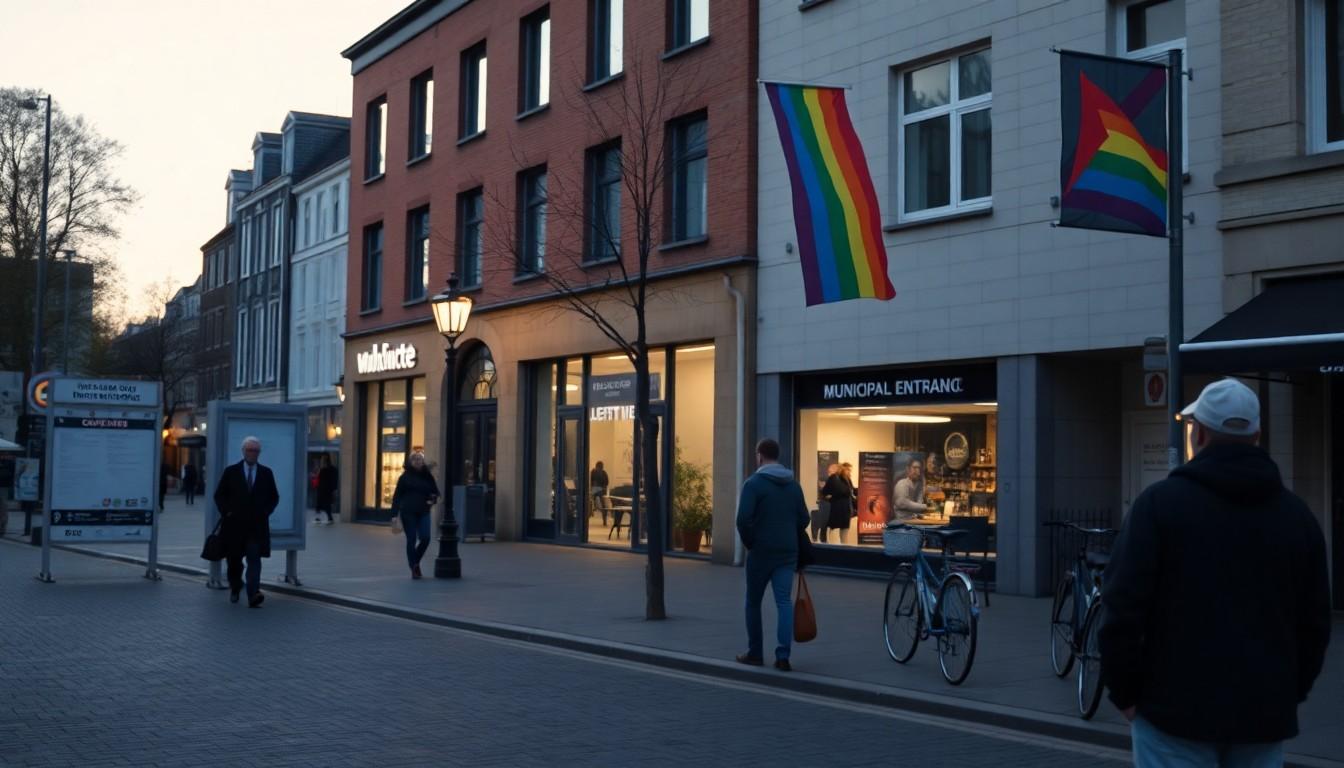
The Dutch government plans to invite 20 more municipalities into its Rainbow Cities network, alongside ten new Safe Cities focused on safer nightlife. Backed by extra public funding through 2029, the move responds to concerns about rising negativity towards homosexuality among young people and continuing safety risks for LGBTQI+ residents.
Essential takeaways
- Twenty more municipalities: The government wants to broaden its Rainbow Cities partnership, although the invited towns have not yet been named.
- Extra funding: An additional EUR 2.6 million will support local work on LGBTQI+ safety until 2029.
- Ten Safe Cities: A separate group will focus on practical improvements, including safer nights out.
- Growing concern: Research has pointed to more negative attitudes towards homosexuality among Dutch young people.
- Local action matters: The scheme relies on councils, nightlife organisations and other partners working together.
More Dutch cities could join the safety push
The Netherlands is preparing to widen its Rainbow Cities network by 20 municipalities. Which councils will receive an invitation hasn't been announced, but several cities have reportedly already volunteered to take part.
The idea is straightforward: national policy can set the direction, but safety is often experienced locally, on a street, in a school corridor or outside a late-night venue. According to the Dutch government's policy documents, municipalities remain central to preventing discrimination and violence against LGBTQI+ people.
The new funding gives councils more room to turn broad commitments into visible measures. That could mean better reporting routes, stronger partnerships with community groups or training for professionals who deal with harassment and violence.
Why the government is acting now
The expansion follows research indicating that Dutch young people have become more negative about homosexuality over the past four years. That shift has added urgency to a policy area where progress can otherwise look deceptively steady on paper.
The concern isn't only about overt violence. Hostile jokes, exclusion and intimidation can quietly reshape where people feel comfortable going, who they feel safe bringing home and whether they report incidents at all. In that sense, a safer society is measured as much by confidence and freedom as by crime figures.
The Dutch government says its wider approach combines prevention, protection and action against discrimination. That matters because attitudes rarely change through one campaign alone. Schools, councils, police forces, venues and youth organisations all have a role to play.
Ten new Safe Cities will focus on nightlife
Alongside the Rainbow Cities expansion, ten new Safe Cities are due to join the programme. Their work will include making nightlife safer, a particularly important focus for LGBTQI+ people who may face harassment in bars, clubs, on public transport or while travelling home.
Research on safe-nightlife partnerships, including work linked to Utrecht University, highlights the challenge of coordinating multiple organisations with different responsibilities and priorities. A venue may focus on staff training, while a council looks at public space and police concentrate on reporting and enforcement. The pieces need to fit together.
That sounds bureaucratic, but the results can be very practical. Clearer incident procedures, visible staff support, safer routes and better communication can all help someone decide that seeking assistance is worth the effort. Nobody wants a night out to come with a risk assessment, but small details can make a real difference.
What the extra funding could change
The government has set aside an additional EUR 2.6 million for the strengthened approach, with cooperation between the national government and municipalities continuing until 2029. The money is intended to support local safety work rather than replace it.
The strongest projects will probably be those that involve LGBTQI+ residents directly. People who understand the problem first-hand can often identify gaps that official plans miss, from poorly lit areas to confusing reporting systems or staff who don't know how to respond.
There is also a question of consistency. A person shouldn't lose access to support simply because they cross a municipal boundary. Shared standards, reliable data and regular evaluation will help show whether the extra investment is improving everyday experiences, rather than merely creating another set of policy announcements.
A longer-term test for local partnerships
The government's decision sends a clear signal that LGBTQI+ safety remains a public responsibility, not an issue to be left entirely to community groups. It also acknowledges that changing attitudes requires sustained work, especially among younger generations.
Provincial and local officials have continued to warn that safety is still under pressure. The challenge now is turning funding and participation into measures people can actually feel: a quicker response, a more confident venue team or simply the freedom to be themselves without scanning the room first.
If the new cities build trusted partnerships and listen carefully to residents, the expansion could become more than a larger map of participating councils. It could help make safety a normal part of local planning.
A safer night out starts with local action that people can see and trust.
Source Reference Map
Story idea inspired by: [1]
Sources by paragraph: