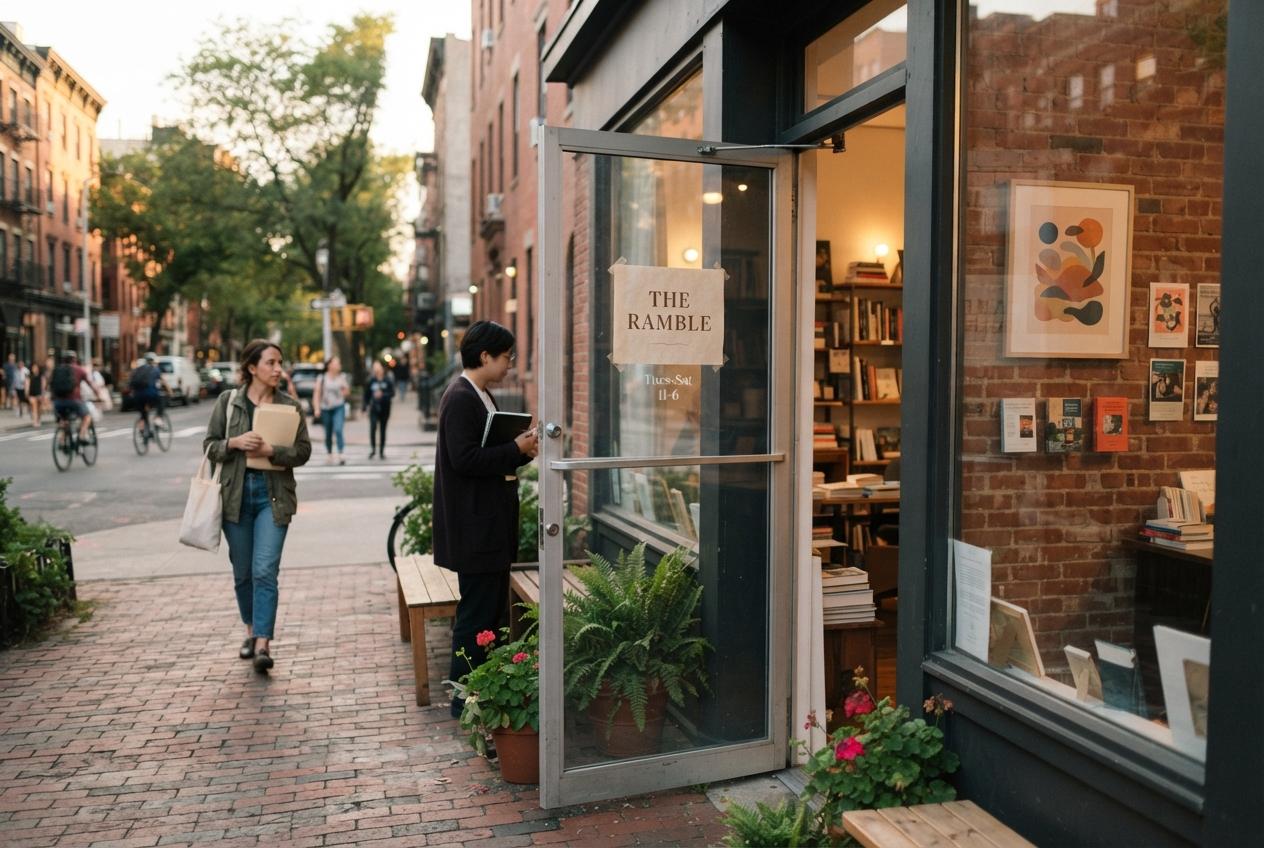
Readers are discovering The Ramble, a new online queer literary journal pairing intimate writing with striking art. Founded by Chris McManus and launched in July, the publication offers a home for emerging and established LGBTQ+ creators, especially those exploring sexuality, vulnerability, humour and the less tidy corners of gay life.
Essential Takeaways
- A fresh editorial voice: The Ramble blends fiction, memoir, visual art and queer cultural history.
- A meaningful lineage: Founder Chris McManus previously worked at Christopher Street, a landmark gay magazine.
- Art matters equally: The journal treats paintings and photography as central storytelling, not decoration.
- Rawness is welcome: McManus looks for honest, vulnerable work with room for wit and surprise.
- Submissions are open: Writers and artists can send work to [email protected].
The Ramble arrives with a clear sense of purpose
The Ramble feels less like another digital publication and more like a room someone has just opened for conversation. Its pages move between literary writing and vivid artwork, creating an atmosphere that's intimate, sometimes erotic and often quietly observant.
That mix matters because queer publishing has always done more than entertain. According to Christopher Street's historical record, gay magazines provided space for journalism, fiction and cultural debate when mainstream outlets offered little understanding or visibility. The Ramble inherits that tradition while giving it a more fluid, online shape.
McManus's editorial interest lies in what he describes as the "pink zone", the territory between conventional literary fiction and explicit erotica. It's a useful distinction. Stories about sex, desire and exposure don't always fit comfortably into neat categories, and The Ramble is deliberately making space for that ambiguity.
From Christopher Street to a new generation
McManus's connection to Christopher Street gives the new journal a strong literary backstory. The magazine, founded in New York in 1969, became an influential forum for gay writing and commentary, publishing figures including Edmund White, Andrew Holleran and Quentin Crisp, according to its published history.
For McManus, working there as a young reporter and editor was initially about journalism and social injustice. Over time, though, the fiction stayed with him. The short stories and memoir pieces he edited proved more enduring than the news copy, helping him understand how creative writing can imagine different lives and offer brief relief from reality.
One memorable episode involved editing a column by Quentin Crisp and then being asked to discuss the changes with him by telephone. Crisp's kindness and humour left a lasting impression, a reminder that literary history can feel surprisingly personal when you're the young person on the other end of the line.
Why the title The Ramble works so well
The journal takes its name from The Ramble in New York's Central Park, a place long associated with gay social life, cruising and chance encounters. It isn't simply a provocative title. It gives the publication an editorial mood.
As the journal's background explains, The Ramble can suggest several kinds of encounter at once: something flirtatious behind the bushes, a thoughtful exchange on a bench or a solitary reader absorbed in a book. That flexibility mirrors the publication's range.
The name also nods towards the history of queer spaces. Christopher Street once represented a recognisable centre of gay life, while today's queer communities are more dispersed across physical and digital worlds. The Ramble turns that change into an advantage, creating a publication that feels open-ended rather than tied to one scene.
Art gets equal billing
The strongest visual impression comes from the artwork. Paintings by Baju Wijono helped shape the journal's identity, while work from artists including Miel de Ideas and Aleksei Pozdnovato adds texture, atmosphere and a distinctly sensual edge.
This isn't art dropped between paragraphs to make a page look attractive. The Ramble treats images as another form of narrative. Its editorial approach gives artists room to explore gay life that can be overlooked, misunderstood or left entirely unrecorded.
That balance is increasingly important online, where publications can easily become text-heavy and visually interchangeable. Here, the artwork slows the reader down. A bold image catches the eye first, then the writing invites a closer look. It's a simple rhythm, but an effective one.
Honest stories, with room for a laugh
McManus says he's drawn to vulnerability, authenticity, whimsy and humour. That combination gives The Ramble its most appealing quality: it doesn't confuse seriousness with solemnity.
Early contributions have included Derek Puddester's emotional short story, Dale Corvino's reflections on contemporary cruising and Rosario Sario Bautista's comic flash fiction, according to the journal's own introduction. Together, those pieces suggest a publication interested in the full range of queer experience, from tenderness and uncertainty to absurdity and desire.
For writers, that can be liberating. A submission doesn't have to perform respectability or arrive with a grand thesis. It needs to feel alive. The best work, after all, often begins in a moment that seems too awkward, funny or exposed to share, then discovers its shape on the page.
A promising home for emerging creators
The Ramble's most encouraging ambition is its focus on artists and writers who haven't yet found a broad audience. McManus initially imagined attracting established names, but early submissions changed his perspective. The journal could be just as valuable as a platform for voices still waiting to be noticed.
That makes the publication worth watching beyond its launch period. Literary journals can act as cultural records, preserving experiences that larger media overlook. Christopher Street's history shows how lasting that role can become, particularly when a publication gives writers permission to be specific and unapologetically themselves.
Writers and artists interested in submitting can contact The Ramble directly at [email protected]. The process is deliberately straightforward, which feels fitting for a journal built around curiosity, discovery and a willingness to wander.
A small online publication can still make a large cultural space.
Source Reference Map
Story idea inspired by: [1]
Sources by paragraph:
- Paragraph 1: [6], [7]
- Paragraph 2: [2], [3]
- Paragraph 3: [6], [7]
- Paragraph 4: [2], [3]
- Paragraph 5: [7], [6]
- Paragraph 6: [7], [2]
- Paragraph 7: [7], [6]
- Paragraph 8: [2], [3]
- Paragraph 9: [6], [7]
- Paragraph 10: [6], [7]
- Paragraph 11: [6], [7]
- Paragraph 12: [3], [5]
- Paragraph 13: [6], [7]
- Paragraph 14: [6], [7]
- Paragraph 15: [2], [3]
- Paragraph 16: [6], [7]