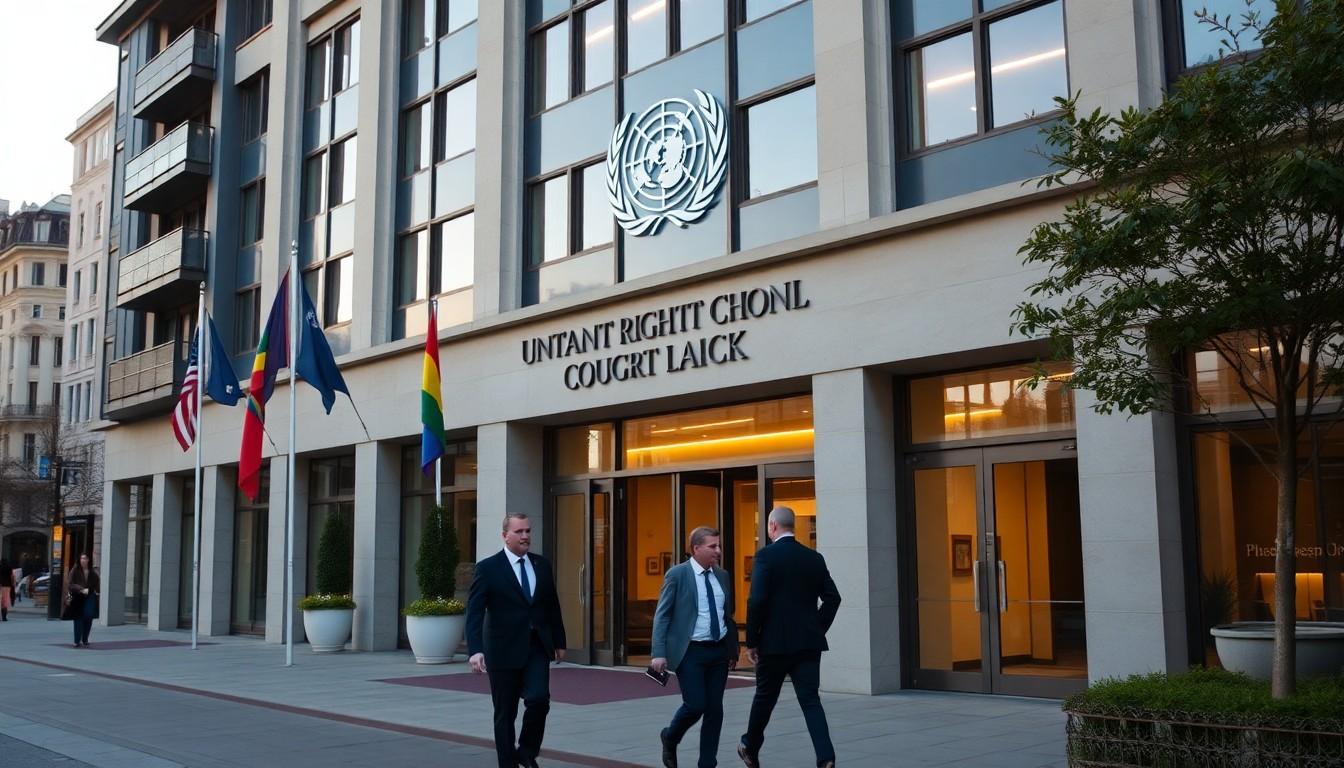
Asexual activist and researcher Yasmin Benoit has taken a long-overlooked issue to the United Nations in Geneva, urging officials to recognise how asexual people can face medical misunderstanding, discrimination and pressure to conform. Her intervention matters because asexuality is still too often treated as a problem to fix rather than a valid sexual orientation.
Asexuality gets a seat at the table
For many people, asexuality remains poorly understood. It generally describes experiencing little or no sexual attraction, yet that straightforward explanation can still prompt awkward questions, medical assumptions and, occasionally, outright disbelief.
Benoit's work has helped move the conversation beyond visibility campaigns and into research, policy and human rights. Her professional profile at King's College London highlights her work across asexuality, LGBTQ+ rights and public education, giving the issue a stronger evidence base than it often receives in mainstream debate.
That shift is important. Asexual people aren't asking for special treatment; they're asking for healthcare and institutions that don't automatically interpret their identity as an illness.
Why healthcare can feel especially difficult
A doctor's question about sexual activity can be routine, but the conversation may become uncomfortable when a patient explains that they don't experience sexual attraction. According to Benoit's UK research with Stonewall, some asexual respondents said disclosure affected the quality of their care, including experiences involving inappropriate medical or psychological assumptions.
The distinction between sexual orientation and a clinical condition matters. A low level of sexual desire can sometimes be relevant to healthcare, but it isn't automatically a disorder, particularly when the person isn't distressed by it. Treating every difference as something requiring correction risks turning an ordinary appointment into an interrogation.
Benoit's research materials examine these patterns alongside issues including conversion practices, sexual violence, workplace harassment and healthcare discrimination. The detail can feel sobering, but it also shows why better training is more than a nice idea.
From personal discovery to public advocacy
Benoit has spoken about questioning herself from a young age before finding the word "asexual" as a teenager. That moment of recognition can be powerful: suddenly, an experience that felt isolating has language, community and context.
She later came out publicly while working as a model and launched This is What Asexual Looks Like, a visibility project that combines culture, education and activism. Her research and public work have since helped broaden the conversation far beyond social media.
King's College London has also featured her work in discussions about LGBTQ+ experiences and institutional change. That combination of personal testimony and formal research gives the subject both emotional clarity and practical weight.
Taking the conversation to the United Nations
Benoit travelled independently to the Human Rights Council session at the Palais des Nations in Geneva, where she introduced asexuality and related discrimination to UN officials and diplomats. It was a significant step for an identity that is still frequently missing from institutional equality discussions.
The significance isn't simply that a new topic appeared on an international agenda. It's that asexuality was discussed in connection with healthcare, human rights and protection from harm, rather than being reduced to a pop-culture curiosity.
Her research archive shows the wider foundation behind this advocacy. This wasn't a last-minute appeal for attention; it followed years of collecting evidence, explaining terminology and pressing organisations to recognise a community that is often overlooked.
What better representation could change
Better awareness could make everyday healthcare more respectful. Clinicians should be able to ask relevant questions without assuming that asexuality explains every symptom, signals a mental health condition or gives them permission to push unwanted tests and interventions.
For patients, it may help to state clearly what support they want and what they don't. Bringing a trusted person, requesting another clinician or asking why a particular question or test is medically necessary can also make an appointment feel more manageable. None of this should be necessary, of course, but practical control matters when systems haven't caught up.
Benoit's clothing and campaign work offers another route into the conversation, turning visibility into something tangible and community-led. Her online shop supports the broader mission, while the research gives the message staying power. A small piece of clothing won't change policy on its own, but it can start a surprisingly useful conversation.
Asexuality is no longer confined to the margins of the discussion, and Benoit's work suggests the next step is making sure institutions listen properly.
It's a small but meaningful move towards healthcare and human rights that recognise people as they are.
Source Reference Map
Story idea inspired by: [1]
Sources by paragraph:
- Paragraph 1: [2], [3]
- Paragraph 2: [4], [5]
- Paragraph 3: [3], [4]
- Paragraph 4: [2], [5]
- Paragraph 5: [3], [4]
- Paragraph 6: [2], [3]
- Paragraph 7: [5], [6]
- Paragraph 8: [3], [4]
- Paragraph 9: [2], [5]
- Paragraph 10: [3], [4]
- Paragraph 11: [2], [6]
- Paragraph 12: [3], [4]
- Paragraph 13: [7]
- Paragraph 14: [2], [3]