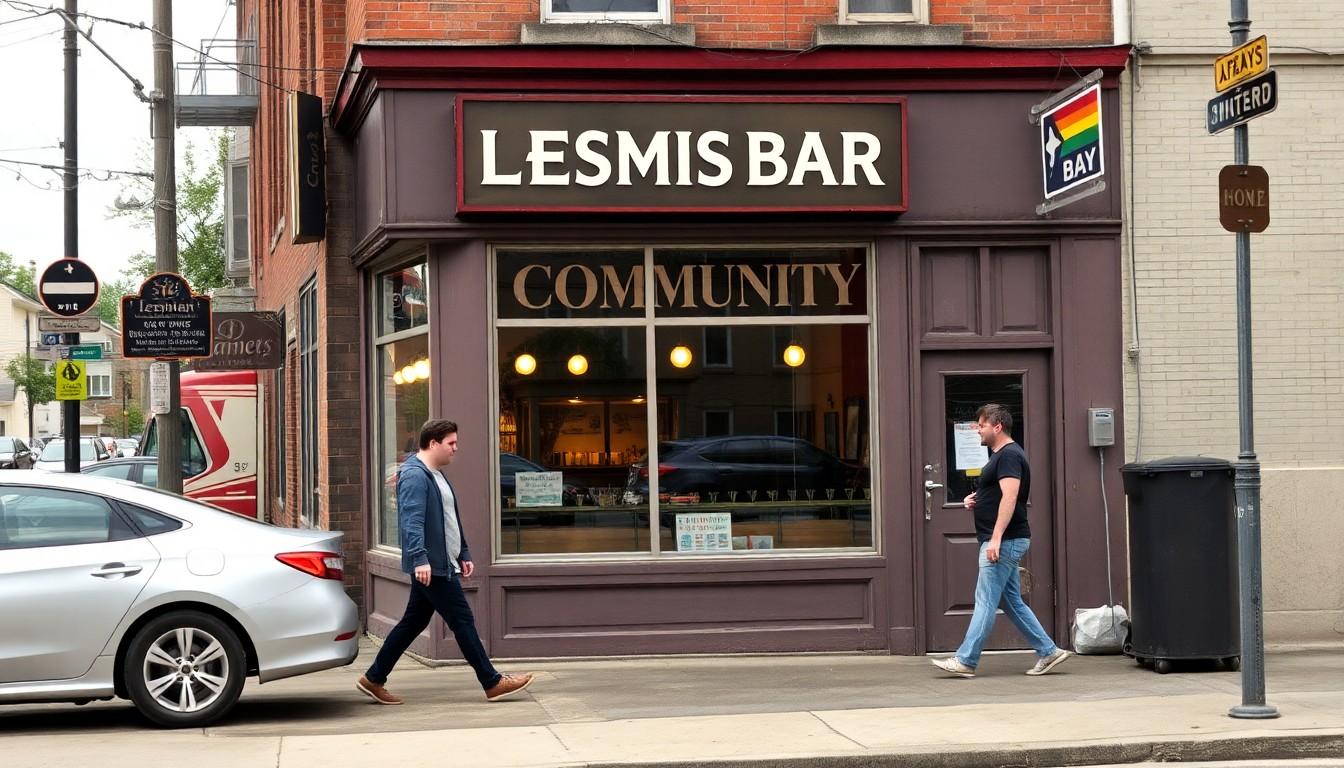
Readers are debating why a small lesbian bar in Greenfield, Massachusetts, became the centre of a national masking controversy. The dispute began when the venue introduced one mask-optional night a week, but its wider significance lies in disability, queer community, media judgement and the uneasy price of going viral.
Essential Takeaways
- A local dispute went national: The bar’s masking policy triggered intense online reaction and coverage far beyond western Massachusetts.
- The change was limited: The venue reportedly retained masked nights while adding one evening when face coverings weren’t required.
- Money was part of the pressure: Coverage connected the decision with the bar’s serious financial difficulties.
- Disabled people feel exposed: Masking remains closely tied to COVID risk, long-term illness and access needs.
- The media question matters: Critics argue that turning community conflict into spectacle can invite ridicule rather than understanding.
A small policy change, then a very large reaction
The original controversy sounds almost tailor-made for the internet: a lesbian bar, a revised mask rule, angry Instagram posts and a community argument that quickly escaped its local setting. According to the Boston Globe, Greenfield’s venue introduced a weekly mask-optional night after struggling financially, while continuing to offer masked events. [3]
That distinction matters, but online outrage rarely travels with footnotes. LGBTQ Nation reported that the change prompted fierce criticism from patrons and other observers, turning a practical decision about survival into a much broader argument about safety and solidarity. [4]
Before long, the story had moved well beyond local queer circles. TMZ and The Gateway Pundit both covered the backlash, showing how quickly a niche dispute can become national entertainment once social media supplies a ready-made villain. [5], [7]
Why did this become a Boston Globe story?
The question isn't whether the disagreement was real. It clearly was. The harder question is why this particular disagreement deserved the attention of a major newspaper, rather than remaining a local community dispute or an online argument that eventually faded.
The Boston Globe's own explanation, as reported in its feature about the story, placed the bar's financial troubles and the significance of the masking debate at the centre of its reporting. [3] That gives the piece a news peg, but it doesn't settle the concern that a small group of marginalised people may have been turned into a national punchline.
The Atlantic's discussion of journalism and press freedom offers useful wider context: news organisations have to make editorial choices in an environment where attention is increasingly treated as proof of importance. [2] Sometimes, the story that travels furthest isn't the story that best serves the people involved.
Masking is about more than personal preference
For many people, wearing a high-quality mask isn't a political statement or a quirky lifestyle choice. It's a response to disability, immune risk, long COVID, caring responsibilities or the simple fact that infection can still carry serious consequences.
Urania Institute's account of the Massachusetts dispute connects the bar's policy with those continuing access concerns, particularly for disabled and medically vulnerable people. [6] That helps explain why the announcement landed so heavily with some patrons: the issue wasn't merely whether one night felt more relaxed, but whether everyone could still participate safely.
The argument also exposes an uncomfortable fracture within queer spaces. LGBTQ communities have long talked about access and mutual care, yet masking can become a test of belonging rather than an opportunity to accommodate different needs. That tension is painful because a venue can be financially desperate and still leave some people feeling shut out.
Going viral can flatten a complicated community
The coverage suggests a familiar digital pattern. A venue makes a difficult announcement, a few posts attract attention, outside commentators arrive, and the original context gets buried beneath jokes, outrage and reaction videos.
The Gateway Pundit and TMZ framed the dispute around backlash and public outrage, a style of coverage that can make the conflict feel more like spectacle than a discussion about public health or a struggling small business. [5], [7] Meanwhile, LGBTQ Nation gave greater weight to the community's concerns, illustrating how different outlets can make the same episode feel either frivolous or consequential. [4]
That matters because visibility isn't automatically power. A story can place queer people at the centre of the news while giving them little control over how they're portrayed. And once a small venue becomes a meme, the people working there have to deal with the consequences long after online audiences have moved on.
What should journalists do differently?
The first step is simple but often overlooked: ask what the story adds. A journalist covering a contentious community decision should explain the practical background, speak to the people most affected and avoid presenting social-media mockery as a substitute for reporting.
The Globe's follow-up explanation indicates that the story was tied to genuine financial strain, rather than being only a quarrel over etiquette. [3] That context should be impossible to miss, because it changes the central question from "Why are these people arguing?" to "What choices are available to a small, cash-strapped venue trying to remain open?"
The Atlantic's wider treatment of journalism also points towards a more careful model of reporting, one that values public interest over easy virality. [2] For readers, the practical lesson is just as useful: look for who has been quoted, whose risks are being described and whether the headline reflects the substance of the story. If those answers are missing, the piece may be feeding the outrage cycle more than informing you.
A bar can make a flawed decision, patrons can feel hurt and reporters can still resist turning the whole community into a joke. That would be a better standard for everyone.
Some conflicts belong in the news, but not every viral argument belongs on the front page.
Source Reference Map
Story idea inspired by: [1]
Sources by paragraph: