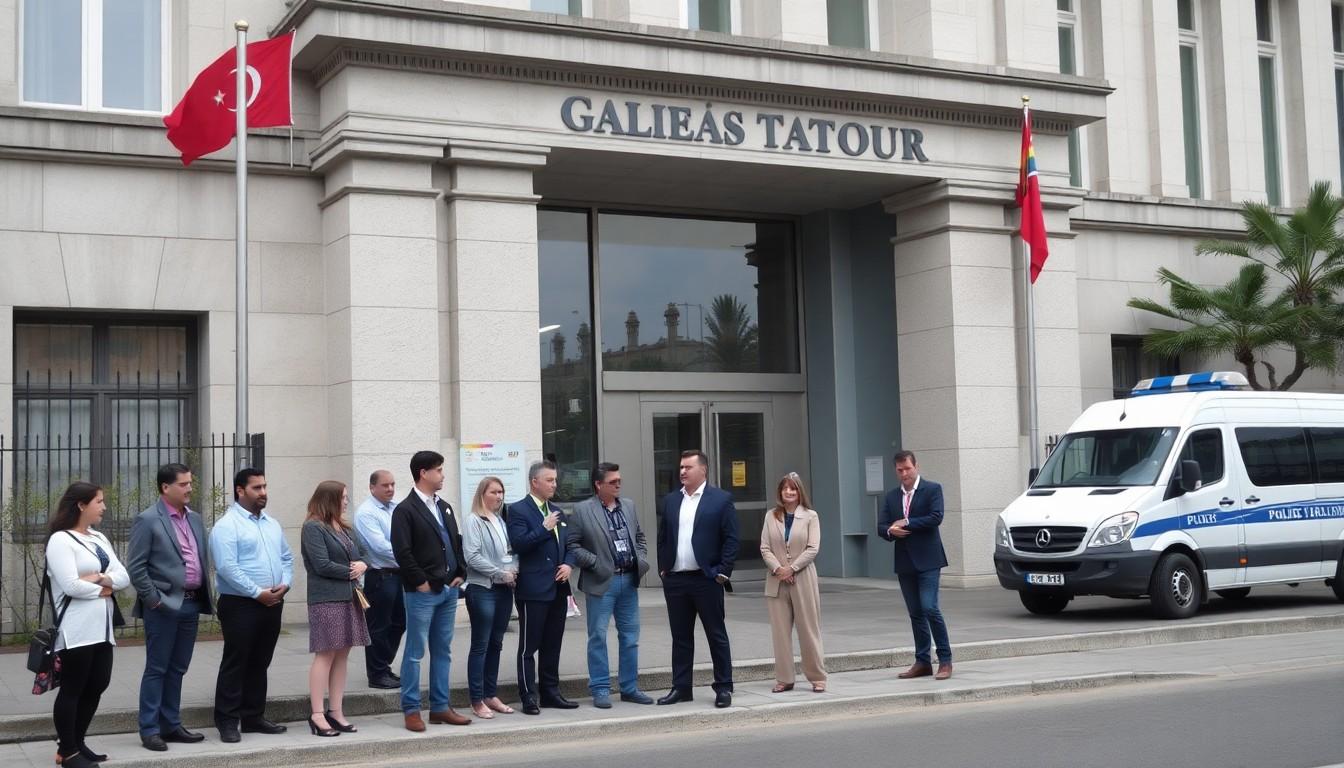
More than 450 organisations from 65 countries are urging Turkey to end its crackdown on LGBTI+ civil society, after raids, online restrictions and mass detentions raised fresh concerns about the safety of activists and rights groups.
Essential Takeaways
- Global appeal: More than 450 civil society organisations have called for an end to the criminalisation of LGBTI+ advocacy in Turkey.
- Raids and restrictions: Police operations reportedly targeted organisations, activists' homes, venues and social media accounts.
- Detentions reported: Turkish media said 116 people were detained and 82 jailed pending trial, although the cases reportedly include wider criminal allegations.
- Key concern: Rights groups say vague ideas such as “morality”, “family” and “obscenity” are being used to suppress lawful advocacy.
- What campaigners want: The groups are calling for the release of people detained solely for peaceful human rights work.
A coordinated appeal puts Turkey under fresh scrutiny
The message from international civil society is unusually broad: more than 450 organisations across 65 countries have joined calls for Turkey to stop treating LGBTI+ rights work as criminal behaviour. The appeal was published by Turkey-based Women for Women’s Human Rights and signed by prominent groups including CIVICUS, IPPF, AWID, PEN Norway and OMCT.
According to the International Planned Parenthood Federation, LGBTI+ people should be able to access respectful, rights-based services without discrimination. That wider principle is now colliding with a fast-moving security operation in Turkey, where activists say peaceful organising is being viewed through a criminal lens. The result is a climate in which even routine advocacy can feel risky. [4]
The signatories aren't asking for special treatment. They're arguing that publishing, fundraising, membership, donations and lawful international funding are ordinary parts of civil society, not automatic proof of wrongdoing. That distinction matters well beyond Turkey, because independent organisations rely on precisely those activities to support vulnerable communities.
Raids reached organisations, homes and nightlife venues
The appeal followed a nationwide operation that began on 13 September, after access was restricted to social media accounts belonging to more than a dozen groups. Police then raided LGBTI+ organisations, activists' homes, gay bars and nightclubs, according to reports cited by Amnesty International and Turkish Minute.
Groups named in connection with the investigations include Kaos GL, LİSTAG and SPoD, alongside other LGBTI+ and HIV-related organisations. These groups provide community support, research, legal assistance and public education, so the impact of raids can stretch far beyond the people taken into custody.
OMCT described the operation as a coordinated crackdown and called for urgent action over the reported mass detention of LGBTI+ human rights defenders. Its intervention highlights the particular danger facing activists whose work is peaceful but whose visibility makes them easy targets. [2]
For people who depend on confidential support, the atmosphere can be especially chilling. A locked office, a vanished social media account or a sudden police search can interrupt helplines, counselling and basic community contact overnight.
What do the allegations mean for rights groups?
The campaigners' central complaint is the use of organised-crime provisions and broad concepts such as “obscenity”, “morality” and “family” against LGBTI+ identities and advocacy. Such language can sound elastic, allowing lawful expression to be pulled into criminal investigations without a clear, predictable boundary.
Amnesty International said Turkish authorities must end what it called an escalating crackdown on LGBTI+ rights organisations and release activists detained solely because of their peaceful work. The organisation's position reflects a familiar human rights principle: criticism, association and advocacy should not become crimes simply because they challenge prevailing social or political views. [5]
There is also an important need for precision. Turkish media reports said 116 people had been detained and 82 jailed pending trial, but the cases reportedly include accusations involving prostitution, drugs and other offences. That means not everyone caught up in the operation was necessarily accused of LGBTI+ advocacy.
Still, the scale of the operation and the inclusion of rights organisations have prompted serious concern. As OMCT's urgent intervention underlines, authorities must distinguish clearly between legitimate criminal investigations and the punishment of peaceful civil society activity. [7]
Why the international response matters
The list of signatories gives the appeal weight across several fields, from women's rights and sexual health to free expression and protection from torture. It also shows that the issue isn't confined to specialist LGBTI+ organisations. International networks increasingly see attacks on one part of civil society as a warning for the whole civic space.
CIVICUS, a global alliance of civil society groups and activists, was among the organisations backing the statement. Other signatories included the International Planned Parenthood Federation, the International Women's Development Agency, PEN Norway and OMCT, creating a coalition that spans advocacy, health, culture and legal protection. [3]
That breadth matters because community organisations often do quiet, practical work: helping someone find a doctor, documenting discrimination, supporting families or offering a safe place to talk. When those organisations are raided or silenced, the loss isn't merely political. It can be personal, immediate and painfully ordinary.
The appeal also puts pressure on governments outside Turkey. Diplomatic statements can be cautious, but sustained attention from international networks makes it harder for detentions and restrictions to disappear from view.
What happens next?
The immediate demands are straightforward: release people held solely for peaceful rights work, stop raids and online restrictions targeting LGBTI+ organisations, and ensure lawful advocacy isn't treated as criminal evidence. The groups also want investigations and prosecutions to follow clear legal standards rather than vague appeals to morality or family.
For observers, the next key test will be whether detainees receive fair proceedings and whether organisations can reopen their offices and digital channels without further reprisals. Reports from Amnesty International and OMCT suggest that the authorities' handling of those questions will shape perceptions of Turkey's commitment to freedom of association and expression. [5]
This is a story about legal process, but it is also about trust. An organisation can't serve people effectively if its staff fear arrest, its supporters fear donating and its audience fears being seen. As one international appeal makes clear, a healthy civic space needs room for disagreement, visibility and ordinary human connection.
The coming weeks will show whether international pressure produces practical change or simply another statement in an increasingly crowded record of concern. [6]
A safer civic space starts with treating peaceful LGBTI+ advocacy as rights work, not evidence of crime.
Source Reference Map
Story idea inspired by: [1]
Sources by paragraph: