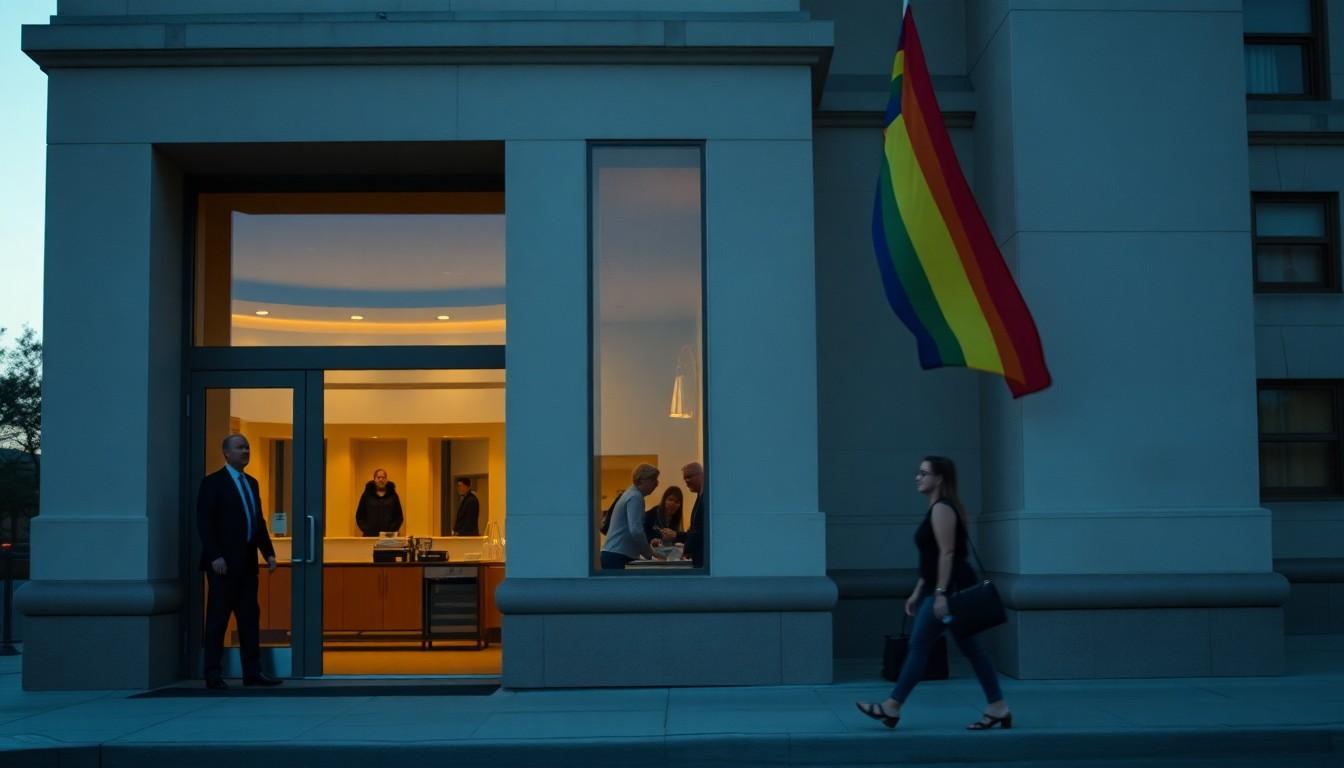
Voters in Michigan are once again weighing Mike Rogers’ LGBTQ+ rights record as he campaigns for a US Senate seat. His past votes on marriage, workplace protections and military service, alongside recent statements about transgender people, offer a clear picture of why equality groups rate his record so poorly.
Essential Takeaways
- Marriage: Rogers backed measures defining marriage as between a man and a woman.
- Civil rights: He voted against workplace and hate-crime protections covering LGBTQ+ people.
- Military service: He opposed efforts to repeal “Don’t Ask, Don’t Tell”.
- Trans rights: His campaign has focused heavily on excluding transgender women and girls from sports and gendered spaces.
- Campaign team: Critics have highlighted controversial anti-LGBTQ+ remarks from members of his religious advisory coalition.
A record that reaches back decades
Mike Rogers’ opposition to LGBTQ+ equality isn't a recent campaign talking point. During his time in Congress, he backed several measures that would have restricted recognition and protection for queer Americans, according to the Human Rights Campaign.
In 2004, Rogers supported legislation designed to prevent federal courts from hearing challenges to the Defense of Marriage Act. He also voted for a proposed constitutional amendment defining marriage as between a man and a woman, repeating his support for that measure in 2006.
At the time, Rogers described same-sex relationships as a “lifestyle choice” and argued that marriage should be limited to heterosexual couples. That language now sounds strikingly dated, but it reflects the political climate he helped reinforce.
Workplace and military protections also drew opposition
Rogers’ record extends beyond marriage. In 2007, he voted against the Employment Non-Discrimination Act, which aimed to prevent workplace discrimination based on sexual orientation.
He also voted against legislation adding sexual orientation to federal hate-crime protections in 2007 and 2009. In 2010, he opposed measures to repeal “Don’t Ask, Don’t Tell”, the policy that barred openly gay, lesbian and bisexual service members from serving in the US military.
The Human Rights Campaign gave Rogers a zero rating for his congressional voting record. That score is stark, but it isn't based on a single vote. It reflects a pattern across marriage, employment, hate-crime law and military service.
Why transgender rights are central to his campaign
More recently, Rogers has made opposition to transgender inclusion a prominent part of his political message. He has pledged to change the interpretation of Title IX, the federal law prohibiting sex discrimination in education, to exclude transgender girls and women from sports and certain facilities.
Rogers frames the issue as one of fairness and privacy for women and girls. LGBTQ+ advocates, including the Michigan Democratic Party, argue that this rhetoric misrepresents transgender people and turns their participation in ordinary public life into a political threat.
His campaign has also attacked Democratic opponents over transgender inclusion in sport. That focus mirrors a wider Republican strategy, in which trans participation has become a high-profile cultural wedge issue even as many voters face more immediate concerns such as healthcare, housing and education.
Schools and LGBTQ+ inclusion remain another flashpoint
Rogers has also criticised LGBTQ+-inclusive education and school library policies. During a 2023 interview, he defended efforts associated with Moms for Liberty to remove books dealing with LGBTQ+ themes and other contested subjects.
He compared some of those books with pornography and argued that a title shouldn't be considered banned if families can still find it elsewhere. That reasoning overlooks how school and library restrictions work in practice: removing a book from a classroom or public collection still limits access, especially for young people who rely on those spaces.
The Michigan Democratic Party has used Pride Month messaging to draw attention to Rogers’ record, while Metro Times has portrayed his positions as an example of how prejudice can become embedded in legislation. For LGBTQ+ students, the debate isn't abstract. It can affect whether they see their lives reflected in school, and whether they feel safe asking for support.
His advisory team has intensified scrutiny
Rogers’ campaign has faced fresh criticism over members of its Faith Coalition. According to Metro Times, several advisers have made hostile comments about homosexuality or LGBTQ+ rights, including remarks describing queer relationships as sinful, perverse or incompatible with religious teaching.
That association matters because campaign personnel can offer clues about the political network surrounding a candidate. Rogers may not personally repeat every adviser’s language, but choosing to elevate those figures sends a message about which constituencies he wants beside him.
The Human Rights Campaign placed Rogers among its anti-equality Senate candidates, while progressive groups in Michigan have urged voters to examine his record rather than treat his campaign as a fresh start. For queer voters, the question is less about one provocative advert and more about whether the candidate would protect or roll back existing rights.
What Michigan voters should watch next
Rogers is seeking to return to the Senate race after an earlier unsuccessful campaign. His background includes service in the Michigan Senate, the US House and the FBI, but his LGBTQ+ record is likely to remain a defining part of the contest.
Voters comparing candidates should look beyond slogans and check voting histories, policy pledges and campaign alliances. Those details often reveal more than carefully polished advertisements, particularly when debates over “parents’ rights”, school books and women’s sport are involved.
For LGBTQ+ Michiganders and their families, the stakes are personal. A Senate candidate's position can influence federal protections, education policy and the tone of public debate for years to come.
A long voting history can tell voters more than a campaign slogan ever will.
Source Reference Map
Story idea inspired by: [1]
Sources by paragraph:
- Paragraph 1: [3], [7]
- Paragraph 2: [2], [6]
- Paragraph 3: [3], [7]
- Paragraph 4: [5]
- Paragraph 5: [2], [6]
- Paragraph 6: [3], [7]
- Paragraph 7: [2], [6]
- Paragraph 8: [5]
- Paragraph 9: [4]
- Paragraph 10: [3], [7]
- Paragraph 11: [5]
- Paragraph 12: [2], [6]
- Paragraph 13: [3], [7]
- Paragraph 14: [5]
- Paragraph 15: [4]
- Paragraph 16: [3], [7]
- Paragraph 17: [2], [6]
- Paragraph 18: [5]
- Paragraph 19: [3], [7]