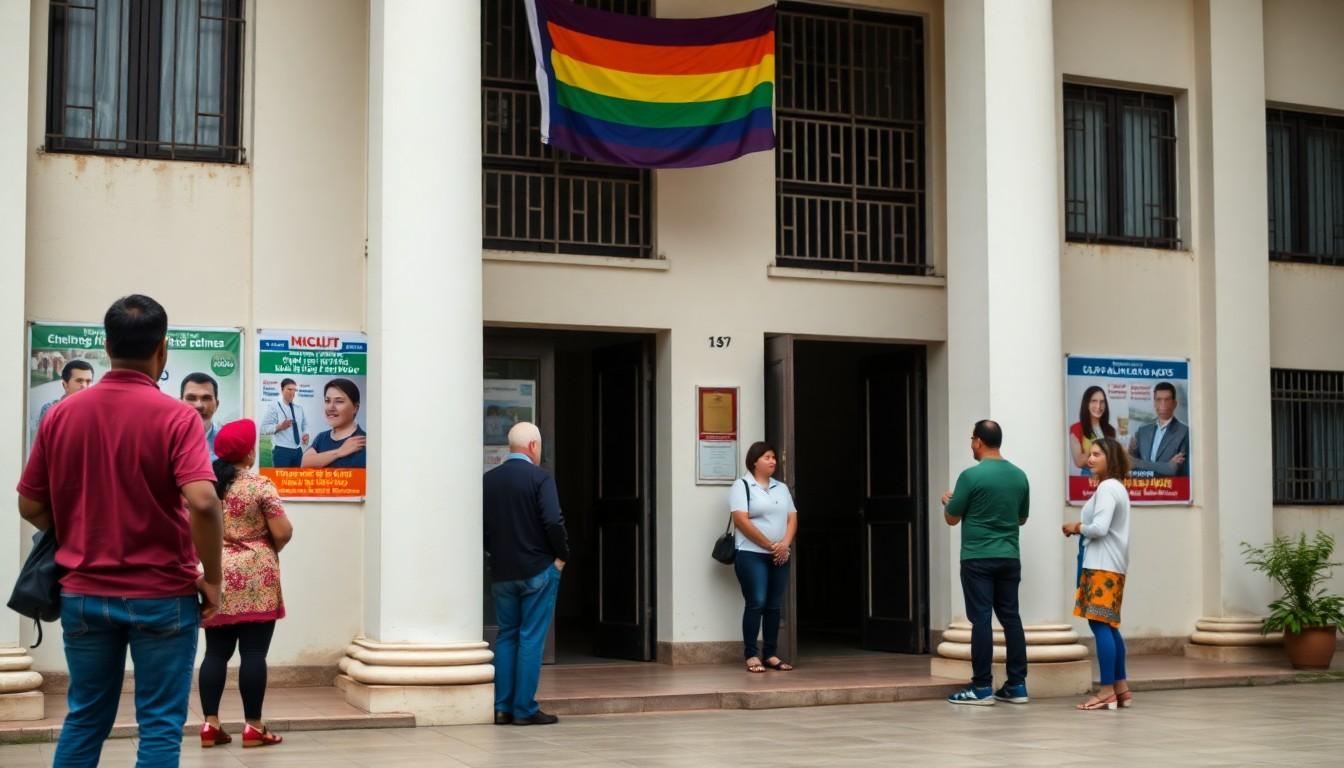
Voters in Maynas, Loreto, are seeing LGBTIQ+ rights emerge as a sharp issue in the 2026 local elections, after mayoral candidate Enrique Rodriguez Morales attacked the “Iquitos Vota por la Igualdad” campaign. The row matters because it brings discrimination, legal recognition and inclusive local government into an increasingly public debate.
Essential Takeaways
- A public clash: Enrique Rodriguez Morales criticised an LGBTIQ+ equality initiative linked to the 2026 municipal elections.
- A broad campaign: Fifteen candidates reportedly joined commitments promoting equal rights and anti-discrimination measures.
- A legal argument: Rodriguez connected equality with marriage and formal civil rights, rather than wider inclusion policies.
- A local test: The dispute puts Maynas and Iquitos under scrutiny over how candidates address minority communities.
- A wider conversation: Advocacy groups are urging parties to include LGBTIQ+ protections in their government plans.
A campaign message becomes an election flashpoint
The dispute began after Rodriguez, a candidate for mayor of Maynas, responded on social media to a photograph connected with “Iquitos Vota por la Igualdad”. His post used a homophobic slur and questioned the value of the initiative, while arguing that marriage was the route to equal treatment.
That reaction quickly shifted attention away from the campaign's policy goals and towards the tone of political debate. For many voters, the issue isn't simply whether candidates support marriage equality. It's also whether public officials can discuss LGBTIQ+ residents with respect and address discrimination in everyday services.
Fifteen candidates signalled support for inclusion
The initiative brought together 15 candidates from different political organisations seeking positions in regional, provincial and district government. Organisers asked them to support proposals focused on equality and the protection of LGBTIQ+ people, rather than leaving those concerns as a footnote in election manifestos.
According to Diario La Region, community organisations in Loreto have been calling on candidates to make concrete commitments against discrimination. That approach matters because promises are easier to measure when they cover public services, staff training, safety and access to complaint mechanisms.
The campaign was promoted by CHERL alongside FeminAs de Loreto, AMHODIP and MHOBE, with support from Mas Igualdad Peru and Cuso International, and collaboration from the Canadian Embassy. Its message was straightforward: local government decisions affect whether residents feel visible, safe and fairly treated.
Why local government is central to the debate
National law may dominate discussions about marriage and civil status, but municipal authorities shape much of daily life. They oversee public spaces, local programmes, administrative services and community initiatives, all areas where a respectful policy can make a noticeable difference.
Mas Igualdad Peru's electoral material frames LGBTIQ+ participation as part of a broader democratic question. The emphasis is not only on legal recognition, but also on whether candidates acknowledge diverse families and communities when drawing up government plans.
That distinction is important in Maynas. A campaign can promise formal equality while leaving practical barriers untouched. Voters may reasonably want to know what a candidate would do about harassment, discrimination in municipal offices or the visibility of LGBTIQ+ people in local programmes.
Public attitudes are becoming part of the political test
Research shared by Mas Igualdad Peru and Ipsos has placed respect for LGBTIQ+ people within a wider discussion about public attitudes in Peru. While survey findings don't settle every legal or political argument, they help explain why candidates are being pressed to state their positions more clearly.
The emerging expectation is simple: disagreement over policy shouldn't require contempt for the people affected by it. In an election campaign, language can become a signal of how a future administration might listen, respond and allocate attention.
For voters, the practical question is therefore less about slogans and more about detail. Does a candidate support anti-discrimination action? Will their administration consult community groups? Are inclusion commitments backed by budgets, training and visible accountability?
What voters should watch next
The most revealing next step will be whether the controversy produces specific proposals from candidates and parties. Support for equality is easy to announce; setting out a timetable, responsible office and measurable goal is much more useful.
Datumperu's profiles of Maynas and Iquitos provide basic electoral and local-government context, but the campaign debate adds a human dimension to those administrative boundaries. Behind every district and council structure are residents deciding whether public institutions recognise them as full participants in civic life.
The argument also shows why political language has consequences beyond one post. A heated comment may attract attention for a day, but voters are likely to remember whether candidates treated an entire community as a problem or as part of the electorate they hope to serve.
A local election has turned equality into a question candidates can no longer easily avoid.
Source Reference Map
Story idea inspired by: [1]
Sources by paragraph:
- Paragraph 1: [2], [3]
- Paragraph 2: [4], [7]
- Paragraph 3: [2], [4]
- Paragraph 4: [2], [4]
- Paragraph 5: [5], [6]
- Paragraph 6: [3], [7]
- Paragraph 7: [4], [5]
- Paragraph 8: [3], [7]
- Paragraph 9: [2], [4]
- Paragraph 10: [5], [6]
- Paragraph 11: [2], [3]
- Paragraph 12: [4], [7]
- Paragraph 13: [5], [6]
- Paragraph 14: [2], [4]
- Paragraph 15: [3], [7]