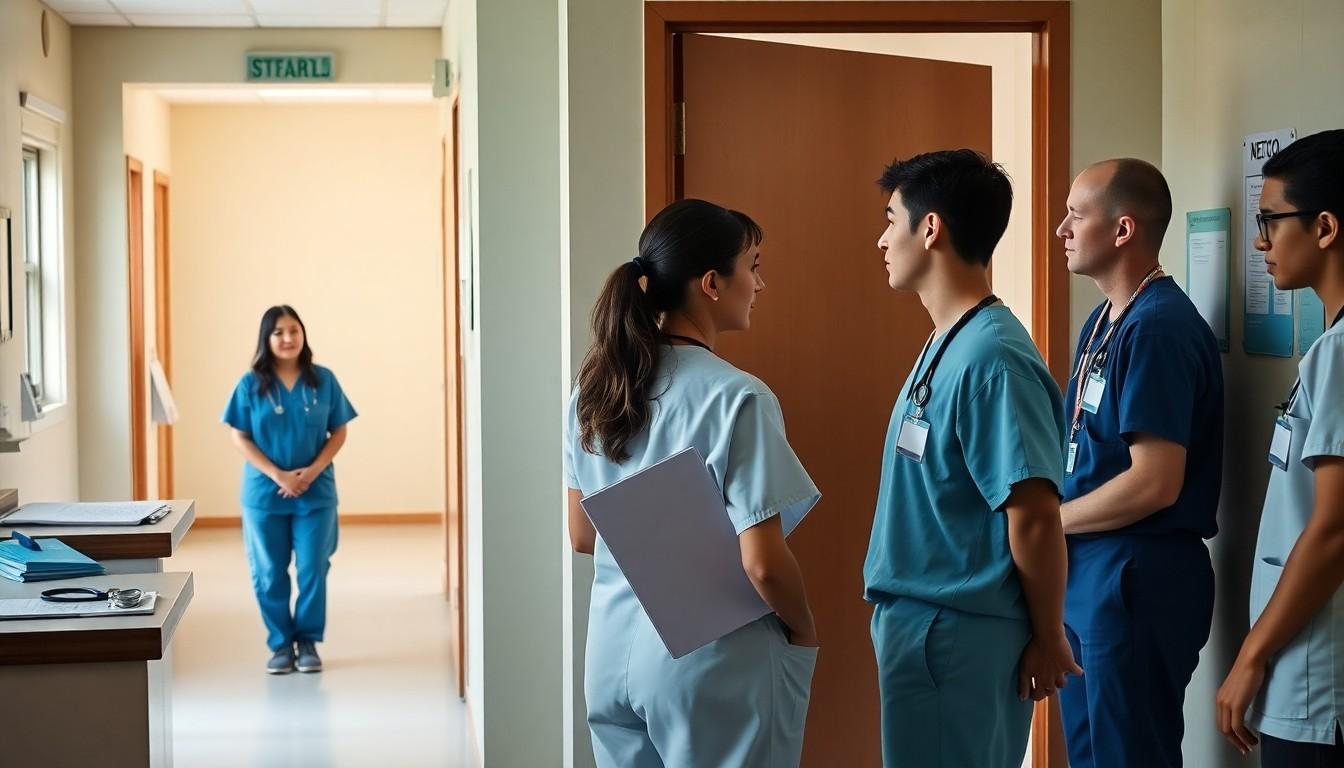
Queer medical students can find themselves coming out repeatedly, from one supervisor to the next, with rural placements adding fresh questions about safety, belonging and professional identity. A new discussion from The Short Coat explores how LGBTQ+ trainees navigate clinical education, patient care and the uneasy pressure to decide when honesty feels safe.
Essential Takeaways
- Coming out is ongoing: Students may face the same personal questions with every new placement, preceptor and patient.
- Rural settings can magnify uncertainty: Smaller communities may offer fewer visible LGBTQ+ networks and less anonymity.
- Safety isn't evenly shared: Passing as cisgender can bring protection that isn't available to every queer or trans trainee.
- Identity can inform care: Sexual orientation, gender identity, pronouns and partners may be clinically relevant, not merely personal details.
- Support needs structure: Inclusive policies, trusted mentors and clear reporting routes matter more than goodwill alone.
Why coming out can feel like starting again
For LGBTQ+ medical students, visibility isn't a single milestone tucked neatly into the past. It can return with a new consultant, a different clinical team or an apparently harmless question about a partner.
That repetition is tiring because every encounter carries a calculation. Will openness build trust, prompt awkwardness or affect an assessment? Research on LGBTQ+ medical education continues to point to the importance of learning environments where students aren't forced to weigh authenticity against progression. [6]
In a rural rotation, the calculation may feel sharper. A student can be highly competent and still wonder whether a supervisor's assumptions will shape invitations, feedback or everyday rapport. Rural health literature has also highlighted how workforce shortages and community context influence both training and access to care. [3]
Rural placements bring belonging into focus
Small-town medicine can offer remarkable continuity and close relationships, but it may also leave queer trainees feeling conspicuous. There are fewer ways to disappear into the crowd, and local attitudes can be difficult to read from the outside.
That doesn't mean rural communities are uniformly hostile. Far from it. But a student shouldn't have to rely on guesswork when deciding whether a placement is emotionally or physically safe. Studies of medical learners describe how institutional climate, peer support and visible role models can shape whether LGBTQ+ students feel able to participate fully. [4]
The pressure isn't distributed equally, either. A cisgender student who can move through a placement without being questioned may have options unavailable to a trans student, particularly a trans woman of colour. Recent scholarship on medical education and inclusion reinforces the need to consider how sexuality, gender, race and geography overlap in real clinical settings. [5]
Patient questions are part of good medicine
The conversation also challenges the idea that asking about identity is automatically intrusive. Used thoughtfully, questions about pronouns, partners, sexual practices or gender history can help clinicians understand risk, anatomy, relationships and a patient's preferences.
Of course, nobody wants a checklist fired at them before they've taken off their coat. Good care depends on relevance, privacy and tone. A patient visiting with a rash may not need every question immediately, but a clinician should know how to ask sensitively when the information could alter a diagnosis or treatment plan.
That approach matters for students, too. Research into LGBTQ+ healthcare experiences has repeatedly found that patients may conceal important information when they expect judgement or dismissal. [2] Inclusive clinical habits aren't about making every consultation political; they're about making it accurate, safe and human.
What students need from medical schools
The most useful support is practical rather than decorative. Students need clear guidance on discriminatory behaviour, confidential ways to raise concerns, supervisors who understand LGBTQ+ health and assessments that don't quietly reward conformity.
Representation helps, but one supportive mentor cannot carry an entire institution. Medical schools also need curricula that treat queer and trans health as part of mainstream medicine, rather than a niche topic that appears briefly during an awareness week. Reviews of LGBTQ+ education have identified persistent gaps in both training content and confidence among healthcare learners. [7]
Admissions messaging matters as well. If applicants are subtly encouraged to hide an aspect of themselves, the damage begins before the first placement. A welcoming prospectus is useful, but students notice whether that welcome survives contact with the ward, the clinic and the supervisor's office. [4]
The profession is moving, but slowly
The discussion reflects a wider shift in medicine. More students and clinicians are asking whether professionalism should mean emotional concealment, or whether it should make room for people to bring their whole selves to work without becoming a teaching exhibit.
There are encouraging signs, including dedicated LGBTQ+ clinics, student groups and growing research attention. Yet progress can feel uneven, especially where local resources are thin or political debate spills into clinical education. Recent studies continue to stress that inclusion needs institutional backing, not just individual kindness. [6]
For patients, the benefits are tangible. A doctor who understands why identity may matter clinically is more likely to notice missing information, ask better questions and avoid assumptions. For students, a safer learning environment can mean spending less energy on self-protection and more on becoming a good doctor. [5]
Coming out shouldn't have to be an entrance exam for every new clinical room.
Source Reference Map
Story idea inspired by: [1]
Sources by paragraph: