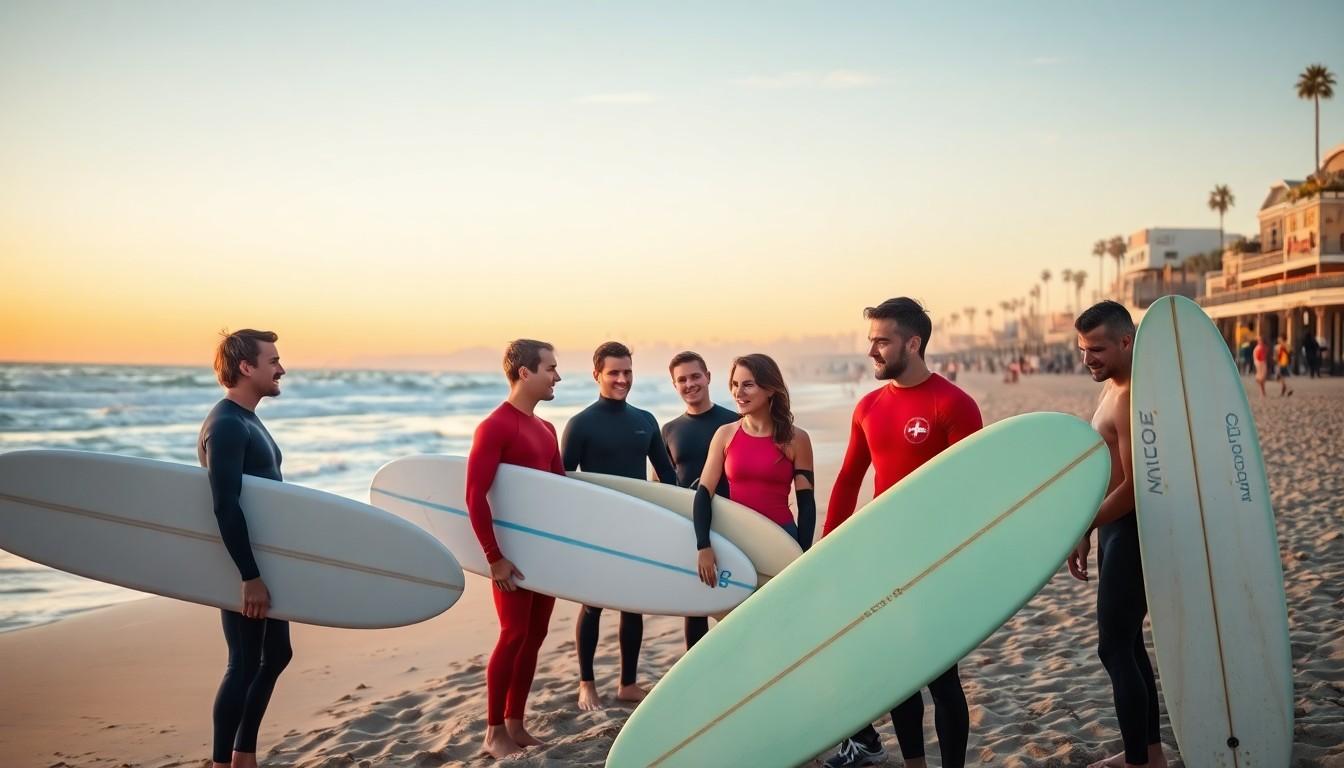
Queer surfers in Venice Beach are turning daily wave reports, group sessions and beach gatherings into something bigger than a surf club. Led in part by local organiser Glen Walsh, the community is making the ocean feel more welcoming, visible and joyful for people who once found surfing intimidating or uncomfortably macho.
Essential Takeaways
- A daily ritual became a community hub: Glen Walsh's Venice surf reports grew from messages to friends into a popular online update followed around the world.
- Visibility matters: Queer surfers have created meet-ups, trips and Pride events that challenge old assumptions about who belongs in the water.
- Safety comes first: Dream Team Surf focuses on mutual support, friendship and making sessions feel less isolating.
- The ocean can be restorative: Surfing and time in nature offer play, concentration and a welcome break from competitive pressure.
- Beginners deserve confidence: The right instructor and a supportive group can make learning feel far less intimidating.
One crush, one surfboard and a very persistent beginner
Glen Walsh didn't begin surfing with a grand plan to reshape Venice Beach. As reported by the Los Angeles Times, he picked up a surfboard at 14 after a crush encouraged him to stop boogie boarding and try something more ambitious.
He wasn't instantly good. In fact, he was reportedly terrible at first, but kept returning to the water. That stubborn streak mattered because surfing soon became complicated by the hostility he encountered as a gay teenager around the Venice Pier. The scene felt overwhelmingly straight, masculine and difficult to enter.
That tension is familiar in sports where identity can seem tightly policed. As The Inertia has noted in its coverage of Walsh's surf reporting, his lasting contribution isn't simply technical knowledge. It's the way he's helped make local surf culture feel more open and recognisable to people who once felt like outsiders.
How a quiet surf report became Venice's daily group chat
Walsh's breakthrough was surprisingly low-key. He began posting morning updates about swell, wind and wave quality, giving friends a quick idea of what they'd find before paddling out.
The format was simple but oddly soothing: a calm voice, a grey-blue horizon and precise observations delivered before much of the beach had properly woken up. According to Finisterre's interview with Walsh, the reports gradually reached beyond Venice, attracting viewers in cities including London, Berlin and Tokyo.
That growth turned a practical service into a piece of local identity. People who never surfed still watched, while regulars recognised Walsh at neighbourhood meeting points. The result was a rare kind of online influence: less polished lifestyle branding, more dependable morning ritual.
Queer surfers are making room in the lineup
The more important shift happened offline. Walsh began connecting with gay surfers, arranging trips and building friendships that gave queer people a stronger presence in the water. His work on the film Out in the Line-Up also helped bring wider attention to homophobia within surfing, a problem that extends well beyond California.
Other organisers have since added their own energy. Shelly Guidera founded Dream Team Surf after moving to Venice and noticing how little visible queer representation there was in the local surf community. The group offers meet-ups and shared sessions, but its deeper purpose is reassurance: nobody should have to wonder whether they belong before even entering the sea.
Coverage from Just SoCal describes the collective as a place where queer surfers can find acceptance and companionship. That's especially valuable for beginners, women and trans surfers, for whom a lesson or solo session can feel unusually exposed.
Why group surfing can feel safer and more joyful
Surfing is often sold as freedom, but learning it can involve plenty of nerves. Waves are unpredictable, the equipment feels unfamiliar and the usual surf-school dynamic may leave beginners feeling watched rather than encouraged.
Dream Team Surf's approach is deliberately social. According to the Los Angeles Times, the group has hosted Pride events and promoted a culture of looking after one another. That might sound straightforward, yet it changes the emotional temperature of a session. A friendly face on the sand can matter almost as much as a good forecast.
Guidera's surf-therapy training adds another layer. The appeal isn't just fitness or adrenaline. Being forced to pay attention to tide, balance and breath can quiet the mental clutter that follows people into the water. For many participants, the real win may be paddling out with confidence, not standing perfectly on a wave.
Choosing a welcoming surf session
If you're new to surfing, look for an instructor or group that explains conditions clearly, checks equipment properly and treats questions as normal. A good session should include a safety briefing, an honest discussion of ability and enough space to learn without embarrassment.
It also helps to start small. Choose gentle waves, wear a comfortable wetsuit and ask whether the lesson is designed for complete beginners. If the atmosphere feels competitive or dismissive, find another group. There are plenty of instructors who understand that confidence develops faster when people feel supported.
For queer surfers especially, community-led sessions can remove a layer of uncertainty. You don't have to arrive already confident, athletic or fluent in surf etiquette. Sometimes the most useful first step is simply finding people who'll cheer when you manage to catch a small wave.
Venice's surf culture is changing, one morning at a time
The story unfolding at Venice Beach isn't about replacing one surf culture with another. It's about widening the doorway. Walsh's reports, Guidera's collective and the people who turn up for shared sessions all show how local traditions can evolve without losing their sense of fun.
There is something heartening about that progression. A teenager who once felt conspicuous on the pier now helps others feel at home in the same stretch of water. And for anyone watching from the beach, the message is refreshingly clear: surfing doesn't belong to one type of person.
A more welcoming lineup starts with making room for everyone.
Source Reference Map
Story idea inspired by: [1]
Sources by paragraph: