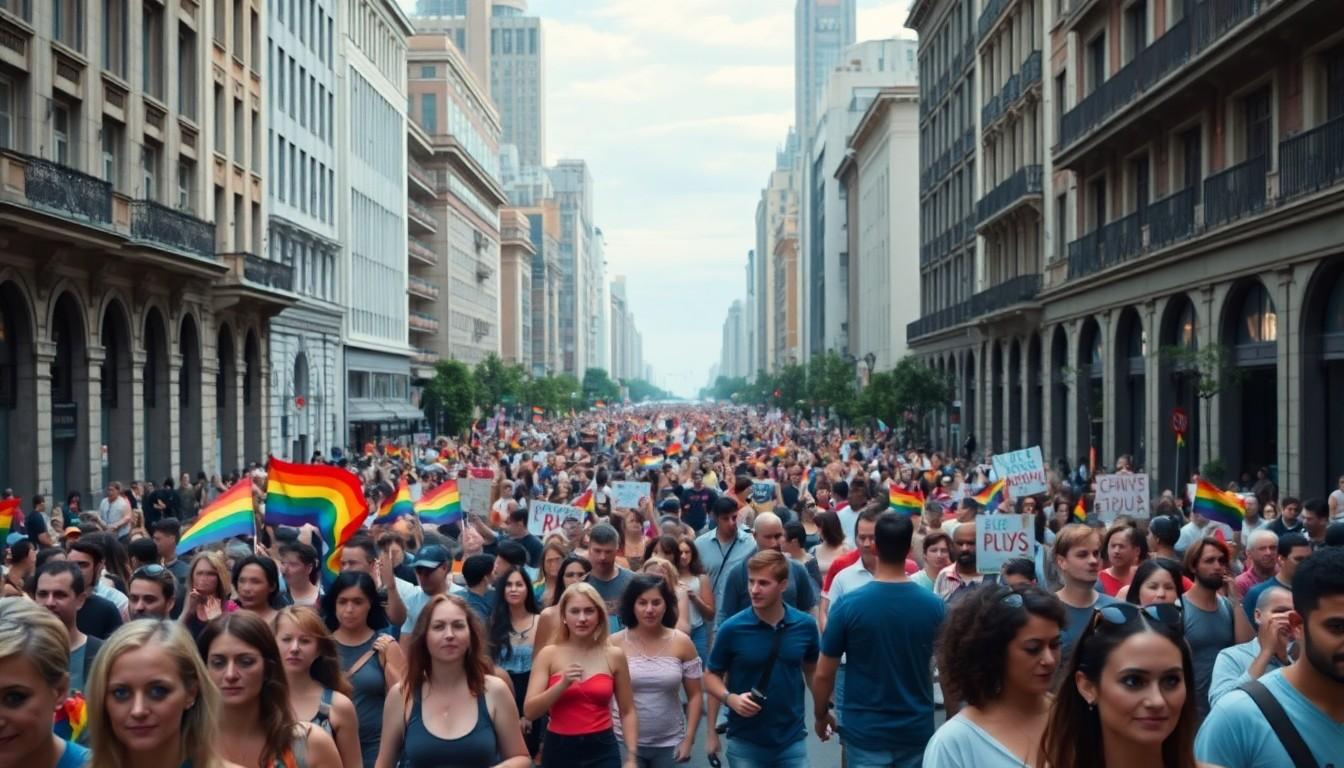
Organisers have confirmed that Buenos Aires' Pride March will go ahead on 7 November as planned, despite uncertainty over a proposed clash with Pope Leo XIV's visit. The decision matters because the long-running celebration is organised by civil society, attracts huge crowds and remains a powerful public expression of LGBTQ+ rights in Argentina.
Essential Takeaways
- The date is staying put: Organisers say the Buenos Aires Pride March will take place on 7 November.
- Civil society sets the timetable: Under Argentine law, the organisations behind the march decide its date.
- A papal visit triggered the dispute: Jorge Macri has argued for a change because Pope Leo XIV is due to arrive the following day.
- No formal objection has emerged: The Catholic Church and national government reportedly haven't asked for the march to be moved.
- Expect a major turnout: Previous Buenos Aires Pride events have drawn crowds approaching two million, bringing colour, music and a serious political message.
Organisers are standing by the November date
The clearest message from the organisers is also the simplest: the Buenos Aires Pride March will proceed on 7 November. That date follows the city's established tradition of holding the event on the first Saturday of November, a rhythm that has helped turn it into one of Argentina's most recognisable annual gatherings.
According to Diario Registrado, the organisations involved have reiterated that they have the legal authority to choose the date. Their position gives the announcement more than symbolic weight. It sets up a direct question for city authorities: will Buenos Aires respect the organisers' decision, or try to force a change?
Why Pope Leo XIV's arrival has complicated plans
The proposed change is linked to Pope Leo XIV's expected arrival in Argentina the day after the march. Jorge Macri, the city's head of government, has continued to suggest that the event won't happen on the scheduled date, even though organisers say otherwise.
The tension is striking because, according to the reported account, neither the Church nor the national government has formally requested that the Pride March be moved. That leaves the dispute looking less like a practical scheduling problem and more like a political standoff over who gets to shape the city's public calendar.
Buenos Aires Pride is far bigger than a parade
Buenos Aires Pride is colourful and celebratory, but its significance reaches well beyond costumes, music and packed streets. The march has been held in the capital since 1992, becoming a yearly gathering for LGBTQ+ communities, allies and campaigners defending hard-won rights.
Coverage from TN and C5N of the 2023 event described crowds nearing one million people, while other reporting has placed recent participation even higher. Either way, this isn't a small civic appointment that can be quietly shifted. It brings an enormous audience into central Buenos Aires, along with a strong sense of visibility and collective identity.
What could happen if the city tries to intervene?
The practical challenge for the Buenos Aires government is the sheer scale of the mobilisation. If hundreds of thousands, or potentially millions, arrive expecting the march to happen, preventing it would be difficult politically and logistically.
Previous coverage by El Dia and images archived on Wikimedia Commons show the event's familiar footprint: broad avenues filled with people, banners, rainbow colours and organised contingents. For visitors, that means transport disruptions and busy streets are possible. For officials, it means any attempt to block the gathering could create a confrontation rather than solve one.
The bigger issue is who controls public space
At heart, the argument is about more than one weekend in November. Pride marches claim public space to make equality visible, and the Buenos Aires event has become a fixture precisely because it combines celebration with protest.
That history makes the organisers' insistence especially significant. Moving the date might appear administrative, but it could also be read as placing LGBTQ+ visibility behind a more powerful institution. As C5N's coverage of the 2023 march noted, the event also reflects fears about setbacks to rights and social progress. In that context, keeping the date becomes a statement in its own right.
For anyone planning to attend, the sensible approach is to follow updates from the organising groups and city authorities, allow extra travel time and expect a loud, crowded and emotionally charged day. Buenos Aires Pride has never been easy to ignore, and this year's dispute may make it even harder to overlook.
The date may be familiar, but the argument around it shows why the march still matters.
Source Reference Map
Story idea inspired by: [1]
Sources by paragraph: