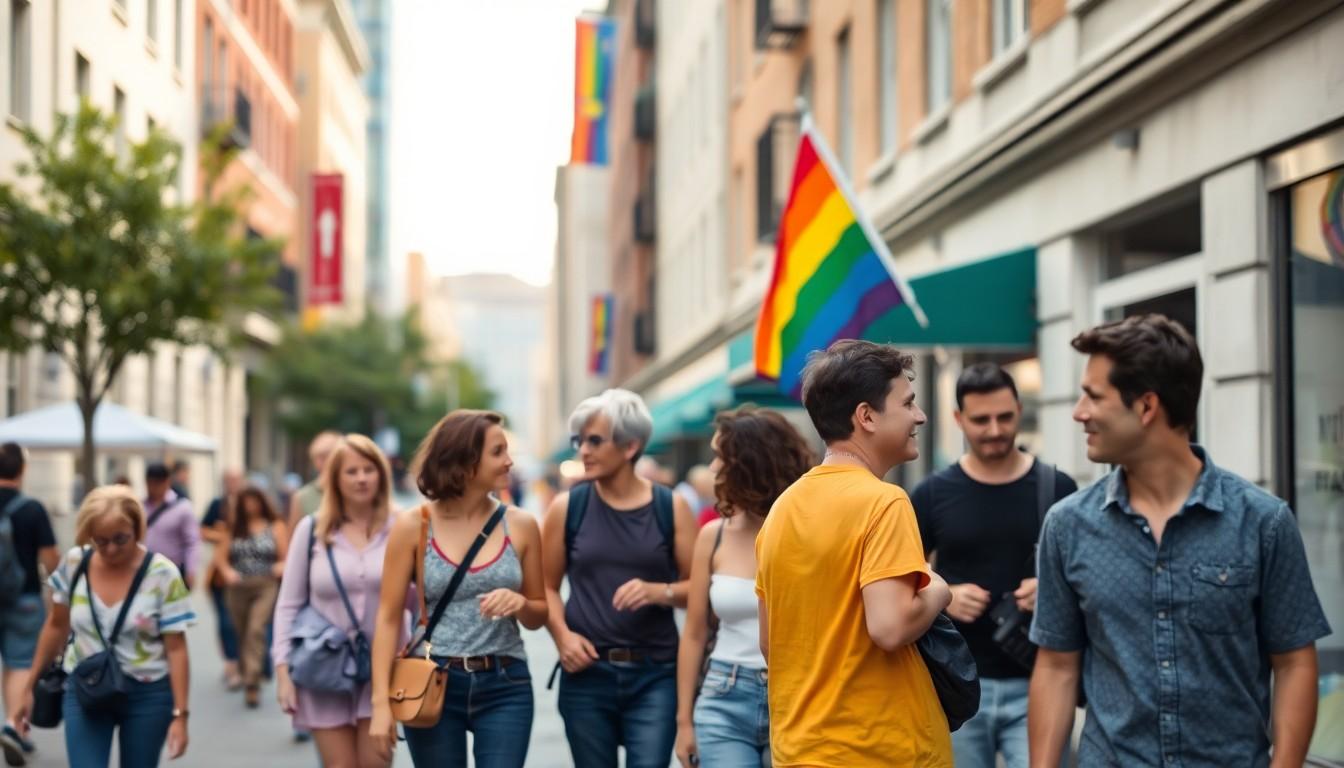
People are marking Bisexual Visibility Day on 23 September by challenging a stubborn myth: bisexuality doesn't need to look perfectly balanced. The annual observance celebrates bisexual people, raises awareness and encourages acceptance, while reminding everyone that identity can't be measured by dating history, appearance or a tidy attraction spreadsheet.
Essential Takeaways
- The date: Bisexual Visibility Day takes place every 23 September.
- The history: The observance was first recognised in 1999.
- The key message: Bisexual people don't need equal attraction to different genders.
- Dating isn't proof: A person's relationship history doesn't define the full scope of their sexuality.
- Visibility matters: Representation should include bisexual people with varied lives, identities and experiences.
Bisexuality doesn't come with a 50/50 calculator
Bisexual Visibility Day offers a useful excuse to bin one of the most persistent myths about bisexuality: that attraction must be split evenly between genders. It doesn't. Sexuality isn't a pie chart, and nobody needs to arrive with percentages, receipts or a presentation deck.
The observance, held annually on 23 September, was established in 1999 to recognise bisexual people and promote greater understanding. Boston's official calendar describes the day as an opportunity to celebrate bisexual communities and increase visibility, while awareness organisations also frame it as a moment for education and acceptance.
Attraction can vary in intensity, shift over time or simply refuse to fit a neat pattern. That's ordinary human complexity, not evidence that someone's identity is somehow incomplete.
Why dating history tells only part of the story
A common misunderstanding is to treat a person's past relationships as a complete record of their sexuality. Someone who's mainly dated men can still be bisexual. So can someone who's mostly dated women, or someone who's never had a relationship with a particular gender.
That distinction is central to the wider message behind Bisexual Visibility Day. Guidance from LGBTQ+ organisations and public-sector awareness campaigns stresses that bisexual identity isn't invalidated by a person's current partner or previous dating history.
A relationship tells you who someone is with now. It doesn't provide a full map of every attraction they've experienced, might experience or choose to talk about. Frankly, demanding a balanced dating history is a remarkably exhausting way to misunderstand another person.
Visibility should be broader than a recognisable stereotype
More visibility is welcome, but it shouldn't create a new set of rules about how bisexual people are expected to look or behave. A bisexual person can be single, married, private, flamboyant, uninterested in dating or happily settled with one partner.
Information from Timeanddate and Awareness Days presents the September observance as a chance to celebrate bisexual people and challenge misconceptions, rather than impose a single template on the community. That matters because representation becomes much less useful when it only recognises people who fit a familiar image.
The quiet person in the corner counts. So does the celebrity, the parent, the student and the person who hasn't shared their identity publicly. Visibility isn't a performance that has to be obvious to everyone else.
Public figures have helped widen the conversation
Over the years, actors, musicians and other public figures have spoken about bisexuality in ways that have made the subject more visible in mainstream culture. Names associated with that conversation include Lady Gaga, Billie Joe Armstrong, Aubrey Plaza, Alan Cumming, Megan Fox, François Arnaud, Nico Tortorella, Tyler Blackburn, Halsey and Kit Connor.
Their experiences aren't interchangeable, and no celebrity can speak for every bisexual person. Still, public conversations can help challenge the old assumption that bisexuality is merely a phase, a branding exercise or something that needs to be proven.
Kit Connor's experience also highlighted an important boundary: visibility should never mean pressuring someone to disclose their sexuality. Awareness campaigns in Boston and Washington state focus on recognition and acceptance, which is rather different from demanding a public announcement.
How to be a better ally on Bisexual Visibility Day
The simplest approach is also the most useful: believe people when they describe their own identity. Avoid treating their partner, clothes, previous relationships or apparent preferences as evidence for or against bisexuality.
It also helps to skip the familiar questions about who someone prefers, whether they have "really" dated more than one gender or whether their attraction is evenly divided. Those questions may sound curious, but they often turn a personal identity into an audition.
For organisations and communities, the day can be marked through educational events, inclusive resources and space for bisexual voices. The Washington State LGBTQ Commission and other awareness groups encourage activities that build understanding, which is a much better use of the occasion than asking people to defend themselves.
A day for recognition, not another test
Bisexual Visibility Day is most meaningful when it expands the idea of what bisexuality can look like. It isn't a demand for equal numbers, a particular style or a carefully maintained dating record.
The message is refreshingly simple: a person's identity belongs to them. Recognition should make life easier, not add another test to pass.
Bisexuality doesn't need to be mathematically balanced; it needs to be respected.
Source Reference Map
Story idea inspired by: [1]
Sources by paragraph:
- Paragraph 1: [2], [3]
- Paragraph 2: [4], [5]
- Paragraph 3: [6], [7]
- Paragraph 4: [2], [4]
- Paragraph 5: [3], [5]
- Paragraph 6: [6], [7]
- Paragraph 7: [2], [3]
- Paragraph 8: [4], [5]
- Paragraph 9: [6], [7]
- Paragraph 10: [2], [4]
- Paragraph 11: [3], [5]
- Paragraph 12: [6], [7]
- Paragraph 13: [2], [3]
- Paragraph 14: [4], [5]