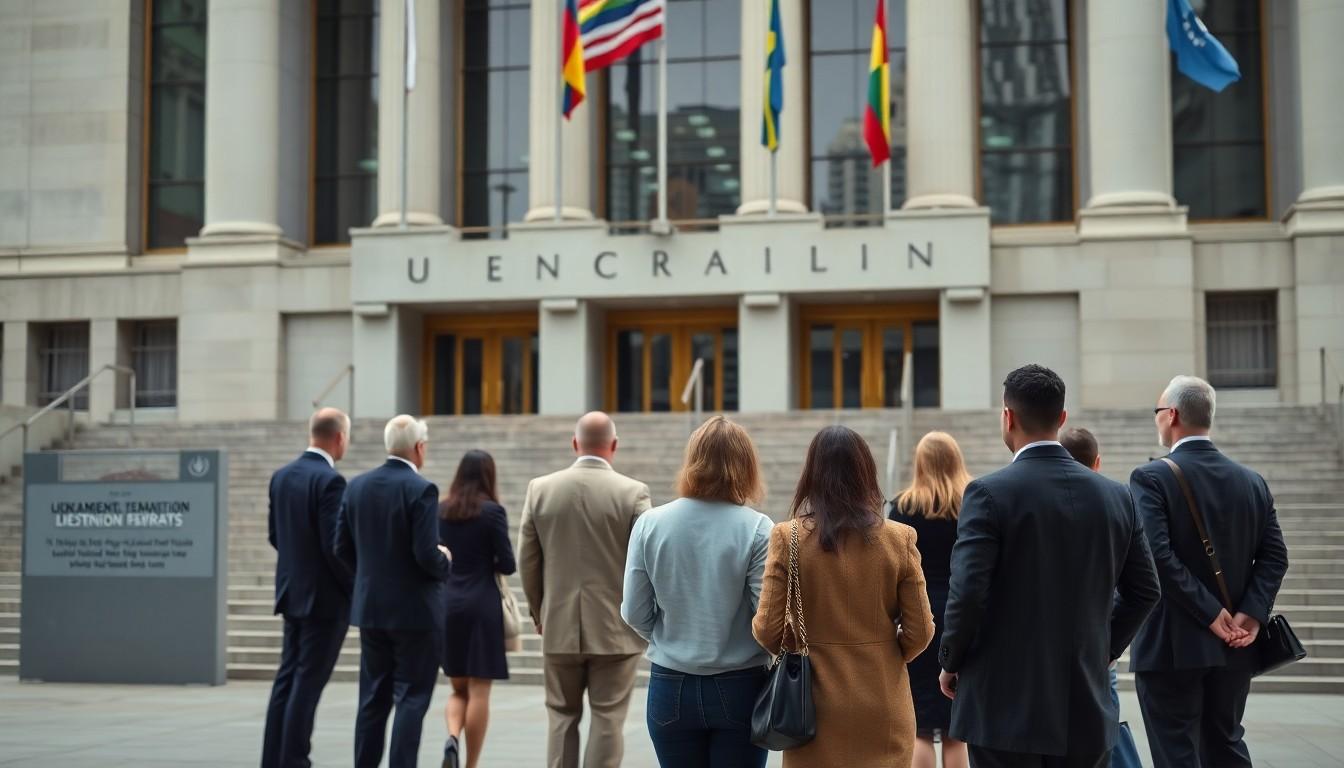
LGBTIQ+ people are facing a widening wave of legal, political and social pressure, the UN’s human rights chief has warned in New York. Volker Turk said the response must be coordinated, arguing that attacks on sexual and gender minorities threaten not only personal safety but wider freedoms, including expression, education and independent thought.
Essential Takeaways
- A global warning: Volker Turk described rising persecution as a coordinated assault on LGBTIQ+ rights.
- Legal danger remains: More than 60 countries still criminalise consensual same-sex relationships.
- Trans people face targeted hostility: Trans women, in particular, are increasingly pushed out of public spaces.
- Rights groups are under pressure: Organisations face raids, restrictive laws, court action and accusations linked to national security.
- A broader concern: The UN says attacks on minority groups can foreshadow wider restrictions on speech and dissent.
The UN says the backlash is becoming harder to ignore
Volker Turk used unusually stark language at the UN General Assembly in New York, warning that LGBTIQ+ people are facing pressure on several fronts at once. The danger isn't limited to one law or one country; it can involve intimidation, detention, exclusion and attacks on a person's sense of safety.
That matters because the pressure reaches beyond private life. According to the United Nations, human rights protections are intended to apply universally, including to people whose sexuality or gender identity makes them a political target.
Turk said the movement for equal rights had helped societies become more open and cohesive. His message was clear: treating LGBTIQ+ rights as a niche issue misses the wider democratic stakes.
Criminalisation still shapes everyday life
More than 60 UN member states continue to criminalise consensual same-sex relationships, according to figures cited by Turk. Even where prosecutions are rare, such laws can cast a long shadow, making it harder for people to seek help, report violence or live openly.
The UN has repeatedly linked equality and dignity to the principles set out in the Universal Declaration of Human Rights. Its central promise, that everyone is born free and equal in dignity and rights, doesn't come with a sexuality or gender exception.
Progress, meanwhile, has proved uneven. Some countries have expanded legal protections, while others are introducing new restrictions or reviving old arguments dressed up in the language of public order and morality.
Why trans people are especially exposed
Turk singled out trans people, particularly trans women, as facing growing demonisation and exclusion from public spaces. That can affect everything from access to healthcare and education to participation in work, culture and civic life.
The UN has also warned that political campaigns increasingly use anti-LGBTIQ+ rhetoric to energise voters. It's a familiar tactic: turn a minority into a symbol of supposed social decline, then present restrictions as common sense.
Arguments about children, decency and protection are often at the centre of these campaigns. But as UN statements have stressed, safeguarding children shouldn't become a pretext for erasing adults' rights or silencing legitimate debate.
Crackdowns on organisations raise the stakes
The latest warning includes reports of arrests, alleged ill treatment and limited access to legal representation in countries including Senegal and Türkiye. Turk also pointed to raids on LGBTIQ+ organisations and efforts to label some groups as extremist, terrorist or security threats.
That shift can make ordinary support work look suspicious. Advice centres, campaign groups and community networks may suddenly have to spend more time defending their existence than helping people find shelter, medical care or legal assistance.
The wider UN system has emphasised that rights protections depend on accountability and inclusion. That principle applies online as well as offline, particularly as new technologies and political pressure reshape public debate.
The fight is also about books, classrooms and free speech
Turk warned that efforts to erase LGBTIQ+ people from books, classrooms, films and public culture can signal a broader attack on independent thought. Once authorities decide that certain identities or ideas shouldn't be visible, the boundaries of acceptable expression can narrow quickly.
This is why the issue reaches beyond the communities directly affected. Restrictions that begin with one group can create a template for suppressing journalists, artists, teachers, researchers or political opponents. The Guardian has previously reported concerns from the UN rights chief about a fundamental shift away from established rights protections.
Turk said he plans to launch a Global Alliance for Human Rights, with LGBTIQ+ rights forming part of a wider effort. It's an ambitious response, but the underlying point is simple: equality is much harder to defend when each threatened group is left to stand alone.
Protecting LGBTIQ+ rights means protecting the wider freedom to live, speak and belong.
Source Reference Map
Story idea inspired by: [1]
Sources by paragraph:
- Paragraph 1: [2], [4]
- Paragraph 2: [3], [5]
- Paragraph 3: [2], [4]
- Paragraph 4: [3], [5]
- Paragraph 5: [2], [4]
- Paragraph 6: [3], [7]
- Paragraph 7: [2], [5]
- Paragraph 8: [4], [7]
- Paragraph 9: [2], [6]
- Paragraph 10: [3], [7]
- Paragraph 11: [2], [4]
- Paragraph 12: [5], [6]
- Paragraph 13: [3], [7]
- Paragraph 14: [2], [6]
- Paragraph 15: [4], [5]
- Paragraph 16: [2], [7]
- Paragraph 17: [3], [6]
- Paragraph 18: [2], [4]