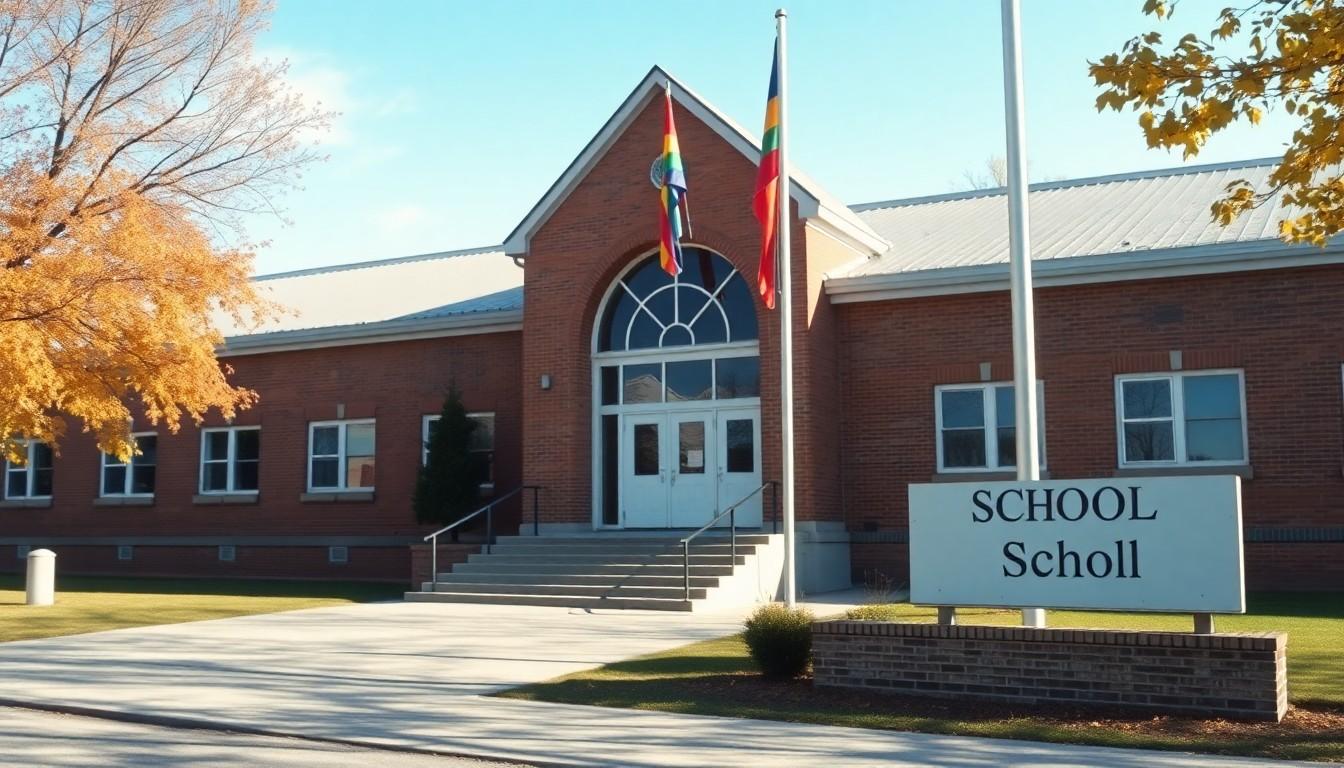
A Minnesota school district is facing a legal challenge after banning unofficial rainbow symbols, including Pride flags, stickers and buttons, from school grounds. The Detroit Lakes policy has sparked anger among families and LGBTQ+ advocates, while district leaders say discussions about display standards are continuing as the dispute moves towards court.
Essential Takeaways
- The policy: Detroit Lakes school board members voted to prohibit non-school-sponsored rainbow flags, stickers, buttons and posters on school property.
- The challenge: The ACLU of Minnesota says the decision breaches free-speech and equal-protection rights.
- The process dispute: Critics argue the measure was introduced without enough public notice or opportunity for comment.
- The district's position: Officials say administrators haven't ordered materials to be removed and won't comment fully while litigation is pending.
- What happens next: A court could decide whether the policy takes effect before the dispute is resolved.
A rainbow ban has become a constitutional fight
The dispute centres on a policy that may sound narrow on paper but carries a much larger message in practice. By restricting rainbow imagery across Detroit Lakes school facilities, the district has placed ordinary signs of LGBTQ+ support at the centre of a debate over speech, belonging and public education.
The ACLU of Minnesota filed suit seeking to prevent the measure from taking effect. The group argues that the policy violates protections under Minnesota's constitution and the Minnesota Human Rights Act, as well as state rules governing open meetings. CBS News Minnesota reported that the case also alleges the board acted with anti-LGBTQ+ bias. [3], [4]
For pupils and families, the argument isn't merely about whether a flag or sticker is allowed on a wall. It's about whether students can see support for them in the places where they spend much of their week. The ACLU says the policy has created a chilling effect on people who want to show solidarity with LGBTQ+ pupils and families. [2], [3]
How the Detroit Lakes policy was introduced
The school board voted 4-2 on 27 July to adopt the directive. It covers rainbow symbols that aren't officially sponsored by the school, including flags, buttons, posters and stickers displayed anywhere on school grounds.
Opponents say the proposal appeared without prior notice, leaving residents without a proper chance to respond before the vote. That procedural complaint is now part of the wider legal challenge, rather than a footnote to it. MPR News reported that the timing and public process have become key points of contention. [5], [7]
The policy's wording has also left room for uncertainty. While the vote set out a clear restriction, the district has said its administration hasn't instructed staff to remove materials under the motion. That gap between what the board approved and what schools have actually done is likely to matter as the case develops. [3], [5]
Families and advocates push back
Community members attended an August board meeting to voice their frustration, concerns and support for LGBTQ+ pupils. The atmosphere reflected a familiar pattern in American school disputes: a seemingly simple rule becomes a proxy battle over identity, parental influence and the boundaries of school authority.
The ACLU says the board declined to approve a resolution delaying implementation. News reports have also described disagreement and emotional reactions around the board's decision, with some district figures reportedly caught off guard by how quickly the measure advanced. [4], [6], [7]
For families, the practical concern is straightforward. A school can say it welcomes every child, but pupils notice which symbols are permitted, which are removed and which are treated as controversial. That visual language can feel quietly powerful, especially to teenagers looking for reassurance.
Why the wording matters for schools
Schools often regulate displays to prevent clutter, commercial promotion or the appearance that an outside group speaks for the institution. The difficult question is whether a neutral rule is being applied consistently, or whether one particular kind of expression is being singled out.
The lawsuit argues that the Detroit Lakes policy crosses that line. It claims the ban suppresses supportive speech and treats LGBTQ+ expression differently, while also pointing to board discussions and media comments as evidence of discriminatory motivation. [2], [3]
That means the court may have to examine both the policy itself and how it came about. A rule can be presented as an across-the-board standard, but its language, enforcement and surrounding debate all help determine how it works in real life. In school corridors, those details aren't abstract; they're visible every day.
The next test will be public and legal
District officials say the board is continuing to discuss expectations and standards for materials displayed in schools. They have declined to offer further comment because the litigation is under way, leaving the next public meeting as an important opportunity for residents to hear how the policy may be interpreted. [3], [5]
The ACLU is asking the court to block the ban before it takes effect. That could give the legal process time to address the free-speech, equal-protection, human-rights and open-meeting claims without schools immediately having to police every rainbow sticker or Pride flag. [2], [4]
Whatever the eventual ruling, the case is likely to be watched well beyond Detroit Lakes. School boards across the United States are wrestling with how to handle symbolic expression, and this dispute shows how quickly a display policy can become a defining test of trust. [6], [7]
The court may decide the policy's fate, but the community's debate over belonging is already out in the open.
Source Reference Map
Story idea inspired by: [1]
Sources by paragraph:
- Paragraph 1: [3], [4]
- Paragraph 2: [2], [3]
- Paragraph 3: [2], [3]
- Paragraph 4: [5], [7]
- Paragraph 5: [3], [5]
- Paragraph 6: [4], [6], [7]
- Paragraph 7: [2], [3]
- Paragraph 8: [3], [5]
- Paragraph 9: [6], [7]
- Paragraph 10: [2], [3]
- Paragraph 11: [2], [4]
- Paragraph 12: [3], [5]
- Paragraph 13: [2], [4]
- Paragraph 14: [6], [7]