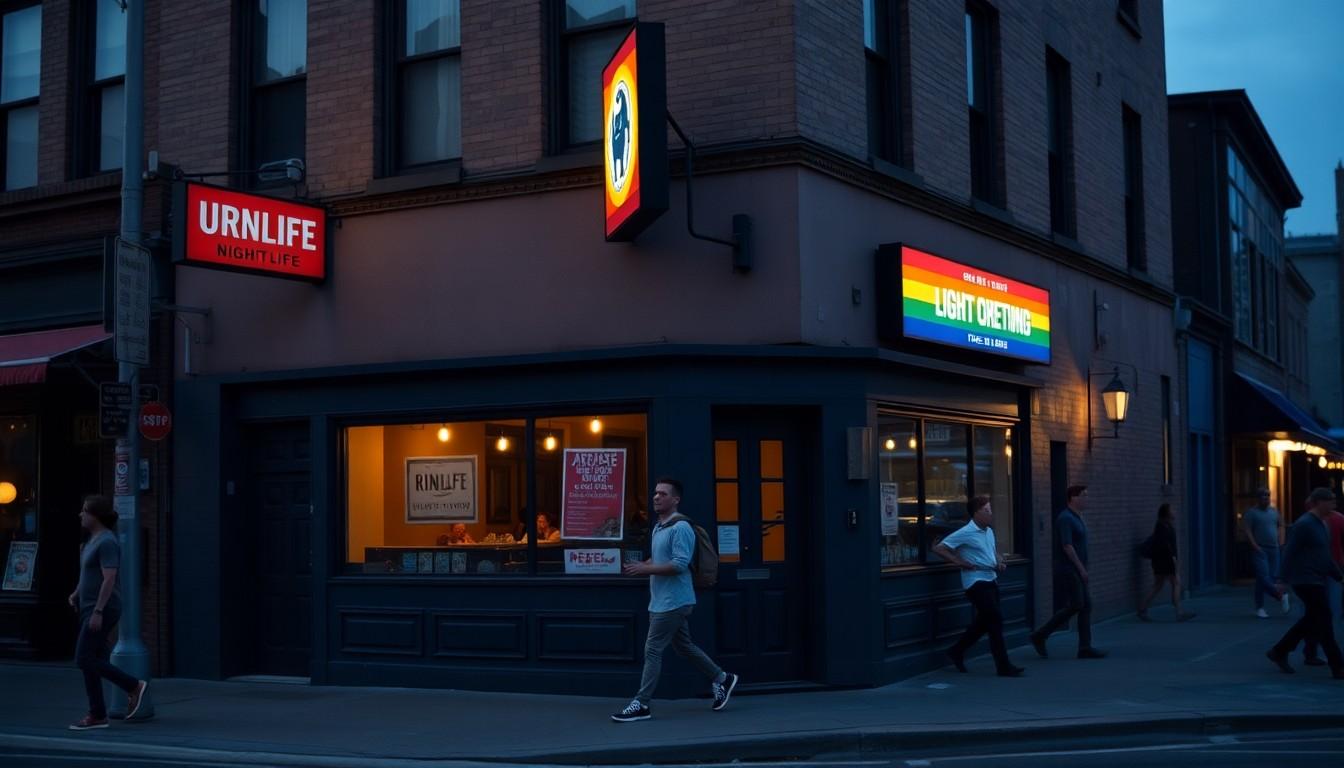
LGBTQ+ venues, publications and community figures are seeing their Instagram accounts return after unexplained suspensions in the US, Europe and Brazil. The reversals offer welcome relief for organisations that rely on social media to promote events and reach audiences, but they also leave a sharper question behind: why were the pages removed in the first place?
Essential Takeaways
- Accounts restored: Several LGBTQ+ venues, media outlets and community pages have returned to Instagram and Facebook.
- Promotion hit hard: Los Angeles venue Catch One estimated that ticket sales dropped by up to 80 per cent while its social pages were unavailable.
- Little explanation: Meta hasn't publicly clarified why many of the accounts were suspended.
- International pattern: Similar cases have been reported in the Netherlands and Brazil, suggesting the problem reaches beyond one market.
- Community concern: Campaigners want clearer moderation decisions, faster appeals and better protection for queer organisations.
Queer venues are getting their pages back
For a nightclub, losing Instagram isn't like misplacing a spare key. It's closer to having the venue's front door vanish overnight, taking event listings, ticket links and regular customers with it.
In Los Angeles, Club Cobra and Club Chico, along with accounts linked to their staff and promoters, were restored after months of disruption. According to the Los Angeles Times, Club Cobra owner Marty Sokol said people would search for the venue and find nothing, a particularly damaging problem for nightlife businesses that depend on last-minute discovery and familiar online routines.
The return of the pages is good news, but it doesn't erase the commercial damage. Catch One, founded as Los Angeles' first nightclub for Black lesbians, said its ticket sales fell by as much as 80 per cent while it couldn't use its normal Facebook and Instagram channels, according to the reporting shared by Attitude.
Why did Meta suspend the accounts?
That's the awkward part. In several cases, the accounts came back without a clear public explanation, leaving owners unsure whether they had breached a rule, been caught by an automated system or been reported in bad faith.
The Stud, a San Francisco queer venue, reportedly had its Instagram page flagged for human-trafficking content before it was restored. Meta didn't explain the decision afterwards, according to Out. For a venue owner, that silence makes it difficult to avoid a repeat incident, especially when the original accusation is serious and potentially damaging.
Meta's moderation systems operate at enormous scale, but scale can feel like a poor consolation when a legitimate community organisation disappears. A short, usable explanation would at least give affected account holders something to work with.
The issue stretches across borders
The latest American cases sit within a wider series of disputes involving LGBTQ+ accounts in Europe and Brazil. Dutch organisations including COC Nederland, The Queer Agenda and queer venues joined a formal challenge seeking changes to Meta's approach to account suspensions, with many of the affected pages later returning, according to NL Times.
That pattern matters because it suggests this isn't simply a local glitch or one-off misunderstanding. Publications and community groups can be especially vulnerable when their work involves sexuality, gender identity or sexual health, subjects that automated systems may handle clumsily even when the content is lawful and non-explicit.
In Brazil, at least five prominent LGBTQ+ pages were suspended in May, with the affected accounts reaching more than 1.7 million followers in total, Folha de S.Paulo reported. Several were restored after media attention and pressure on Meta, which raises an uncomfortable possibility: do organisations need publicity or political support before a normal appeal is taken seriously?
What can LGBTQ+ organisations do meanwhile?
The safest approach is not to abandon Instagram, but to stop treating it as the only doorway to an audience. Venues and publications should keep an up-to-date website, email list and alternative social channel, while storing event details and customer contacts somewhere they control.
It also helps to document everything quickly. Save screenshots of suspension notices, keep copies of appeal submissions and record the date and time an account disappears. Those details can make it easier to show a pattern to journalists, trade groups or elected representatives.
For event promoters, a simple backup plan can soften the blow: publish ticket links on a standalone website, share updates through mailing lists and make sure partner venues can distribute announcements. It may feel slightly old-fashioned, but a dependable mailing list doesn't vanish because an automated filter gets nervous.
Restorations are welcome, but answers are overdue
The reinstated accounts are a relief for the people who run them and the audiences trying to find them. Yet the return of a page without an explanation leaves the central problem intact.
In December, more than 50 queer advocacy, abortion access and reproductive health organisations accused Meta of restricting or removing accounts across its platforms, describing the situation as a major wave of censorship. Reports from the Netherlands and Canada have continued to fuel concern about LGBTQ+ and sexual-health content, according to NL Times and Fugues.
For now, the most useful test is what happens next. If Meta can restore accounts, it should also be able to explain the decisions, improve appeals and prevent legitimate community spaces from disappearing without warning. Social media may be virtual, but the livelihoods and connections built there are very real.
It's a welcome reset, but LGBTQ+ organisations still need clearer rules and a safer digital home.
Source Reference Map
Story idea inspired by: [1]
Sources by paragraph:
- Paragraph 1: [2], [3]
- Paragraph 2: [3], [4]
- Paragraph 3: [5], [6]
- Paragraph 4: [4], [7]
- Paragraph 5: [5], [6]
- Paragraph 6: [2], [3]
- Paragraph 7: [4], [7]
- Paragraph 8: [5], [6]
- Paragraph 9: [2], [4]
- Paragraph 10: [3], [5]
- Paragraph 11: [6], [7]
- Paragraph 12: [2], [4]
- Paragraph 13: [3], [5]
- Paragraph 14: [6], [7]