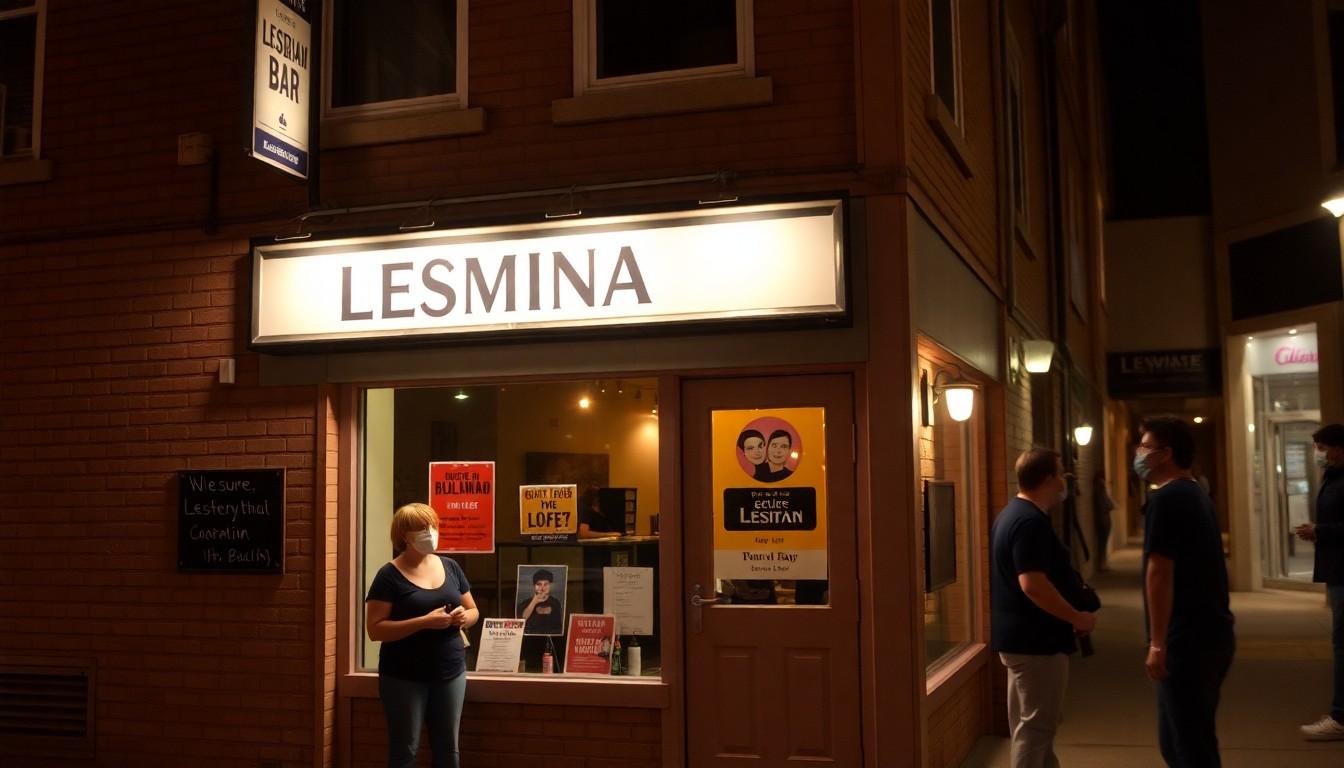
A Massachusetts lesbian bar’s move to make some Saturday nights mask-optional has divided its community, putting accessibility, health risks and the future of queer nightlife under an unusually bright spotlight.
Essential Takeaways
- The policy is changing: Saturday nights will become mask-optional as the venue tests fuller club events.
- Masked events remain: The bar says it will continue prioritising masked bookings and a regular masked social.
- Community reaction is mixed: Some patrons welcomed broader nightlife, while others fear losing a safer space.
- The bigger issue: The dispute reflects a difficult question for venues serving people with different health needs.
One small policy change, a very loud reaction
A Massachusetts lesbian bar has discovered that even a limited change to its mask policy can produce a remarkably large argument. The venue plans to trial mask-optional Saturday nights, complete with themed events, hosts, DJs and full-capacity crowds, according to coverage from The Boston Globe and Townhall.
For some customers, that sounds like a long-awaited return to ordinary nightlife: music, packed rooms and the sweaty, slightly chaotic energy that makes a club feel alive. For others, it represents the loss of one of the few queer venues designed with immunocompromised and disabled patrons in mind.
The disagreement has been amplified by the fact that the change isn't being presented as a complete rejection of masking. Instead, the bar says it will retain masked bookings and a recurring masked social, creating two different forms of access rather than one universal rule.
Why the language has become part of the story
The announcement's tone has attracted almost as much attention as the policy itself. Its emphasis on love, solidarity, transparency and radical community-building has prompted some observers to joke that the wording sounds more like an old counterculture leaflet than a contemporary nightlife notice.
That reaction says something about the unusual cultural mix surrounding the venue. This isn't simply a dispute over whether customers should cover their faces. It's also a collision between activist language, public-health caution and the practical desire to run a busy club night.
As The Boston Globe's reporting illustrates, the venue is trying to serve people who don't all share the same tolerance for risk. That is a sympathetic aim, but it also creates a communications challenge: warm, idealistic language can sound reassuring to some readers and evasive to others.
A safer space and a lively space aren't always the same thing
Masked events can offer a valuable option for people who remain vulnerable to respiratory illness, particularly in crowded indoor settings. Yet venues also need enough flexibility to attract performers, hosts and customers who expect a conventional club experience. The result is a compromise that may satisfy nobody completely.
The bar's proposed split schedule is an attempt to keep both groups in the conversation. A dedicated masked social preserves a lower-risk gathering, while mask-optional nights open the door to a broader format. According to reports from Not The Bee and Townhall, though, critics see the change as a serious threat rather than a minor adjustment.
That response may feel disproportionate to outsiders, but a familiar venue can matter enormously to people who have few alternatives. For someone who has spent years avoiding crowded indoor spaces, losing one trusted night can feel personal, not merely administrative.
What should customers check before turning up?
Anyone planning to attend should look beyond the headline policy and check the details directly with the venue. Ask which nights are masked, whether staff and performers follow the same rules, how crowded the room is expected to be and whether ventilation or air filtration measures are available.
It also helps to distinguish between a mask-optional event and a genuinely mask-friendly one. At the former, customers may wear face coverings but shouldn't expect others to do the same. At the latter, organisers usually make masking central to the event's planning and social expectations.
That distinction matters for people making health decisions, and it can prevent an unpleasant surprise at the door. The best policy is the one customers understand before they arrive, rather than one they have to decode in a noisy queue.
The future of queer nightlife may be more flexible
The argument is unlikely to end with this one venue. Across nightlife, organisers are still working out how to balance inclusion, financial survival and different attitudes towards indoor health risks. Some spaces may settle on dedicated safer events, while others will return to standard club rules.
There is no perfect arrangement for a community with sharply different needs. But clear schedules, honest risk information and a genuine willingness to listen are more useful than grand declarations. People can disagree about the policy without pretending that either side has no legitimate concern.
For now, this Massachusetts bar has become a small but telling example of how complicated reopening, access and community can remain. Even in a nightclub, the hardest part may be agreeing what welcome is supposed to look like.
A little clarity could make the debate far less exhausting for everyone.
Source Reference Map
Story idea inspired by: [1]
Sources by paragraph:
- Paragraph 1: [2], [3]
- Paragraph 2: [4], [6]
- Paragraph 3: [2], [5]
- Paragraph 4: [3], [4]
- Paragraph 5: [2], [7]
- Paragraph 6: [4], [6]
- Paragraph 7: [2], [5]
- Paragraph 8: [3], [4]
- Paragraph 9: [2], [6]
- Paragraph 10: [4], [7]
- Paragraph 11: [2], [3]
- Paragraph 12: [4], [6]
- Paragraph 13: [2], [5]
- Paragraph 14: [3], [7]
- Paragraph 15: [4], [6]
- Paragraph 16: [2], [3]
- Paragraph 17: [4], [5]
- Paragraph 18: [2], [6]
- Paragraph 19: [3], [7]
- Paragraph 20: [4], [5]